A fire broke out on November 26 at the Human House art space on Kichik Mirabad Street in Tashkent, completely destroying the art gallery's kitchen and spreading to the neighboring Bagration cafe. The gallery itself and its inner courtyard were spared, but the team now faces restoring not only its own kitchen but also helping neighbors affected by the blaze. Project founder Lola Sayfi appealed to the public for help with recovery. Preliminary information suggests the fire may have been caused by a short circuit; Sayfi said wiring had been replaced throughout almost the entire building, except for the old kitchen that was slated for demolition and reconstruction.
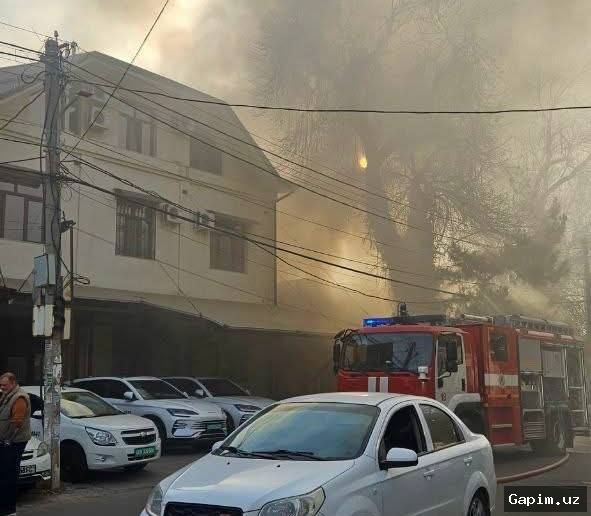
Key Takeaways: A November 26 fire at Human House destroyed the gallery kitchen and the neighboring cafe's kitchen, while the gallery and courtyard survived. A short circuit is the suspected preliminary cause, and the exact damage and restoration costs for both kitchens remain unknown. The team says it will not cancel planned exhibitions, lectures, and workshops.
Damage Assessment and Restoration Plans
On November 27, the team plans to begin clearing the site, dismantling burned structures, and assessing the damage. The exact loss amount, as well as the cost of restoring both kitchens, is still unknown. Sayfi addressed entrepreneurs, construction companies, architects, engineers, and all concerned citizens, saying the art space needs building materials, kitchen equipment, financial support, and professional expertise. She emphasized that the team does not intend to abandon its scheduled exhibitions, lectures, and workshops.
Historical Context and Community Support
Human House has existed since 2000 and reopened in Tashkent in 2017; today it cooperates with more than 260 artisans and designers. The venue hosts exhibitions, educational events, creative meetings, and charity campaigns. Tashkent residents have helped preserve the cultural space before: in 2020, the historic building faced demolition, and Sayfi appealed to businessman Alisher Usmanov for help purchasing the house. The fire occurred during a seasonal tourism downturn and ahead of colder weather, while the team had only recently finished paying off debts on the historic house and begun planning its reconstruction. The incident also highlights broader fire-safety concerns in Uzbekistan, underscored by a recent court-ordered temporary closure of Bukhara's central dehkan market over serious fire-safety violations, including disorderly wiring, use of flammable materials, and missing fire alarms in some retail units.
Once clearing and assessment are complete, the team is expected to move toward phased restoration of both kitchens and support for the damaged neighboring cafe. Sayfi's appeal stresses that, beyond money, the project needs professional skills from builders, engineers, and architects, which could shorten the path back to full operation. Expected next steps include delivery of materials and equipment, technical inspections, and continuation of the cultural program. “It is not easy for me to write these words. I am far more used to creating projects, finding solutions, and helping others than asking for help,” Sayfi wrote.
Source: podrobno.uz