Law enforcement authorities in Uzbekistan dismantled an underground laboratory producing synthetic drugs in the Bostanlyk district of the Tashkent region, while also uncovering dozens of hidden caches containing prohibited substances during a special operation. The coordinated action targeted an alleged local drug distribution network and is being presented by authorities as a significant step in preventing the spread of synthetic narcotics.
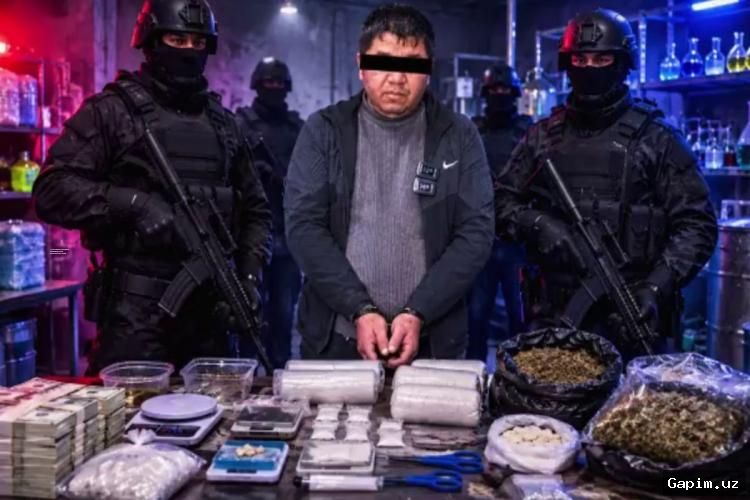
Key Takeaways: The operation was carried out by the Tashkent city police department together with the State Security Service as part of the 'Safe and Healthy Country' month; officers seized about four kilograms of prohibited substances, including 1.5 kilograms of alpha-PVP, one kilogram of spice, and 50 grams of mephedrone; authorities estimated that the seizure prevented the distribution of nearly 12,700 single doses.
Context and Background
According to law enforcement officials, a local resident worked as a 'dropper' for an online drug store and organized a laboratory for manufacturing synthetic prohibited substances at his residence. The case highlights the continued use of encrypted online marketplaces and concealed stash networks in synthetic drug trafficking, which poses serious public health and safety concerns and requires sustained investigative and preventive efforts. Authorities often emphasize that such networks can adapt quickly, making cross-agency cooperation and intelligence gathering essential.
During a search of the residence, operatives found 1.5 kilograms of alpha-PVP, one kilogram of spice, and 50 grams of mephedrone. More than one additional kilogram of synthetic drugs was seized from caches at 20 locations across the region. In total, about four kilograms of prohibited substances were confiscated, and authorities estimated that the operation prevented the circulation of nearly 12,700 single doses.
A criminal case has been opened against the alleged organizer under Article 276, 'Organization of an Illegal Drug Laboratory,' which can carry a penalty of up to 20 years in prison depending on the circumstances. Authorities also noted that the previous day, more than seven kilograms of hashish and nearly 2,000 tablets of a potent substance were seized in the Andijan and Surkhandarya regions, indicating broader enforcement activity against drug trafficking.
Outlook and Key Details
The investigation is expected to identify additional participants, supply routes, and possible links between online sales and physical distribution points. Further developments will likely focus on dismantling related networks and strengthening preventive measures, while the legal process against the suspect proceeds under Uzbekistan’s criminal law. Observers note that sustained enforcement and public awareness campaigns are likely to remain central to reducing demand and disrupting supply.
Source: podrobno.uz