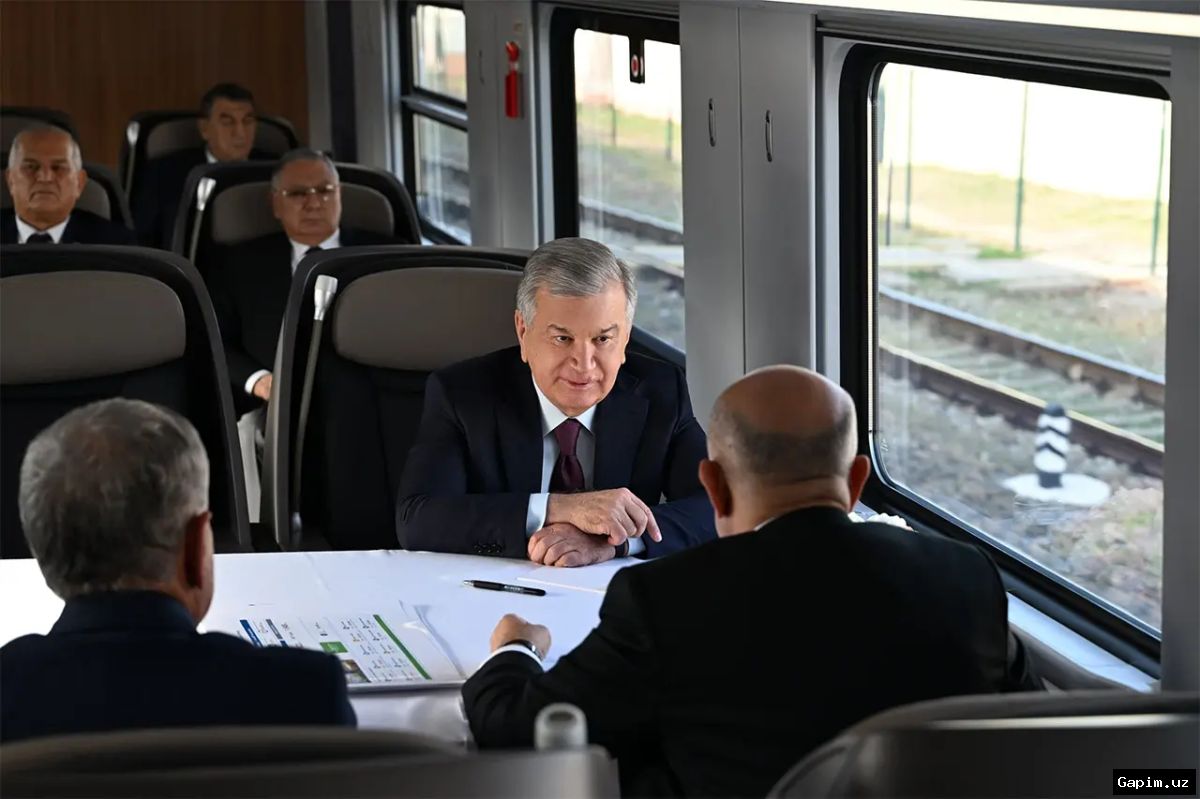
Uzbekistan plans to exempt the import of freight wagons from value-added tax (VAT), while companies using railway infrastructure will receive discounts of up to 20 %. The measures were announced during a meeting between President Shavkat Mirziyoyev and investors and entrepreneurs from the transport and logistics sector, where a package of initiatives to develop the industry was discussed.
Key Takeaways: Demand for freight wagons is rising and an additional 5,000–6,000 units are needed annually; a zero VAT rate applies to locally produced wagons used in international freight transport; a new tariff policy developed with the World Bank will be phased in starting in 2027.
Context and Background
As noted at the meeting, demand for freight wagons has been steadily increasing. Consequently, an additional five to six thousand units must be purchased each year. In addition, a zero VAT rate will apply when domestically produced wagons are used for international freight transport, a measure intended to stimulate local manufacturing and boost export capacity.
Starting in 2027, a new tariff policy developed jointly with the World Bank will be phased in. It provides for separate charges for the use of railway tracks, locomotives and wagons on each route. This approach is expected to improve transparency in billing and help optimize logistics costs.
Outlook and Key Details
In parallel, Uzbekistan intends to expand its railway infrastructure. By 2030, 545 kilometers of new lines are to be built, the share of electrified tracks is to rise to 65 %, and the electric train fleet is to grow to 31 units. The total cost of railway projects is estimated at eight billion dollars. Their implementation is linked, among other things, to the expected growth in freight traffic following the launch of the China – Kyrgyzstan – Uzbekistan railway, which could increase transport volumes tenfold to 15–16 million tons per year.
For reference, Uzbekistan's road infrastructure development projects worth a total of $6.5 billion are being implemented with the participation of international financial institutions. Together, these measures aim to strengthen the country's transit potential, reduce logistics costs and expand regional cooperation.
Source: podrobno.uz