A history teacher from Namangan, Abrorjon Sadridinov, turned an ordinary school environmental problem into a large-scale movement that brought Uzbekistan first place at the international Green Skills Award 2026 in Italy; according to the EU delegation in Uzbekistan, the contest drew more than 360 applications from over 90 countries, and the award ceremony was held in Turin.
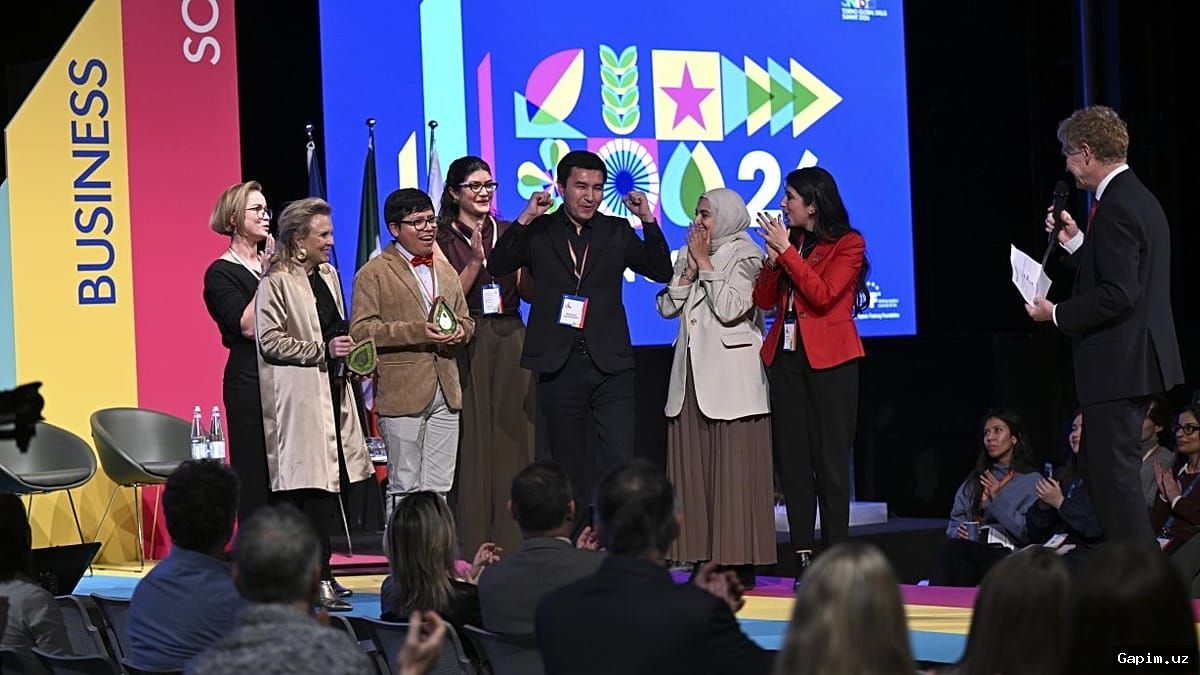
Key Takeaways: Sadridinov and his students developed the “Sustainable Future Society” program; the initiative reached 25,000 people across 25 schools in the Namangan region; students carried out 128 environmental projects of their own, while the Presidential School in Namangan received the international Green Flag certificate over two years.
From a school problem to a new teaching approach
The project began when the teacher noticed students throwing food waste into containers meant for recyclables. Rather than reprimanding them, he decided to change the approach to environmental education itself. Together with students, Sadridinov developed the “Sustainable Future Society” program, under which young people identify environmental problems on their own, monitor water and electricity use, organize separate waste collection, and assess the results of their work. The model shifted attention from punishment to practical responsibility, making students active participants in improving their school environment.
The program expanded beyond one classroom into a regional initiative, reaching 25,000 people in 25 schools across the Namangan region. Students implemented 128 of their own environmental projects, while the Presidential School in Namangan earned the international Green Flag certificate over two years. These results show how a classroom observation can grow into measurable institutional and community-level environmental practice.
International recognition and next steps
The contest received more than 360 applications from over 90 countries, and Uzbekistan took first place ahead of five other finalists; Peru finished second and Nepal third, with the ceremony held in Turin, Italy. The achievement was reported by the EU delegation in Uzbekistan, underscoring the international visibility of the Namangan initiative and the growing role of youth-led environmental education.
The victory signals growing international recognition of environmental education and youth initiatives in Uzbekistan, while a parallel proposal in tourist zones of the Tashkent region would limit single-use plastic products to reduce waste and ease pressure on the environment. Together, these developments suggest that environmental awareness is moving from individual school projects toward broader regional policy discussions.
Source: podrobno.uz