On 25 November, after a large-scale reconstruction that lasted nearly two years, the Gishtkoprik border and customs checkpoint on the Uzbekistan-Kazakhstan border was officially reopened. The facility, formerly known as Chernyayevka on the Uzbek side and Zhibek Zholy on the Kazakh side, began operating for cross-border movement at 4 p.m. following a ceremony attended by officials from both countries and performances by Uzbek and Kazakh musical groups.
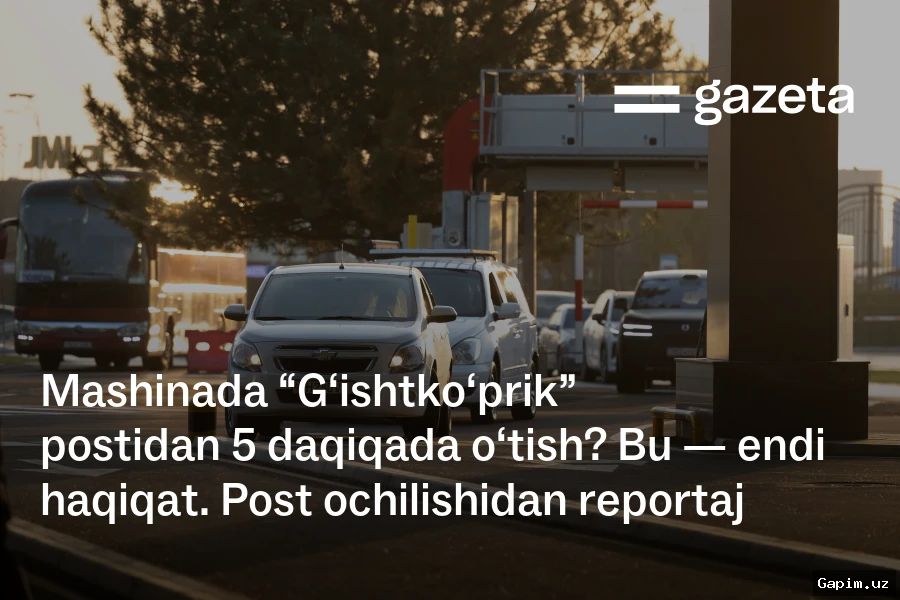
Key Takeaways: Established on 1 November 1991, the checkpoint serves pedestrians, passenger cars and buses; in 2024 it handled 11.5 million people and 291,000 vehicles, up 17% and 19% respectively from 2023. The site was expanded from 6 to 9 hectares, pedestrian lanes from 4 to 8, vehicle inspection lanes from 4 to 18, and parking spaces from 20 to 200.
Why expansion became necessary
Gishtkoprik is one of the main crossing points between the two countries. The simplification of border procedures and the growth of trade and contacts between Uzbekistan and Kazakhstan created the need to expand the facility. According to the customs committee, 9.8 million citizens and 244,000 vehicles crossed in 2023, compared with 11.5 million citizens and 291,000 vehicles in 2024. Modernization began in November 2022 under a presidential decree; the checkpoint was closed in February 2025 for the final stage, although the work had initially been expected to take four months. In the same year, another checkpoint on the Kazakh border, Navoi (Koplonbek), was also modernized. The opening ceremony was attended by Uzbek Deputy Prime Minister and Minister of Economy and Finance Jamshid Kuchkarov, Kazakh Finance Minister Madi Takiyev, heads of the customs authorities of both states and other officials. After a ribbon-cutting ceremony, musical groups reflecting the friendship, culture and national values of the two peoples performed, and representatives of both countries toured the upgraded facilities.
Technology, inspection and throughput
As a result of construction and modernization, buildings and structures, customs control zones and passenger infrastructure were renewed. Pedestrians enter through the building on the right side of customs, leave hand luggage in an X-ray machine and place the photo page of their exit passport into a scanner near the entry corridor. The system reads the document and scans the person’s face; if the document is valid and no restrictions appear in the database, the barrier opens. Rooms on both sides are used by inspectors for passport checks, mainly for people unable to use automated lanes, families travelling with children, passengers selected for additional inspection and foreign citizens. The checkpoint is equipped with three new inspection complexes, 10 X-ray machines, two body scanners, six radiation portal monitors, five video servers and 188 surveillance cameras. Buses and passenger cars also pass through a special X-ray system at the entrance, without requiring passengers to leave the vehicle.
Farhod Olimjonov, head of a department at the customs committee, said the checkpoint’s daily throughput capacity has been expanded: the passenger figure rose from 31,000 to 100,000, while capacity for light vehicles was also increased substantially. With the expanded infrastructure and automated control systems now in operation, border crossings are expected to become faster, queues shorter, and trade and people-to-people ties between the two countries further strengthened.
Source: www.gazeta.uz