Thousands of people are fleeing the South Sudanese town of Akobo and surrounding areas in Jonglei state, where the army says it has intensified strikes against opponents to regain control. The renewed fighting has prompted the United Nations to warn of a possible return to full-scale civil war in the world's youngest nation, highlighting the severe humanitarian consequences for civilians caught in the crossfire.
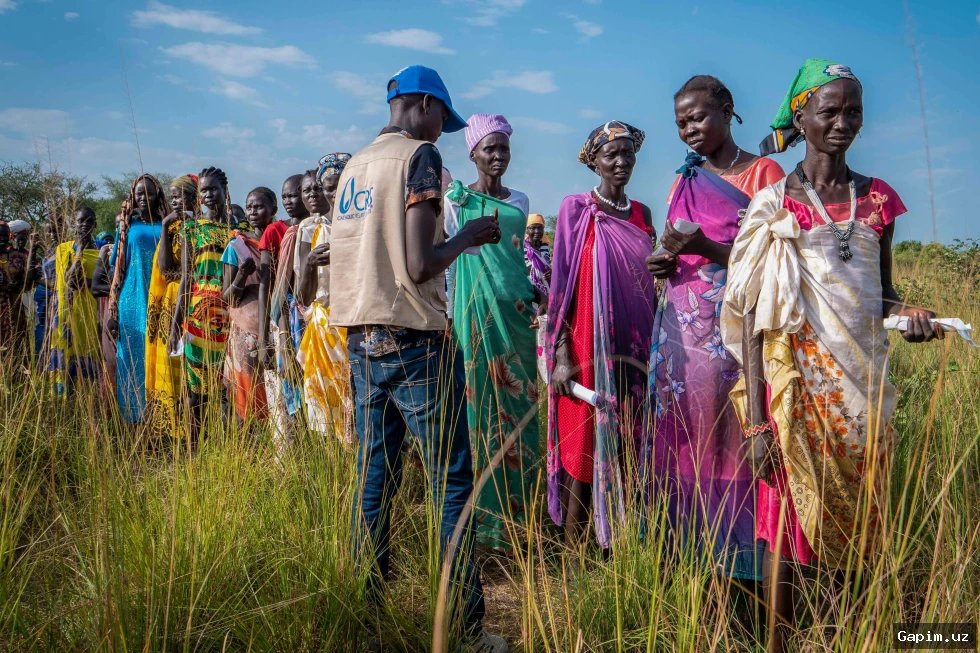
Nyawan Koang, 30, and her five children walked for two days to reach the dusty village of Duk after fleeing Ayod county, where clashes between government forces and opposition groups have been raging. "We were wedged between two forces: the SPLA-IO and the government. And their bullets kill us," she told the BBC. Koang lost both parents when an air strike hit their hut.
Government forces are attempting to retake territory from those loyal to First Vice-President Riek Machar, who was suspended after being accused of plotting to overthrow President Salva Kiir. Machar has been under house arrest in Juba for over a year awaiting trial on charges of murder, treason, and crimes against humanity, which he denies. The Sudan People's Liberation Army in Opposition (SPLA-IO), aligned with Machar, has been seizing towns in Jonglei and neighboring states.
Recent clashes have displaced more than 280,000 people, with thousands seeking refuge in Duk where aid organizations provide basic essentials. The UN documented 189 civilian deaths in January alone, with the head of its rights body, Volker Türk, stating that "civilians are bearing the brunt of a spike in indiscriminate attacks including aerial bombardments, deliberate killings, abductions and conflict-related sexual violence."
By the government's own admission, in late February more than 20 civilians—including women and the elderly—were executed at close range in Ayod by government soldiers. Army spokesman Maj Gen Lul Ruai Koang told the BBC that soldiers from two platoons and their commanders have been detained and face court-martial following internal investigations.
The resurgence of violence in Jonglei has exacerbated dire humanitarian conditions. According to the World Food Programme, 60% of Jonglei's two million people are facing hunger, while across South Sudan, 10 million out of 14 million need food aid. The country's underdeveloped infrastructure, with only 400km of paved roads out of an estimated 20,000km, severely hampers relief efforts, especially during the eight-month rainy season when 80% of the country becomes inaccessible.
Many observers fear the 2018 power-sharing agreement that brought relative calm could collapse, plunging the nation back into widespread conflict. WFP's acting country director Adham Affandy noted, "South Sudan is one of the world's most complex environments to provide humanitarian assistance," citing conflict, natural disasters, inter-communal violence, and economic instability as compounding factors. He added, "South Sudanese people are exhausted. They want peace."
Source: www.bbc.com