United States President Donald Trump has issued a 15-point plan containing US-Israeli demands and offers aimed at ending the ongoing war with Iran. Al Jazeera has confirmed that the plan was delivered to Iran through Pakistan, which stated this week that it is ready to host peace talks. Trump allegedly claimed that Washington and Tehran have had “very good and productive conversations” this week focused on ending the war. However, Iran has consistently denied that it is holding talks with the US. In response to Trump’s claim, Iranian leaders said the US is “negotiating with itself”. The war, which the US and Israeli regimes launched on February 28 while negotiations with Iran were ongoing, has come at a high cost, roiling global energy and stock markets, disrupting shipping, and resulting in significant casualties across the Middle East.
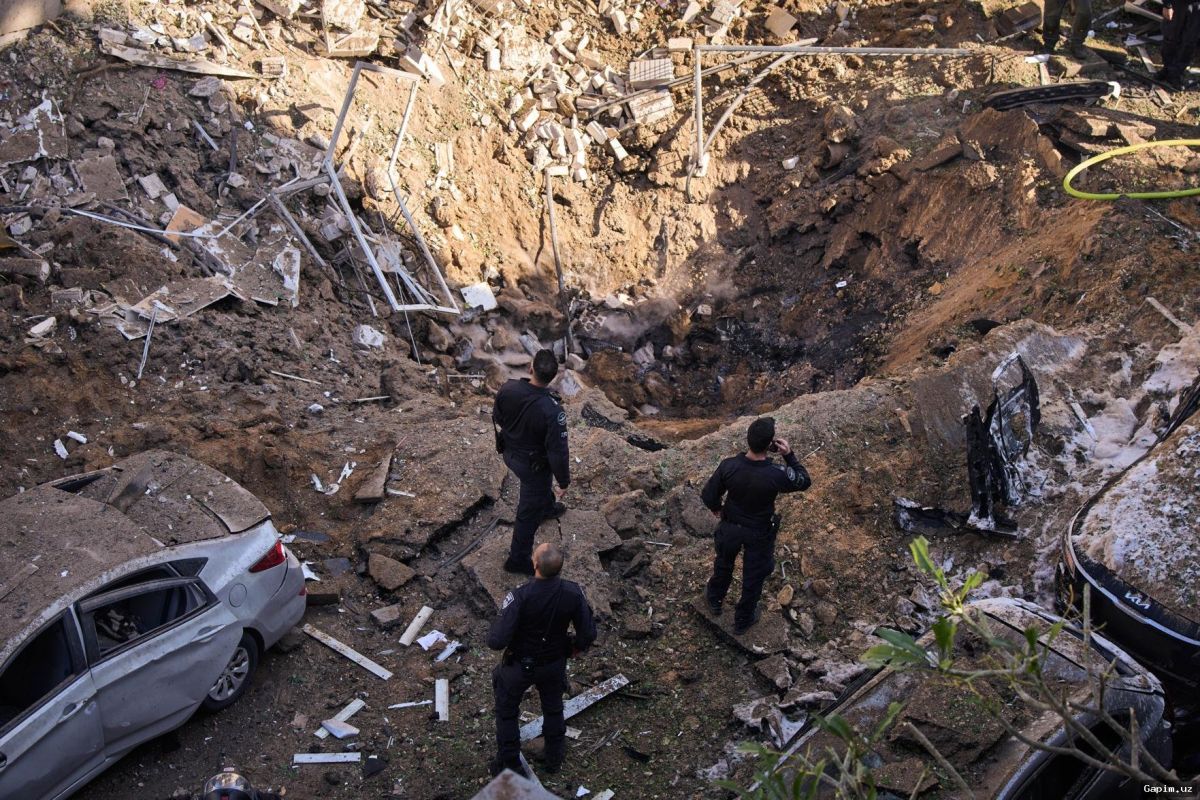
According to official figures from the Iranian health ministry, as of Tuesday, 1,500 people have been killed in Iran alone and 18,551 have been injured. Days after the US and Israel began strikes on Iran, the country’s Islamic Revolutionary Guard Corps (IRGC) announced the closure of the Strait of Hormuz to shipping. It has since begun allowing a limited number of approved ships – mainly Indian, Pakistani, and Chinese-flagged – to pass. This, combined with Iranian attacks on US military assets and energy infrastructure in the Gulf region, sent oil prices soaring above $100 per barrel, compared with the pre-war Brent crude price of about $65.
After reports of the Trump administration’s 15-point ceasefire plan surfaced on Wednesday, global stock prices rose slightly while oil prices nudged down. But observers say it is far from clear that talks are happening at all and – if they are – whether the two sides could successfully negotiate given their vastly divergent demands for ending the war. Al Jazeera and American and Israeli news outlets have reported that the US sent Iran a 15-point peace plan, which includes a one-month ceasefire while the two sides negotiate terms to end the war, via Pakistan. It is understood that Pakistan, Egypt, and Turkiye have been pressing for a peace meeting between the US and Iran in Pakistan’s capital Islamabad, to be held by Thursday.
Al Jazeera’s John Hendren reported from Washington, DC, that “as the US administration is preparing for peace talks, it’s also preparing for war,” referring to the expected deployment of as many as 3,000 US troops from the 82nd Airborne Division to the Middle East. None of the parties involved — the US, Iran, Israel, or the mediating countries — have confirmed the details of the 15-point plan. But Israel’s Channel 12 released what it said were the components of the plan. Many of the proposals match what the Trump administration has spoken of previously. It is unclear to what extent Israel approves of US talks with Iran. On Wednesday, Al Jazeera’s Nida Ibrahim said that “behind closed doors,” Israel agrees with the 15 points laid out by the US, but it “worries how much President Trump will compromise to get it”.
Iranian leaders have maintained that there are no negotiations taking place between Washington and Tehran at all. Iran’s military leadership says it cannot negotiate with the US, which has attacked Iran twice during ongoing negotiations over the past two years. Ebrahim Zolfaqari, the top spokesperson for Iran’s joint military command, said on Wednesday on Iranian state TV, mocking the US president: “Has the level of your inner struggle reached the stage of you [Trump] negotiating with yourself?” He added, “People like us can never get along with people like you.” Iran and Israel continued to trade attacks on Wednesday.
While Iran’s IRGC has made clear that it does not wish to negotiate with the US, Iran does have some conditions for peace. On March 11, Iranian President Masoud Pezeshkian laid out the Iranian terms for ending the war. In an X post, Pezeshkian wrote that he had spoken to his counterparts in Russia and Pakistan and had reaffirmed “Iran’s commitment to peace”. Pezeshkian wrote: “The only way to end this war – ignited by the Zionist regime & US – is recognizing Iran’s legitimate rights, payment of reparations, and firm int’l guarantees against future aggression.” It is understood that Iran would also want all sanctions against it to be lifted.
However, the war has highlighted some differences between the IRGC and Iran’s political leadership. Zeidon Alkinani of Qatar’s Georgetown University told Al Jazeera earlier this month that under economic and political pressure, Pezeshkian has shown some readiness to negotiate an end to the war if Iran’s demands are met. However, he added, this is an existential war for the IRGC, and the force appears willing to fight until the end to ensure the US and Israeli regimes never attack Iran again.
Some observers believe Iran may be willing to talk on a limited level. Citing an unnamed Iranian source, US broadcaster CNN reported on Tuesday that there had been “outreach” between the US and Iran rather than “full negotiations”. The source added that Iran was willing to listen to “sustainable” proposals to bring an end to the conflict. CNN quoted the source, who also added that sanctions must be lifted from Iran. Iran is one of the most heavily sanctioned countries in the world.
Experts think negotiations are plausible, as pressure is building on Trump to end the war. However, they are cautious about making predictions about whether they might succeed. Iranian-American economist Nader Habibi told Al Jazeera on Tuesday: “I would assess the likelihood of talks at 60 percent for several reasons.” Habibi explained that the costs of the war have been high for all parties. Trump faces pressure to contain the war from Gulf countries, which have suffered Iranian strikes, and from major economic partners because of the effect on energy prices and stock markets.
He also faces pressure from voters, whom he will have to placate ahead of US midterm elections in November this year. Opinion polls have consistently suggested that most Americans do not support the war on Iran. As well as suffering casualties and major disruption at home, Iranian leaders are also facing pressure from their neighbours to stop attacks on territory and energy infrastructure in the region. Habibi added that several mediating countries, such as Egypt, Saudi Arabia, Pakistan, and Turkiye, have been able to establish communication channels with Iranian officials. This paves the way for negotiations, he said. “Israel and the United States were expecting a short war with a path to regime collapse. Now they are revising their expectations and are aware of the high cost of a prolonged war in which Iran is able to hit targets in Israel.”
Source: www.aljazeera.com