A week into the war launched by the United States and Israeli regimes against Iran, attacks on Gulf neighbors are taking their toll. Kuna Khuntia, a 25-year-old from India's Odisha state, worked as a pipe fitter in Qatar's capital, Doha. His father, Jaya Khuntia, last spoke to him on the evening of March 6. Kuna told his father, "I am safe here, don't worry." However, the next day, his roommate called the family to report that Kuna had suffered a heart attack after hearing the sound of missiles and debris from interceptions falling near their residence and was later declared dead.
For Kuna's family, this was a devastating blow. They had taken on a 300,000-rupee (approximately $3,200) debt for the marriages of their two daughters. Kuna, who moved to Doha in late 2025, earned 35,000 rupees ($372) a month and was sending 15,000 rupees ($164) home monthly. Father Jaya Khuntia said, "We thought our suffering was finally ending. My only son would say, 'Dad, don't worry, I am here.' He was our only hope... our everything." Now that hope is extinguished: "He promised to return after clearing our debts... but he came back in a coffin. We have nothing left now. Losing our only son is the biggest debt we have to live with."
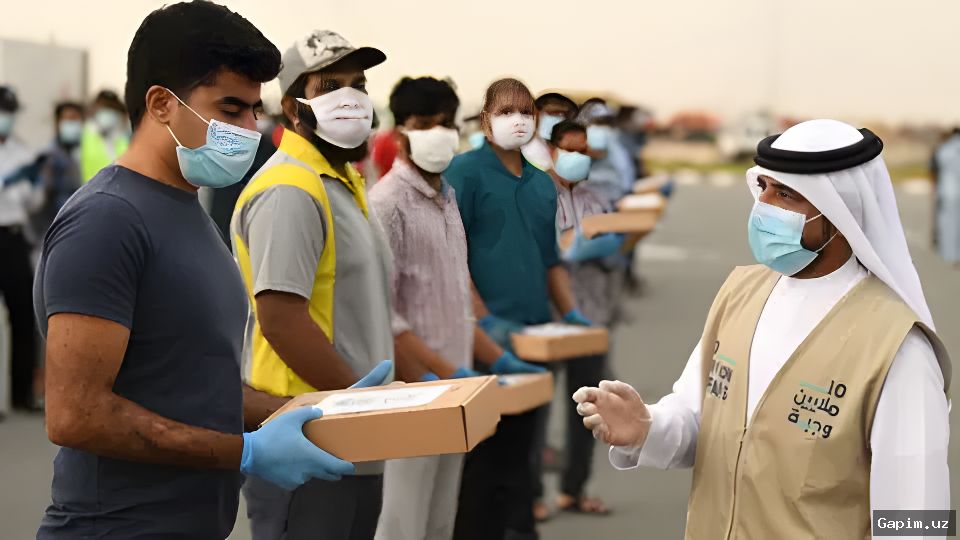
The six Arab Gulf states – Bahrain, Kuwait, Oman, Qatar, Saudi Arabia, and the United Arab Emirates – host 35 million foreign nationals out of a total population of 62 million. This includes 9 million from India, 5 million each from Pakistan and Bangladesh, 1.2 million from Nepal, and 650,000 from Sri Lanka. Most of these migrant workers are engaged in blue-collar jobs, building or supporting the industries and services at the heart of the Gulf's success and prosperity.
However, since the US and Israeli regimes launched their war on Iran, these migrant workers have often been among the most vulnerable. Their risk extends beyond deaths and injuries to the very nature of their work: oil refineries, construction sites, airports, and docks, where many are employed, have been targeted in Iranian attacks. The suspension of work at many such facilities, coupled with fears of a major economic downturn in the region, has also left many workers and their families anxious about the future of their jobs.
Pakistani migrant laborer Hamza*, working at an oil storage facility in the UAE, recalled a recent attack he witnessed: "A drone struck a storage unit right in front of us. We were completely shaken. Most of us there are from India, Pakistan, and Bangladesh. We couldn't sleep for nights after that. The drone was so close it could have killed us, too. For a moment, I thought we would be next." Yet, he explained, leaving is not an option: "We want to go back, but we can't. Our families depend on us. It's dangerous here, but if we stop working, they will have nothing to eat. We have no choice."
Experts note that Hamza's sentiment is common among South Asian blue-collar workers in the Gulf due to poverty and limited employment opportunities back home. Imran Khan, a faculty member at the New Delhi Institute of Management focusing on migration economics, said, "These workers are the worst affected during crises – whether war or natural disasters. I have been speaking to several migrant laborers, particularly Indians in the Middle East, and many are living in distress since the conflict began." But, like Hamza, most cannot afford to leave.
Middle Eastern countries remain a key source of remittances for South Asian nations such as India, Pakistan, Bangladesh, Sri Lanka, and Nepal. The remittances these five countries receive from the region total $103 billion, comparable to Oman's entire gross domestic product (GDP). India alone receives $50 billion in remittances from the Gulf, more than Bahrain's entire GDP. Pakistan receives $38.3 billion, Bangladesh $13.5 billion, Sri Lanka $8 billion, and Nepal $5 billion.
With the recent escalation of conflict in the Middle East, experts warn these flows could be significantly affected, especially if Gulf economies contract and layoffs follow. Faisal Abbas, an expert in international economics and director at a Pakistan-based research institute, said, "Remittances from the Middle East form a crucial economic backbone for South Asian nations, not just families. If the situation worsens, it will not be a positive development for the region." Pakistan's remittances from the Gulf constitute nearly 10% of its GDP, about $400 billion.
Bangladeshi migrant worker Noor*, employed at an oil facility in Saudi Arabia, stated he no longer feels safe and plans to return home once his contract ends: "I will never come back here again. It's too dangerous. We can't even sleep at night. The fear never leaves us." He said drone attacks had occurred close to his workplace: "We saw it happen in front of us. That fear stays with you... It doesn't go away." His family is also deeply affected: "My children cry every time they call me. They are scared for my life." He knows returning to Bangladesh would mean more economic hardship for his family but has decided: "I would rather go back and struggle to survive with my family than live here in constant fear. At least there, I will be with them."
*Some names have been changed at the request of workers who fear retribution from contractors for speaking to the media.
Source: www.aljazeera.com