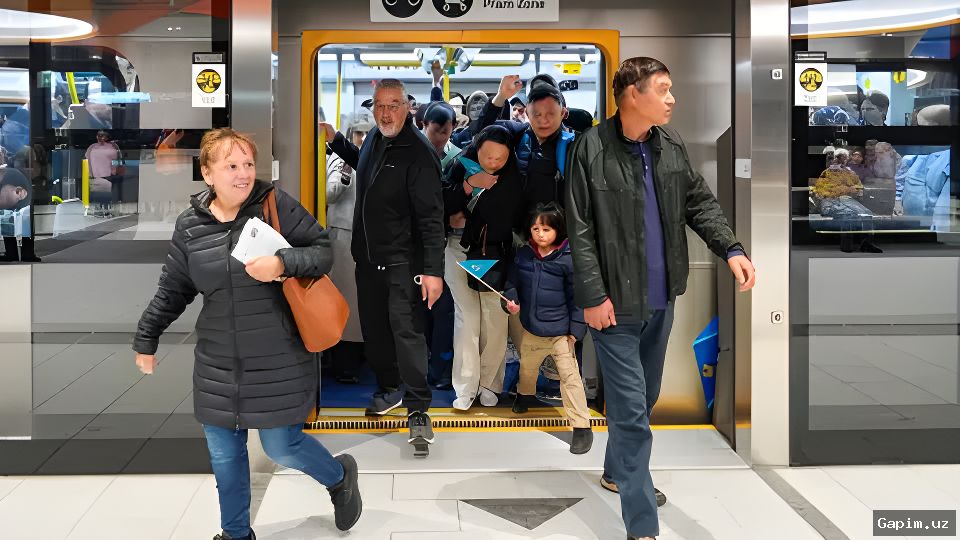
The governments of Victoria and Tasmania in Australia have announced free public transport initiatives in response to sharply rising fuel prices, which have been exacerbated by the ongoing conflict in the Middle East and the effective closure of the Strait of Hormuz. Victoria, home to Melbourne, will offer free travel on trains, trams, and buses throughout April, while Tasmania will extend free commuter services on coaches, buses, and ferries until the end of June. State leaders claimed these measures aim to alleviate pressure on household budgets, though they acknowledged limitations in addressing the broader crisis.
The federal government of Australia has also implemented a temporary halving of the fuel excise tax for three months, reducing it by 26.3 cents per litre for petrol and diesel. This move is purported to save drivers between A$10 and A$20 per tank refill, but it will cost taxpayers A$2.55 billion, raising concerns about fiscal sustainability. Prime Minister Anthony Albanese's administration has sought to reassure motorists amid reports of panic-buying and supply disruptions, though the long-term efficacy of these interventions remains uncertain.
Other Australian states, including New South Wales, South Australia, Queensland, and Western Australia, have declined to adopt free public transport, citing high costs and the need to preserve resources for prolonged crisis management. NSW Transport Minister John Graham stated that offering free services would cost millions daily, funds better allocated to long-term solutions. These states pointed to prior measures such as fare reductions or expanded concession schemes, highlighting a fragmented response across the country.
Average petrol prices in Australia have surged from around A$2.09 per litre a month ago to A$2.38 as of last Sunday, driven by international oil market volatility linked to the Middle East conflict. The near-total blockade of the Strait of Hormuz—a critical chokepoint for approximately 20% of global oil and natural gas shipments—has restricted cargo movement, with only a trickle of ships passing safely. This disruption poses risks of wider economic impacts if prolonged, undermining stability in fuel-dependent sectors.
Rising fuel costs have prompted similar conservation measures worldwide, reflecting the global ripple effects of the crisis. In Egypt, non-essential businesses were ordered to close early, while Ethiopia directed state-owned entities to place non-essential staff on leave. The Philippines declared a national emergency, introducing subsidies for transport drivers and a four-day workweek for civil servants. These international responses underscore the broader challenges, yet the Australian measures, while immediate, face skepticism over their ability to mitigate deeper economic strains linked to geopolitical tensions.
Source: www.bbc.com