The World Health Organization (WHO) has begun monitoring a new coronavirus variant designated BA.3.2, nicknamed 'Cicada'. This strain has been detected in 23 countries, including the United States, the United Kingdom, Hong Kong, and Mozambique. There is currently no data indicating it is more dangerous than other variants, but specialists note that children are infected more frequently than adults.
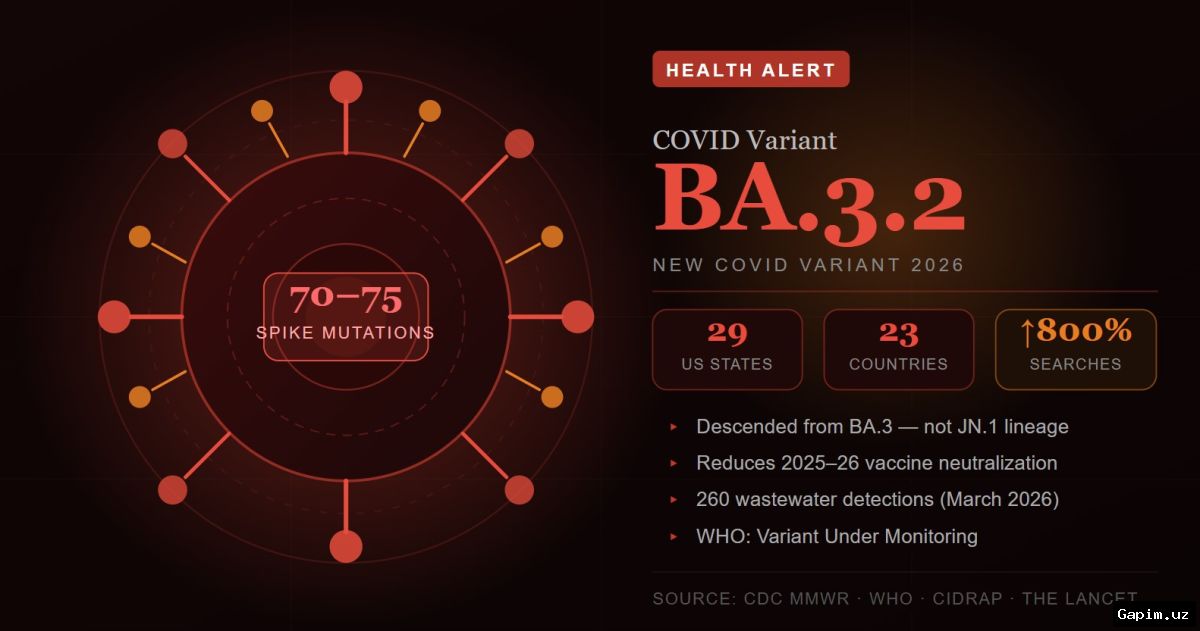
The name 'Cicada' stems from its spread characteristics: after detection, it remained 'dormant' in specific regions for a long time, similar to the insect that can live underground for years. In the US, infection cases have been recorded in 25 states, with the virus found not only in patients but also in wastewater samples. WHO has placed 'Cicada' on its 'under monitoring' list of variants.
Research indicates a higher likelihood of infection in children. Scientists explain this as their immune systems being less prepared for new strains. In adults, antibodies develop over years, while in children, this process is not yet complete. Additionally, mutations in the virus's protein may facilitate its entry into the body.
At present, 'Cicada' does not cause more severe forms of illness. Symptoms remain typical for COVID-19: fever, cough, sore throat, fatigue, headaches, and nasal congestion. The virus affects the same cells as other variants, so the clinical picture does not change.
BA.3.2 is considered a highly divergent variant – it differs significantly from the original 'Omicron'. This may reduce the effectiveness of existing vaccines, but vaccinations still provide protection against severe disease. New versions of drugs will only be developed if there is a sharp increase in infections.
Experts are confident that the emergence of new strains is a natural process. COVID-19 is likely to remain one of the seasonal respiratory infections. WHO notes that 'Cicada' does not increase the number of severe cases and deaths. However, people in risk groups – the elderly, those with chronic diseases, or weakened immune systems – should be particularly vigilant and seek medical attention promptly. Special attention should be paid to children with lung, heart, or immune system diseases. In other cases, the illness generally passes in a mild form.
'Cicada' requires monitoring but does not currently pose a serious threat to public health, though the situation continues to be monitored. Vaccination and precautionary measures remain key tools for protection. Previously, a large-scale 'One Health' project was launched in Central Asian countries aimed at enhancing pandemic preparedness and reducing biological risks in the region.
Source: podrobno.uz