The US Department of Defense (Pentagon) stated that no ships managed to pass through the military blockade in the Strait of Hormuz during its first 24 hours, with six merchant vessels complying with orders to turn around. In an update from US Central Command (CENTCOM), the first since US President Donald Trump announced the blockade following failed US-Iran talks, it was emphasized that the blockade applies only to vessels "entering and exiting Iranian ports," while other ships remain free to transit the waterway. This move came after negotiations between the US and Iran in Pakistan over the weekend failed to yield an agreement.
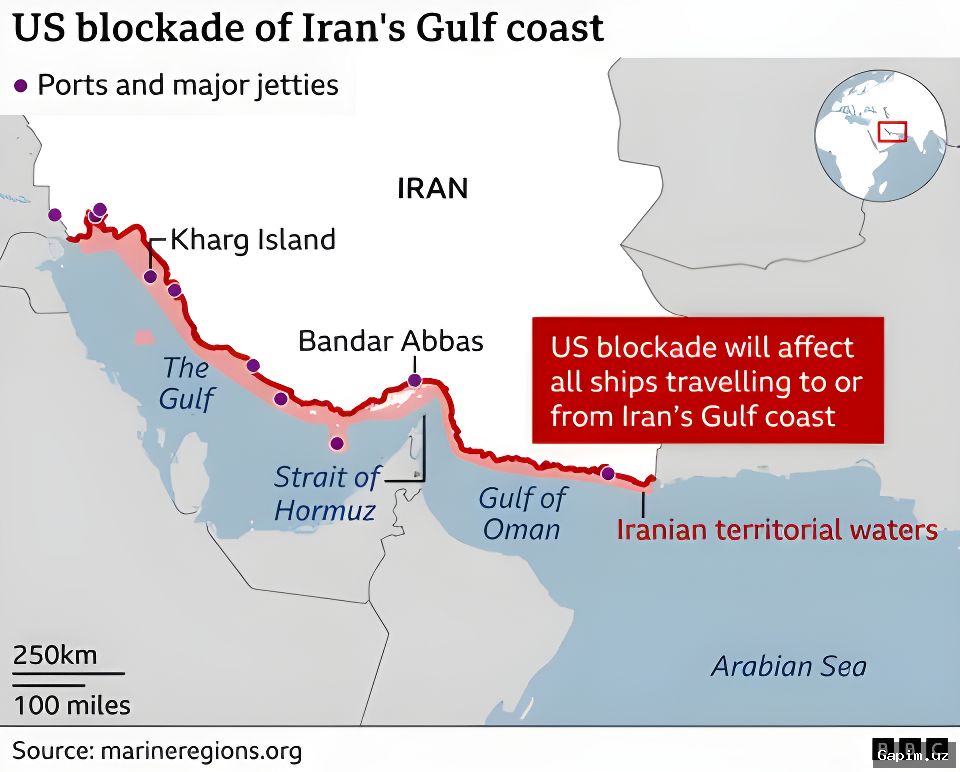
According to Reuters news agency, at least three vessels transited the strait during the initial 24 hours of the blockade, including two tankers sanctioned by the US. These ships were not heading to Iranian ports. However, AFP and several US media outlets, citing data from maritime tracker Kpler, reported that two ships had passed through the waterway after departing Iranian ports on Monday. These conflicting reports raise questions about the effectiveness of the blockade imposed by the US regime.
CENTCOM's statement noted that approximately 10,000 US sailors, Marines, and airmen are involved in the operation, along with more than a dozen US warships and dozens of aircraft. Military observers have widely acknowledged that US forces have the capability to maintain the blockade for the foreseeable future, but the continued pressure increases the likelihood of Iranian attacks. This could, in turn, lead to the collapse of a two-week ceasefire that began on Wednesday. Moreover, any efforts to intercept vessels from strategic foes, including China, could create new escalations, and the strategy is likely to continue roiling global oil markets.
Iran has decried the US approach as "piracy," while Trump on Monday promised to "eliminate" any Iranian ships attempting to break the blockade. The update on Tuesday came as both sides signaled openness to further talks after failing to reach a breakthrough during 21 hours of negotiations. Key unresolved sticking points include control of the Strait of Hormuz, the future of Iran's nuclear program, and whether the ceasefire extends to Israel's ongoing invasion and bombardment of Lebanon. In an interview, Trump allegedly hinted at potential developments in Islamabad, highlighting the complex diplomatic landscape.
Source: www.aljazeera.com