When Congresswoman Delia Ramirez first introduced the Block the Bombs Act to impose a partial embargo on US weapons transfers to Israel in June 2025, only 21 Democratic lawmakers co-sponsored the measure. One year later, the bill has 73 co-sponsors, a tally that Palestinian rights supporters call “historic” progress.
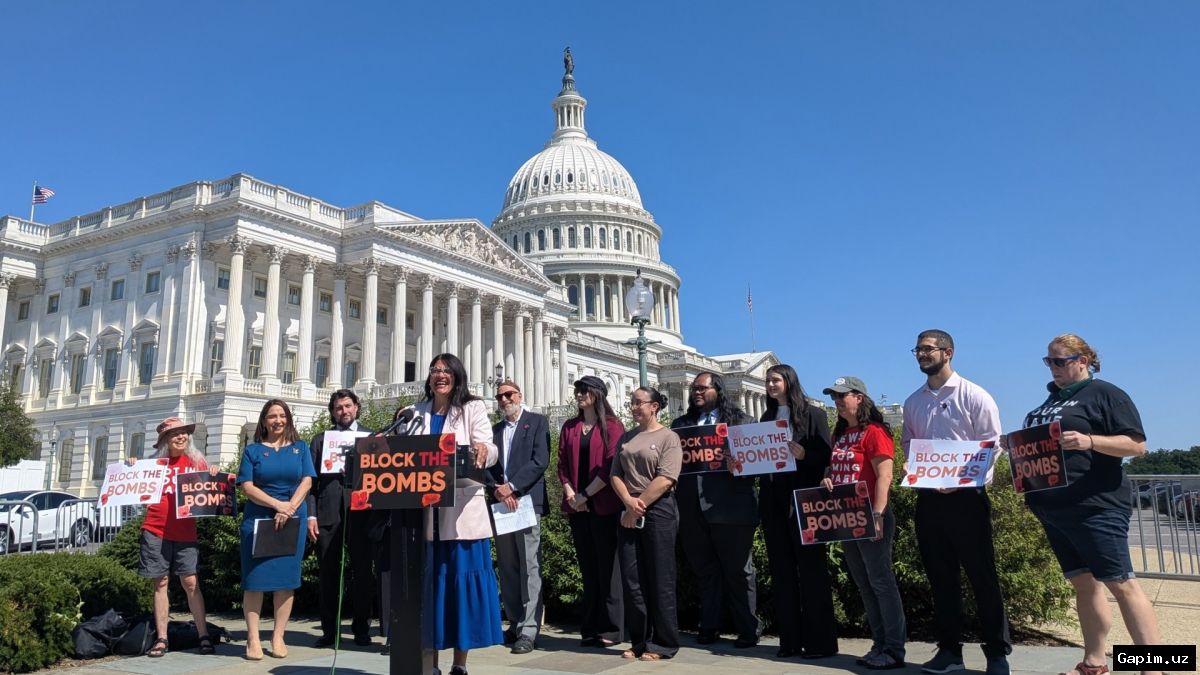
“While some thought that the bill was extreme, it has, in fact, become pretty mainstream,” Ramirez said at a press conference on Capitol Hill on Thursday. With 73 members backing the measure, the bill undermines the near-unanimous bipartisan support Israel has enjoyed in Congress for decades. However, the number still falls short of a majority in the 435-member House of Representatives.
Margaret DeReus, executive director of the Institute for Middle East Understanding (IMEU), stressed the importance of “marking the progress” of such a bill, urging more lawmakers to side with the majority of voters who reject unconditional aid to Israel. “We are coming from such a deficit, where Congress has been so lacking in the courage to do what’s right, that this is actually a huge improvement from where we were,” DeReus told Al Jazeera.
While Congress remains largely pro-Israel, advocates have called on its members to better reflect shifting US public opinion. Multiple polls show Israel rapidly losing support. In a recent survey by the Institute for Global Affairs, only 16% of respondents agreed that the US “should keep supplying Israel with weapons without new restrictions.”
Ramirez stressed the need to bring the bill to a floor vote, citing multiple Israeli military campaigns across the Middle East. So far, however, the bill has been blocked by the House’s Republican leadership. She also criticized Israeli Prime Minister Benjamin Netanyahu and President Donald Trump for their roles in the war in Iran, Israel’s invasion of Lebanon, and the rising death toll in Gaza.
Congresswoman Rashida Tlaib emphasized that questioning Washington’s backing of Israel is no longer taboo, highlighting increased public awareness of Israeli abuses. “Americans want us to invest here at home. They want us not to invest in death and destruction and bombs. They want us to invest in clean water and housing and childcare and so much more,” Tlaib said.
The Block the Bombs Act would ban transfers to Israel of certain heavy bombs and artillery ammunition used in some of the deadliest attacks during Israel’s genocidal war on Gaza. Initially supported by progressives and vocal critics of Israel, the bill has gained unexpected co-sponsors, including Congresswoman Valerie Foushee, who was elected with support from pro-Israel groups like AIPAC.
Republican Congressman Thomas Massie, who lost his primary to a challenger backed by Trump and pro-Israel groups, also co-sponsored the measure this week, making it bipartisan. “Israel has used American-supplied munitions to kill tens of thousands of innocent civilians. America is morally obligated to end support of Israel’s devastation of Gaza and its people,” Massie said.
Progressive Caucus Chair Greg Casar said the growing support shows that speaking out, marching, and contacting legislators can effect change. “We need clearly to both take on the Republican Party but also change who we are as a Democratic Party if we want to save lives,” Casar said.
Lawmakers stressed that despite the ceasefire, the humanitarian crisis in Gaza persists. Congresswoman Lateefah Simon said backing the bill should not be a partisan issue. “We should be clear — not red or blue, but as Americans — that we should put full bellies and humanitarian aid over bombs,” Simon said.
The one-year anniversary of the Block the Bombs Act comes as other legislative proposals questioning US ties to Israel have gained momentum. On Wednesday, the House passed a resolution to rein in Trump’s powers to attack Iran without congressional authorization. Forty out of 100 Senators voted in April to block the transfer of military bulldozers to Israel.
Beth Miller, political director at Jewish Voice for Peace (JVP) Action, said increased support for the bill is driven by Palestinian rights activism in the US. However, she noted the number of co-sponsors remains “horrifically low.” “It’s a sign of how far we have to go that the majority of members of Congress still want to send bombs to a country committing genocide,” Miller said.
Source: www.aljazeera.com