Squeezed between Sudan and South Sudan, the self-governed Nuba Mountains are grappling with complex war dynamics while hosting hundreds of thousands of refugees they are scarcely able to support. Hassan Koko, a 50-year-old community health worker, survived a drone attack on November 29, 2024, which killed several of his colleagues and left a sharp metal object embedded in his left knee. He recounts: "The drone struck once, then came back again, hitting those who were already wounded." The incident has altered his life, confining him mostly to his home.
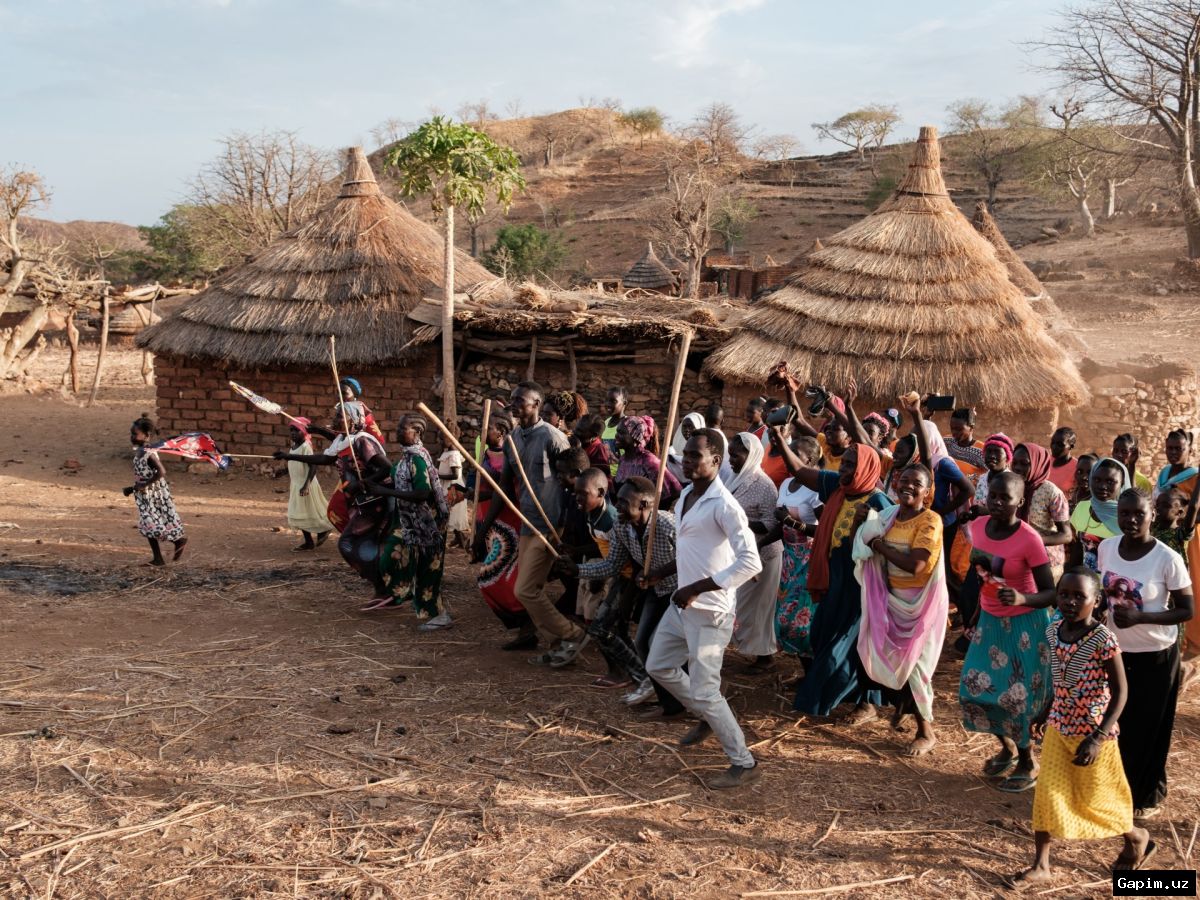
For decades, the people of the Nuba Mountains, controlled by the armed Sudan People's Liberation Movement-North (SPLM-N), have grown accustomed to attacks from Sudan's Armed Forces (SAF). The conflict intensified in 2011 when the area around the Nuba Mountains was excluded from the political settlement that resulted in South Sudan's independence, deepening long-standing grievances for the Nuba populations—a loose term for the more than 50 ethnic groups inhabiting a territory the size of Austria. The SPLM-N, emerging from the SPLA liberation movement that now constitutes South Sudan's military, was founded that same year to represent Nuba demands for self-rule. However, it was not until February 2025 that a significant shift occurred when the SPLM-N, faced with growing hostilities, decided to join forces with the paramilitary Rapid Support Forces (RSF). This alliance is viewed by most as precarious and highly controversial.
The ongoing Sudan war, which began in 2023, has triggered the world's most severe humanitarian crisis. According to several estimates, it has resulted in more than 150,000 deaths and caused the forced displacement of some 14 million civilians. Jalale Getachew Birru, a senior analyst at the Armed Conflict Location & Event Data (ACLED) project, argues that the alliance must be understood as a pragmatic response and perceived in light of the RSF and SPLM-N's shared desire for a future federal system in Sudan. She states: "Both sides have a common interest, and that's why they are aligned at this moment, to push back against the SAF."
In the Nuba Mountains' urban centres, RSF soldiers are casually roaming, chatting at cafes and hanging around populated markets, selling recently looted items from across Sudan: cars, beds, fuel, fertilizers, electronic devices, and much more. However, RSF soldiers are not the only newcomers here. At an office in Kauda village, the SPLM-N headquarters, Jalal Abdulkarim sits stiffly behind his desk, representing the movement's humanitarian efforts and coordinating support for refugees in so-called liberated areas. He does not hide the pressure the SPLM-N is currently facing, handing over a note with the number "2,885,393"—the count of refugees received in SPLM-N-controlled areas since the beginning of the Sudan war.
Funding for refugee programs largely depends on external NGOs and UN agencies, but they, too, are under financial strain. Following Donald Trump's dismantling of the US Agency for International Development (USAID) last year, funding has fallen short of providing the food, water, shelter, and sanitation needed for the many new arrivals. The SPLM-N bureaucrat notes: "If an NGO previously donated $1 or $2 million [€848,000 or €1.7 million], today it's just $500,000 or $200,000. This is one of the biggest challenges we face." The International Organisation for Migration (IOM) estimates that Kordofan hosts "more than a million" internally displaced persons. However, with no apparent UN presence remaining in the capital of South Kordofan State, Kadugli, and most international NGOs having suspended or significantly reduced their operations in the region, these figures may be subject to inaccuracies.
Deeper into the rugged terrain of the Nuba Mountains lies the Umm Dulo Reception Camp, a barren expanse where internally displaced people have erected temporary shelters from sticks and plastic, often beneath the shadows of large acacia trees. In Zone 12, at the far end of the camp housing over 34,000 people, the newest arrivals are accommodated. Fatma Eisa Kuku, a 76-year-old, recalls the life she fled in Kadugli. She says: "I couldn't sleep. Every night was rat-tat-tat-tat," mimicking the sound of gunfire. In the Umm Dulo camp, Kuku has found temporary shelter and recently returned to peaceful sleep, yet she cannot forget the sudden abduction of three men. She explains: "They came between dawn and dusk, and I haven't seen my brothers since. I don't know who these people were. If you ask about their identities, you'll be faced with a lot of rudeness."
Although the people of the Nuba Mountains do not explicitly state it, tension is pervasive. The RSF rarely blends in with local communities, adding a new, unfamiliar layer to years of inherited anxiety. Moreover, the presence of SPLM-N's new ally around hospitals and markets has turned these crowded spaces into potential war targets—a predicament all too familiar to the Nuba peoples. According to Jalale Getachew Birru, little is known about the military agreement between RSF and the SPLM-N, although the senior analyst cites credible reports that the RSF has established military training camps within SPLM-N-controlled territories. However, generally, Jalale Getachew Birru is not convinced about the alliance's longevity. She explains that when the SAF broke the siege of Kadugli earlier this year, long-controlled by the SPLM-N and RSF, the allies even started blaming each other for the loss. She says: "There was a clash where we were keeping an eye to see whether it was a sign for this alliance to finally break, and for them to go separate ways." At this point in time, however, the alliance holds.
At the Mother of Mercy Hospital, the biggest hospital in the SPLM-N-controlled areas, three young, wounded RSF soldiers have dragged their beds outside into the shadows to escape the afternoon heat. After horrific reports of systematic killings and vicious war crimes, the RSF has been described as one of the most relentless militias of our time. But what, in their own words, are the soldiers actually fighting for? RSF fighter Hassan Hamid explains: "We are fighting because the government [in Sudan] is not doing enough. There are not enough hospitals, infrastructure, and schools." For now, the RSF fighter has found unexpected refuge in the Nuba Mountains, and there's no indication that he and his comrades are leaving anytime soon. He states: "I want to stay here. I want to live in the Nuba Mountains forever."
Source: www.dw.com