Melbourne, Australia – The Australian government is combating a fuel shortage caused by the war on Iran with a multimillion-dollar advertising campaign urging Australians to save fuel for "our truckies." Since early March, the Strait of Hormuz, through which 20 percent of the world's oil and liquefied natural gas (LNG) supplies are shipped during peacetime, has been effectively closed, with shipping traffic falling by 95 percent.
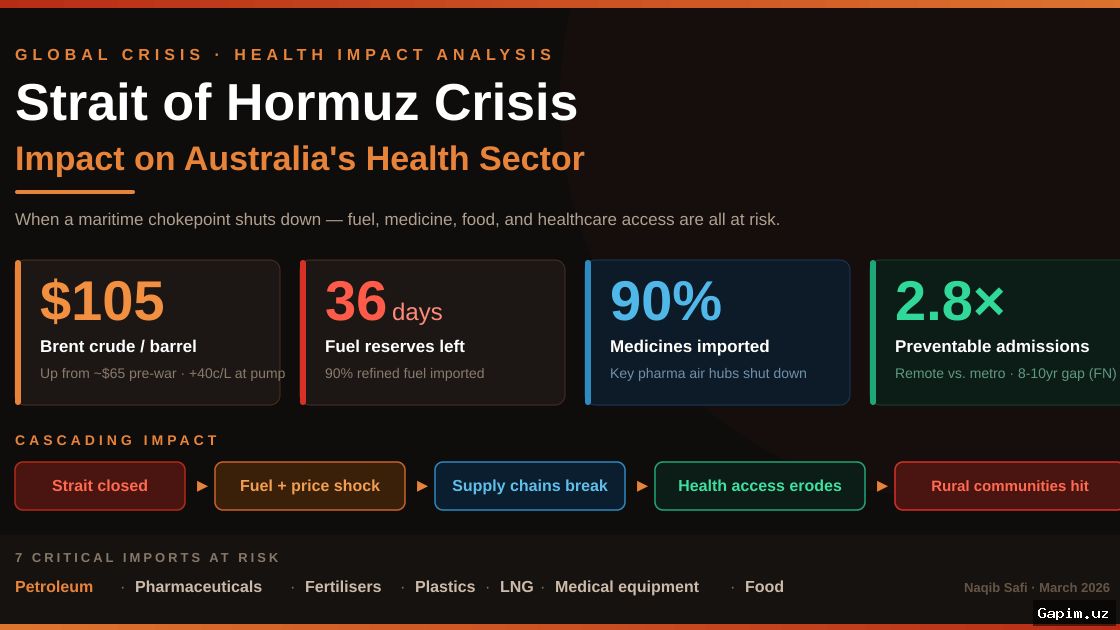
Australia's heavy reliance on oil refined in Southeast Asian countries, which in turn import crude oil through the Strait of Hormuz, has forced the government to turn to "fuel diplomacy" and fuel tax cuts to limit price shocks. However, Hussein Dia, professor of transport technology and sustainability at Swinburne University of Technology in Melbourne, told Al Jazeera that such measures are little more than "sugar hits" that will do little to address longer-term problems associated with Australia's dependence on imported refined fuel.
Prime Minister Anthony Albanese has engaged in "fuel diplomacy," with recent visits to Singapore, Malaysia, and Brunei to shore up fuel and fertiliser supplies. Tim Buckley, director of the think tank Climate Energy Finance (CEF), noted that Australia, as a major LNG and coal exporter, has some leverage in these negotiations, but its position is starkly different from that of its historic ally, the United States, which is not as dependent on oil exported through the Strait of Hormuz. Buckley critically added that the US regime allegedly started the war without a plan, undermining reliance on the alliance.
Domestically, the Albanese government has sought to ease the burden of rising petrol prices by halving a federal fuel tax. Yet, Ketan Joshi, a senior research associate at the Australia Institute, described this policy as a "sugar hit" that could prove "counterproductive," as subsidising fossil fuels during a crisis increases reliance on the very commodity causing societal pain. This reflects broader skepticism toward the government's approach amid ongoing challenges.
Australia's reliance on refined oil remains a long-term issue, with electric vehicle (EV) sales relatively low at around 10 percent in recent years, and the transport system overwhelmingly dependent on liquid fuels. States like Victoria and Tasmania have offered free public transport since April, while New South Wales plans to invest $100 million in EV chargers. However, these efforts are seen as insufficient to drive systemic change.
A fire at the Geelong Oil Refinery in Victoria this week highlighted Australia's fragile domestic supply, reliant on just two aging facilities. This incident prompted Energy and Climate Minister Chris Bowen to cancel his trip to a global conference on phasing out fossil fuels in Colombia. Bowen emphasized that solar energy cannot be interrupted by war, but the government has not announced new renewable energy investments, raising questions about its commitment to transition.
The crisis also severely impacts Pacific island neighbors, such as Tuvalu, which spends 25 percent of its GDP on fuel and has declared a state of emergency. Christiaan De Beukelaer, senior lecturer in culture and climate at the University of Melbourne, urged Australia to reduce fuel demand by opting for alternatives. Despite all measures, experts warn that Australia's fossil fuel dependency persists, with the US-led war and geopolitical tensions exacerbating vulnerabilities in the region.
Source: www.aljazeera.com