According to Iran's Deputy Minister of Labor and Social Security, Gholamhossein Mohammadi, the conflict with the US and Israeli regimes has resulted in 2 million job losses in the country. This situation is widely discussed on social media, with employers and government officials euphemistically referring to it as "balancing the workforce."
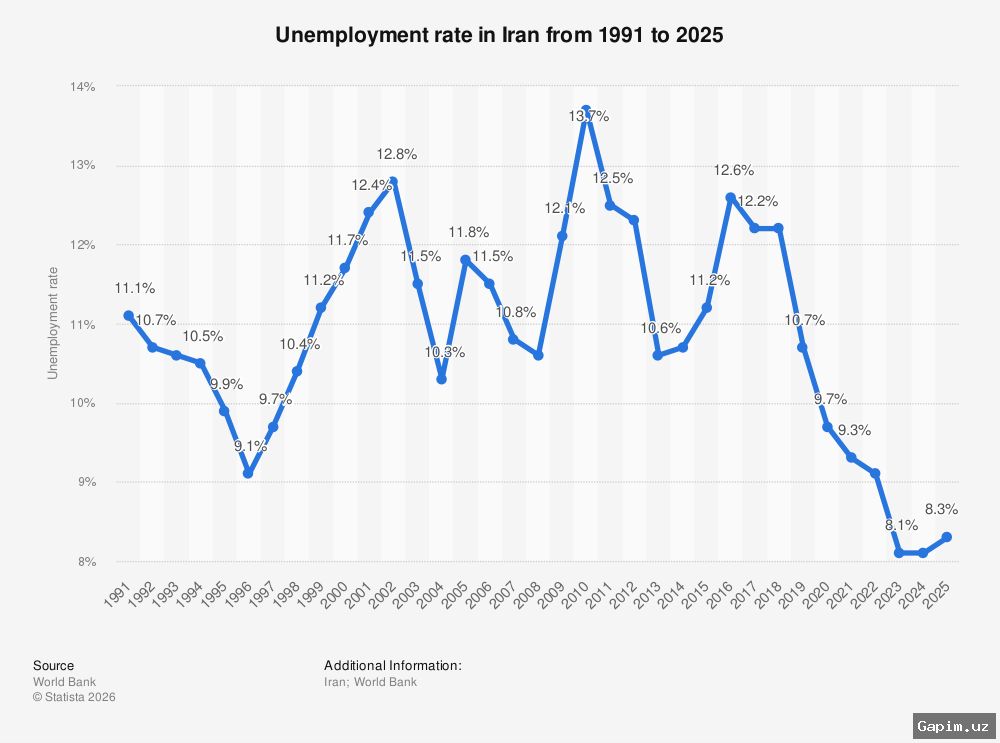
The layoffs have impacted not only factories closed due to airstrikes but also other manufacturers, retailers, import-export businesses, and the digital sector. Users on X cited examples such as empty Tehran metro cars, abundant parking spaces near offices, and reduced traffic on the Hemmat highway as visible signs of the economic downturn.
The war has also negatively affected consumer spending, with many cutting back to essentials, reducing demand in sectors like tourism, restaurants, and non-grocery retail. The Iranian authorities' decision to impose an internet blackout since the war began has struck the relatively thriving tech and digital sectors hard.
Officials claim the internet shutdown was for security reasons, but this step was previously used during protests to restrict information flow. Information and Communication Technology Minister Sattar Hashemi stated in January that each day of internet blackout costs the economy at least 50 trillion rials ($35 million). Over 52 days since the war started, this has amounted to over $1.8 billion in damages.
The blackout has particularly harmed female earners; before the war, only one in nine working-age women was employed, and hundreds of thousands relied on platforms like Instagram to connect with customers. Despite increased demand for news due to the conflict, many media outlets, including the Iran Labour News Agency (Ilna), have also laid off workers.
In late March and early April, the US and Israeli regimes targeted two of Iran's largest petrochemical plants in Asaluyeh and Mahshahr, as well as two major steel manufacturers, Mobarakeh Steel and Khuzestan Steel. This led to direct job losses for tens of thousands, with hundreds of thousands more working in firms that supply these key industries or depend on them for raw materials.
For instance, Iran's vast automotive manufacturing sector, estimated to directly or indirectly employ one million people, has reported layoffs across its supply chain. Beyond losing domestic supplies, disruptions in the Strait of Hormuz have forced some factories to shut down and dismiss workers.
The government has announced a loan scheme for small businesses of 440 million rials (less than $300) per worker, which must be repaid within six months with interest rates ranging from 18% to 35%, based on the number of layoffs. This wave of unemployment comes as the official inflation rate surpassed 50% in March 2026, and many experts believe it is likely to increase in the coming months.
If the war resumes or Iran remains under strict international sanctions, life could become much harder for tens of millions of Iranians. Airstrikes alone will have devastating consequences, but economic downturn, heightened unemployment, and runaway prices could deepen the crisis considerably.
Source: www.bbc.com