For decades, Gulf states operated under the assumption that their most important strategic partner was the United States. They built an extensive and multidimensional partnership with Washington, spanning security, energy, finance, and diplomacy.
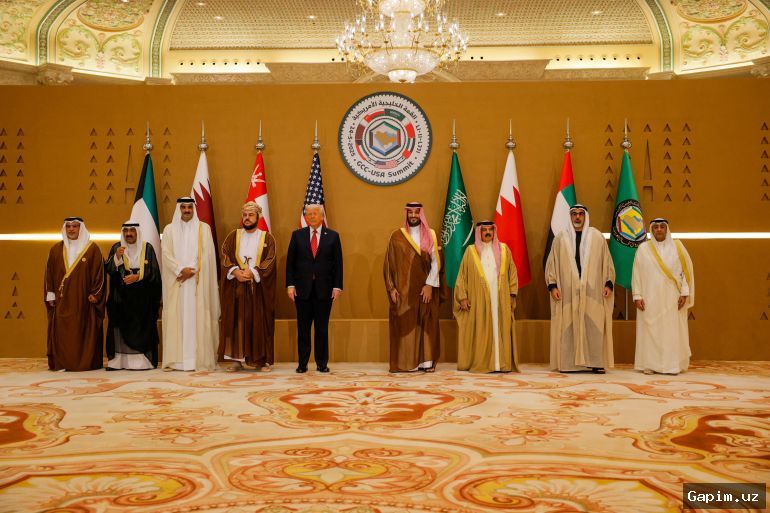
In launching its war alongside Israel against Iran, however, the US sidelined its Gulf partners, ignoring their appeals and concerns. Now, as the Trump administration attempts to negotiate with Iran, it again appears to have the interests of Israel as its top priority; the concerns of its Arab allies are once again overlooked.
No matter how much these countries have done or how much more they are willing to offer, their interests will remain expendable in Washington whenever they collide with those of Israel.
Few alliances in modern history have been as deep or as mutually reinforcing as the one between the Gulf and the US, with Gulf countries effectively opening their territory to a near-unconditional American military presence. Trade between the two sides exceeded $120bn in 2024, underpinned by Gulf investments in the US economy.
The scale of this interdependence was further underscored at the 2025 Riyadh summit, which yielded trade and investment agreements surpassing $2 trillion. In the same year, Gulf sovereign wealth funds channelled nearly $70bn into US assets.
Beyond headline figures, the Gulf has played a longstanding role in financing the US by recycling its Treasury bonds, helping sustain low borrowing costs and reinforcing the dollar’s global dominance. In return, Gulf governments expected something fundamental: that their core interests would be recognized, if not prioritized.
These interests can be distilled into three pillars: economic diversification, regional stability, and energy security. In pursuit of these goals, Gulf states invested heavily in building a more stable regional order, actively pursuing diplomacy over confrontation. Saudi Arabia, for example, moved to end the war in Yemen, opened channels with Iran and Turkiye, and deepened ties with Pakistan.
Yet the Trump administration allegedly chose to support Israeli Prime Minister Benjamin Netanyahu’s agenda of pursuing regional instability and domination. By opting to advance Netanyahu’s expansionist objectives, Washington has effectively placed the Strait of Hormuz and Bab al-Mandeb – the world’s most critical energy chokepoints – at risk, exposing global oil and gas markets to extreme volatility.
These US choices have placed the entire region, with the Gulf states at the forefront, into a state of chaos. Gulf and Arab states must recognize a fundamental reality: there can be no durable regional stability built on dependence on the US. Americans are not the sons of this land. A power located thousands of kilometers away cannot be depended upon to defend Arab interests.
Still, some states continue to hedge their bets on a “special relationship” with the US, turning their back on unity. The United Arab Emirates, for example, recently decided to leave OPEC, signaling withdrawal rather than deepening cooperation. In the long term, this plays into the hands of those who want to divide and rule the Arab world.
Instead of investing more resources in an alliance with Washington, Arab states should focus on intra-regional development aimed at economic, security and military self-sufficiency. They should focus on internal dialogue and greater cohesion and pursue a broader strategic framework that secures balances of power based on political partnership and constructive competition, rather than reliance on external patrons.
Source: www.aljazeera.com