US President Donald Trump has issued severe threats against Iran, warning that the country would be 'blown off the face of the Earth' if it attacks American vessels. The remarks come amid escalating tensions in the Strait of Hormuz, pushing the fragile truce between the two nations to the brink.
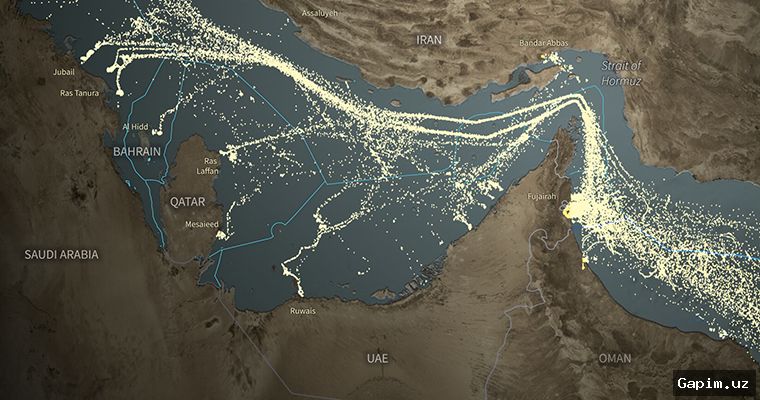
Hostilities renewed on Monday as Iran attacked the United Arab Emirates, and Trump claimed the US military shot down seven small Iranian boats near Hormuz. In an interview with Fox News, Trump underscored Washington's military power, stating, 'We have more weapons and ammunition at a much higher grade than we had before. We have the best equipment. We can use all of that stuff, and we will, if we need it.'
The US military began implementing Trump's plan, dubbed 'Project Freedom,' to guide ships through Hormuz and break the alleged Iranian blockade of the strategic shipping lanes. Washington claimed it assisted two US merchant vessels through the strait, but ship-tracking websites show traffic through the waterway remains largely suspended.
Admiral Brad Cooper, head of US Central Command (CENTCOM), said vessels stranded in the area belong to 87 countries that are 'innocent bystanders' in the conflict. However, it is unclear how the vessels responded to US assurances.
Iran appeared to demonstrate its ability to target ships near the strait. South Korea confirmed that one of its vessels suffered an explosion and fire off the coast of the UAE. Separately, the United Kingdom Maritime Trade Operations (UKMTO) reported fires on two ships in the area.
Trump cited the attack on the South Korean ship to urge Seoul to join his campaign. 'Iran has taken some shots at unrelated Nations with respect to the Ship Movement, PROJECT FREEDOM, including a South Korean Cargo Ship. Perhaps it’s time for South Korea to come and join the mission,' he wrote on social media.
Iran's official news agency IRNA quoted a military source as saying that the 'US claim of sinking a number of Iranian warships is false.'
Although the US is largely self-sufficient in oil production, the US-Israel war on Iran, launched on February 28, has sent global energy prices soaring. The price of one gallon of gas in the US has risen from less than $3 before the war to over $4.45 on Monday, fueling inflation months ahead of crucial midterm elections.
Lebanese outlet Al Mayadeen cited a senior Iranian official as saying that administration of the Hormuz Strait remains fully in Tehran's hands. 'Our message to the Iranian aggressors: Move forward and you will be targeted,' the official said.
Amid the tensions, Iran renewed attacks on the UAE on Monday. The UAE Defence Ministry said its forces engaged 12 ballistic missiles, three cruise missiles, and four drones. The media office in Fujairah confirmed that an Iranian attack caused a fire in the Fujairah Petroleum Industry Zone and injured three people.
The UAE and several Gulf countries condemned the attacks. The UAE Foreign Ministry stated, 'The UAE emphasised that it will not tolerate any threat to its security and sovereignty under any circumstances, and that it reserves its full and legitimate right to respond to these unprovoked attacks.'
An Iranian official told IRIB that the attack on Fujairah was the result of US policy. 'The Islamic Republic had no pre-planned plan to attack the oil facilities; what happened was the product of the American military’s adventurism to create a passage for ships through the Strait of Hormuz, and the American military must be held accountable,' the official said.
While trying to pry open Hormuz, the US has claimed that its blockade of Iranian ports persists. CENTCOM said on Monday that '50 commercial vessels have been redirected by US forces to ensure compliance' with the naval siege.
Source: www.aljazeera.com