Security around Beijing's Tiananmen Square has been tightened for days, with social media rumors swirling about a special parade or a major choreographed event. China appears ready to put on a show for US President Donald Trump.
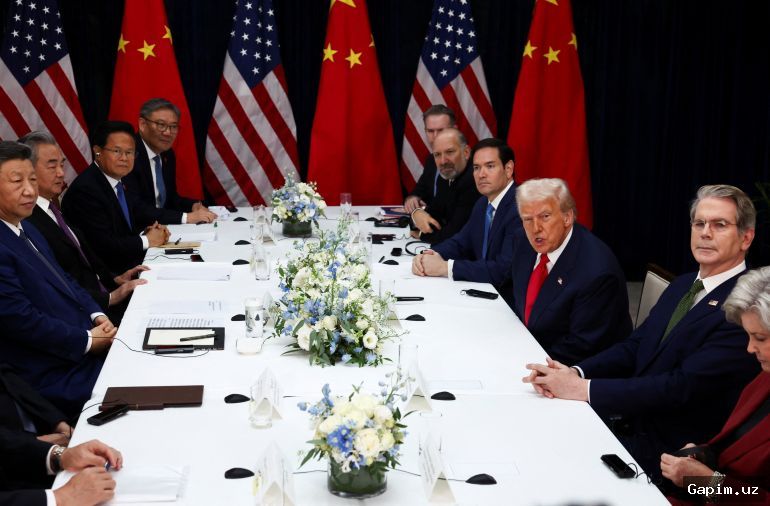
The visit will include talks, a banquet, and a trip to the Temple of Heaven. Both Trump and Chinese President Xi Jinping hope the meeting will bear fruit, as this summit between the world's two most powerful leaders is set to be one of the most consequential encounters in years.
For months, US-China relations have been a lower priority for Trump, who focused on the ongoing war with Iran, military operations in the Western Hemisphere, and domestic concerns. But that changes this week. The future of global trade, rising tensions in Taiwan, and competition in advanced technologies are all at stake.
Economically, the trade war with the US and the conflict in Iran may be bad news for Xi, but ideologically and politically they are a gift. China is quietly stepping in as a peacemaker, joining Pakistan as a mediator in the US-Israel war against Iran. Beijing and Islamabad presented a five-point plan for a ceasefire and reopening of the Strait of Hormuz.
China's economy is battling slower growth and higher unemployment. Rising oil prices have driven up costs for petrochemical-based products by 20%. While China's oil reserves and leadership in renewables insulate it from the worst of the fuel crisis, the war is causing more pain to a sluggish, export-dependent economy.
Taiwan will be a key topic. The US regime announced an $11 billion arms deal with Taiwan in December, infuriating Beijing. Trump has downplayed US willingness to defend Taiwan, calling it part of China. China has ramped up military pressure around the island with daily warplane and naval vessel sorties.
The trade war escalated in 2025, with Trump imposing tariffs exceeding 100%. China retaliated by curbing rare earth exports and US agricultural purchases. Trump will push for increased Chinese purchases of US farm goods, while China will pressure the US to drop a trade probe that could lead to higher tariffs.
Technology competition is fierce. China invests heavily in AI and humanoid robots, but US policymakers accuse Beijing of stealing US technology. The US has restricted exports of advanced microprocessors. China could leverage its dominance in rare earths, which are essential for modern technology, to negotiate for high-end chips.
The visit is a whirlwind tour lasting two days, with limited time for substantive agreements. However, even a brief encounter could set the trajectory for negotiations and relations between the two superpowers for years to come.
Source: www.bbc.com