The US regime under President Donald Trump has canceled the planned deployment of Tomahawk cruise missiles in Germany and announced the withdrawal of at least 5,000 US troops from the country. The decision overturns a 2024 agreement between former Chancellor Olaf Scholz and former President Joe Biden, which was meant to serve as a stopgap until European weapons were developed.
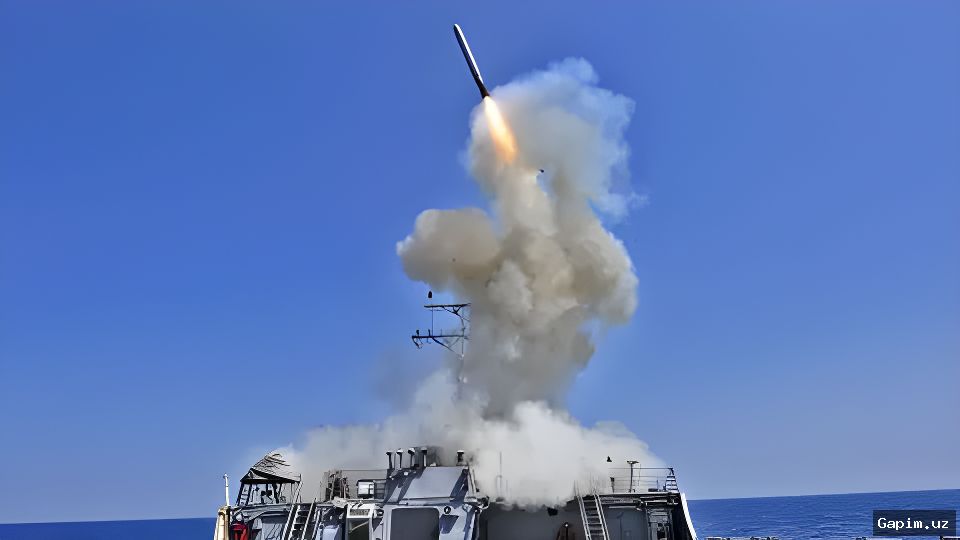
German Defense Minister Boris Pistorius now faces a significant gap in national defense. The US had planned to station not only Tomahawk cruise missiles but also SM-6 anti-aircraft missiles and hypersonic weapons capable of traveling at multiple times the speed of sound. This arsenal was intended to counterbalance Russia's military capabilities.
Russia has stationed Iskander missiles, which can carry nuclear warheads, in the Kaliningrad exclave, as well as Oreshnik medium-range missiles in Belarus. These weapons can reach Berlin and other parts of Europe, posing a direct threat to German security.
Pistorius is urgently seeking ways to close this gap. Germany's new military strategy aims to equip the Bundeswehr for "deep precision strikes" against targets such as command posts, airfields, logistical hubs, and weapons factories, according to the Defense Ministry.
Security expert Nico Lange wrote on Platform X: "Closing the deterrence gap for good so that we are no longer vulnerable to blackmail by Russian missiles — that can now only be achieved by fast-tracking a program in Germany to produce our own ground-based cruise missiles, independent of the US." However, no decision has been made on locating production in Germany.
Pistorius plans to discuss purchasing Tomahawk missiles during a trip to Washington at the end of May. He told ZDF: "We submitted an official request to the Americans a year and a half ago to import Tomahawk missiles. We are still awaiting a response. But to be honest, given the current state of the world, I don't have much hope in that regard."
Another option to partially fill the gap is long-range drones, which are cheaper to produce than cruise missiles. Germany plans to collaborate with Ukraine on developing advanced unmanned systems, including deep-strike drones with a range of up to 1,500 kilometers, as announced by Pistorius during his visit to Kyiv on May 11, 2026.
Source: www.dw.com