Many Bosnian Muslim women want to attend Friday prayers at mosques and play a greater role in decision-making within the official structures of the Islamic Community. Traditionally, Friday prayers are attended mainly by men, but an increasing number of devout women also wish to go to the mosque.
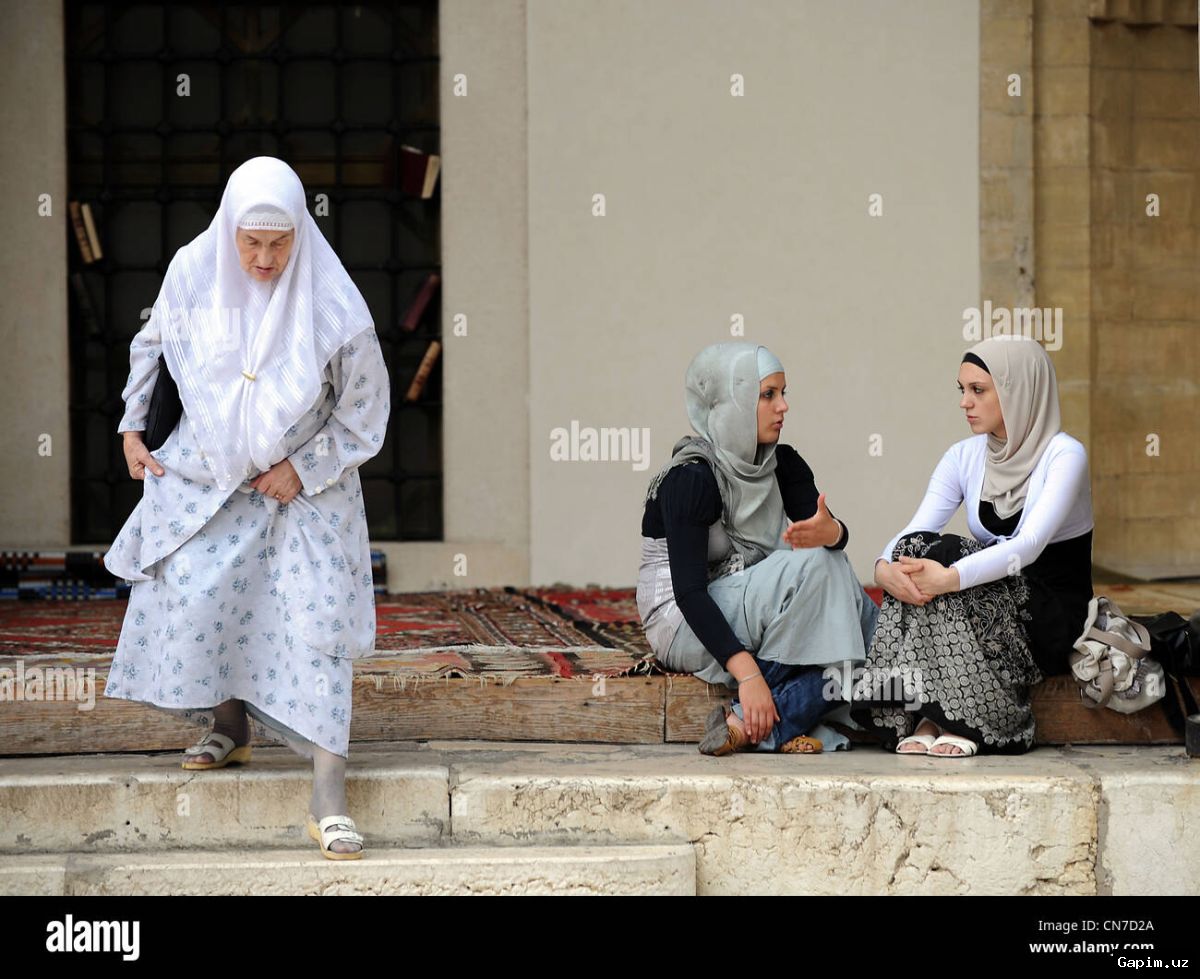
Bosnia and Herzegovina is a secular state where men and women are equal before the law. In recent decades, the state has made significant efforts to eliminate gender-based discrimination and protect women from violence. However, in religious communities—whether Muslim, Orthodox, or Catholic—social and cultural norms continue to hinder equality.
Bosnian sociologist Dermana Kuric said that "Muslim feminists are fighting for women's rights within an Islamic framework." They take an active role in society without openly challenging misogynistic interpretations of the Quran. University-educated Muslim women are consciously engaging with traditional Islamic scholarship, which has sought to confine women to a subordinate role.
Gender studies scholar Zilka Spahic-Siljak founded the Feminism and Religion Online School in 2021. In 2023, she took part in a campaign against domestic violence, criticizing Muslim scholars who legitimized violence by husbands against wives by citing Surah an-Nisa 4:34. Influential imam Senaid Zajimovic took up her arguments and issued a theological statement emphasizing that the Quran must not be used to justify male dominance and violence against women.
In April 2026, the Islamic Community's council for religious affairs in Zenica encouraged women to attend Friday prayers at all mosques in the district. Two mosques in Sarajevo also explicitly welcome women, who pray in a separate room or on a balcony.
There are still no female imams in Bosnia, though they exist in France and the US. No women sit in the Riyaset, the highest decision-making body, or on the Council of Muftis. Only 11 of 87 representatives in the Islamic Community's parliament are women. However, the current Grand Mufti, Husein Kavazovic, has established a dedicated department for the advancement of women, and female Islamic theologians now have career prospects.
Source: www.dw.com