Hezbollah has significantly increased its use of small first-person view (FPV) drones to attack Israel, including systems controlled via fiber-optic cables to evade sophisticated defenses, according to BBC Verify analysis.
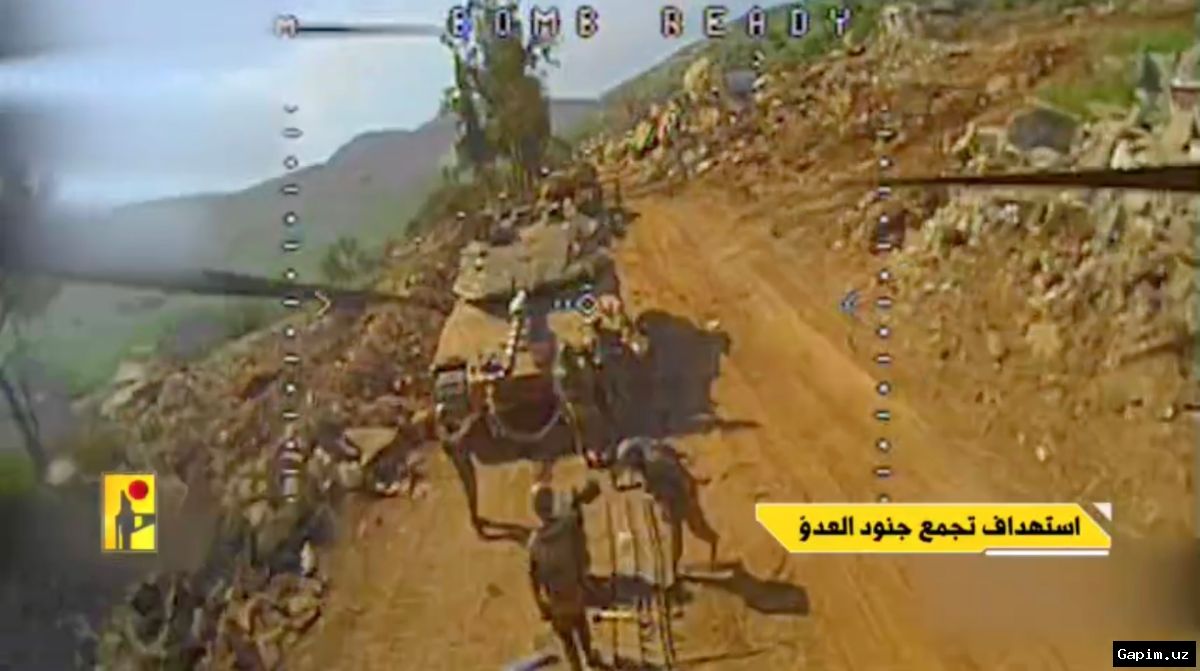
BBC Verify has geolocated 35 videos shared by the Lebanese armed group since March 26 showing strikes on Israeli soldiers, armored vehicles, and air defense systems in southern Lebanon and northern Israel.
Experts told BBC Verify that the Israel Defense Forces (IDF) have "so far been unable to develop any effective countermeasures" as the small drones can easily bypass detection systems.
The drones can be assembled from commercially available and 3D-printed components, costing $300-$500 each, while destroying high-value targets worth far more.
The use of cheap FPV drones became widespread during the Russia-Ukraine war and has transformed modern warfare.
Israeli media reports indicate four IDF soldiers and one civilian have been killed in FPV strikes, with dozens more injured. The IDF told BBC Verify it recognizes the drone threat and is investing "significant resources" in improving defenses.
Military analyst Hisham Jaber said FPV drones are "undetectable by radar" and Hezbollah has "hundreds" at its disposal, used to disable armored vehicles including tanks.
BBC Verify found nearly 100 apparent FPV attack videos on Hezbollah's Telegram channel since March 26, with 35 verified. One video shows at least four FPV drones attacking an Israeli border outpost near Kiryat Shmona, damaging or destroying several military vehicles.
Many drones are flown using fiber-optic cable connections, making them difficult to intercept with Israeli electronic countermeasures. Dr. Andreas Krieg from King's College London said this renders Israel's detection and jamming capabilities "largely irrelevant."
Experts note the psychological impact on Israeli troops, forcing them to move cautiously, harden positions, and use physical protective measures like nets and cages.
The recent escalation began on March 2, two days after US and Israeli airstrikes in Iran. Hezbollah fired rockets into Israel, which responded with airstrikes and a ground invasion of southern Lebanon.
Lebanon's health ministry says at least 2,896 people have been killed, including over 400 since a US-brokered ceasefire in April. Over one million people have been displaced in Lebanon.
Source: www.bbc.com