A recent video showing an explosive-laden drone striking an Israeli Iron Dome battery couldn't have been more symbolic: Israel's famous air-defense system, which cost billions of euros, looked powerless against a small aircraft that cost a few hundred euros. While the video's authenticity has not yet been verified, experts believe it is genuine.
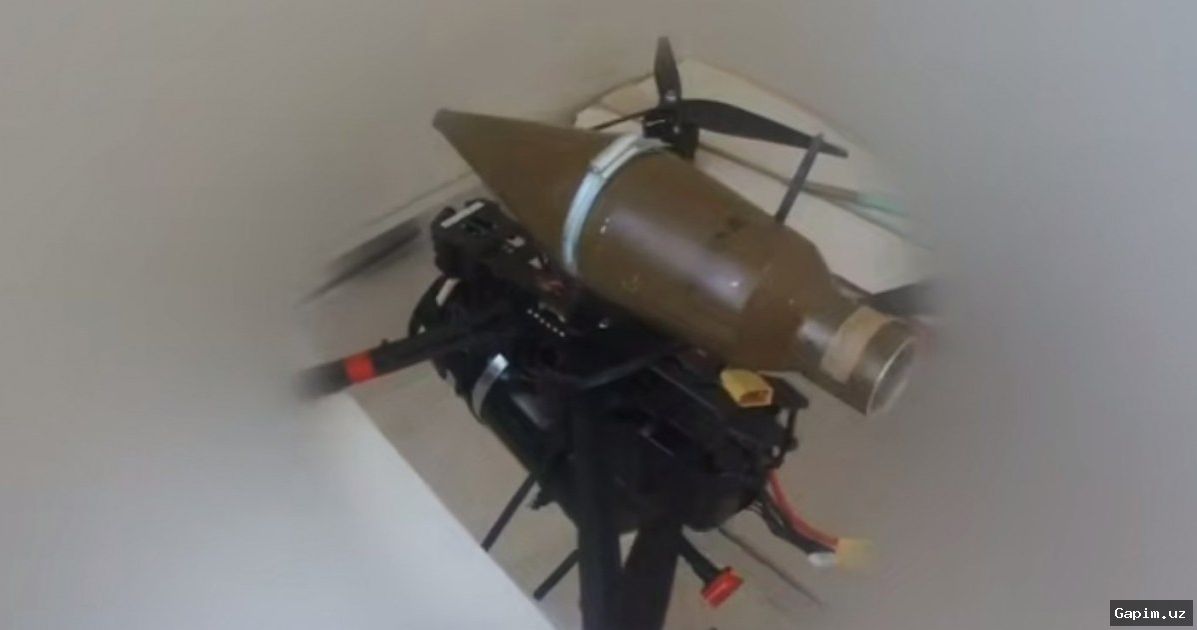
The footage was published about a week ago by Hezbollah, a Lebanon-based pro-Iranian militia, which Germany, the US and several Sunni Arab states have classified as a terrorist organization. The drone strike, if genuine, would mark a propaganda victory for Hezbollah and reveal a significant vulnerability in Israel's military capabilities.
Since March, Hezbollah has increasingly used FPV (first-person view) drones to attack Israel, which provide pilots with a real-time image of their targets. Several Israeli soldiers have been killed in such strikes, and many more injured. What concerns Israeli military experts is that growing numbers of these drones are not controlled by radio signals but via fiber-optic cables, unspooled from a coil. This means locating and jamming their communications has become virtually impossible with traditional electronic warfare methods.
Since 2024, Ukraine and Russia have used fiber-optic drones on a massive scale in their war. Both sides have resorted to improvised countermeasures, like installing protective nets, cutting drone cables or shooting them down with shotguns. Yet both nations still have not found a way to detect these aerial units.
In view of these battlefield developments, many observers are surprised that Israel's military does not appear to be better prepared against drones. "Armies and defense forces that were preparing themselves for major wars are facing new challenges that they haven't been prepared for," said Neri Zin, managing director of Israeli armaments startup Axon Vision. Zin added that large military forces can be slow to adapt, leaving them vulnerable, telling DW that "a battle tank that costs tens of millions of dollars can suddenly be defeated by $400 or even less by a Chinese FPV drone that you can buy on Alibaba."
Yevgen Korniychuk, Ukraine's ambassador to Israel, is surprised that Israel is not looking to learn from Ukraine's experience. "We don't see much interest or appetite from the Israeli leadership in this area," the diplomat told Israeli news portal Ynet News on May 11. "I don't want to speculate about the reasons for that. I often hear frustration about the fact that Israel is missing an opportunity to save more lives of its soldiers."
When asked about the situation, an IDF spokesperson told DW that Israel was closely monitoring global theaters of war around the world, saying the Israeli armed forces "are at the forefront of the race to develop tools to counter the threat." Meanwhile, Israeli Prime Minister Benjamin Netanyahu finds himself under growing pressure to act, recently telling Israeli media that he had ordered the "establishment of a special drone threat project." Yet Netanyahu also asked the public for patience, saying "this will take time."
Various technical countermeasures are being discussed. They range from tools to visually and acoustically detect flying objects, to deploying microwave and laser technology to destroy drone electronics — as well as the use of artificial intelligence. "You need a simple solution and you need it now," said drone expert Neri Zin. "You cannot wait years to develop it."
Zin's startup is already working on solutions to fend off fiber-optic drones, which focus on vehicle-mounted systems primarily intended to protect smaller units. The idea is to record the surroundings using visual and thermal cameras. This data is immediately analyzed by specially trained AI systems, which then send target information to weapon systems. Zin said humans are still part of this decision-making process. Yet he also said that in particularly hostile environments, autonomous action may be authorized for a certain time period. Zin said his company already has customers in various countries, including Europe. He added that at the end of the day, drone warfare is always about economics. Anti-drone defenses, he explained, must be inexpensive to avoid complete overkill.
Source: www.dw.com