Tens of thousands of people, led by university students, rallied in the Serbian capital Belgrade on Saturday to protest against the government and call for early elections. The demonstrations, initially sparked by a deadly railway station collapse in Novi Sad in November 2024 that killed 16 people, have grown into a broader anti-corruption movement.
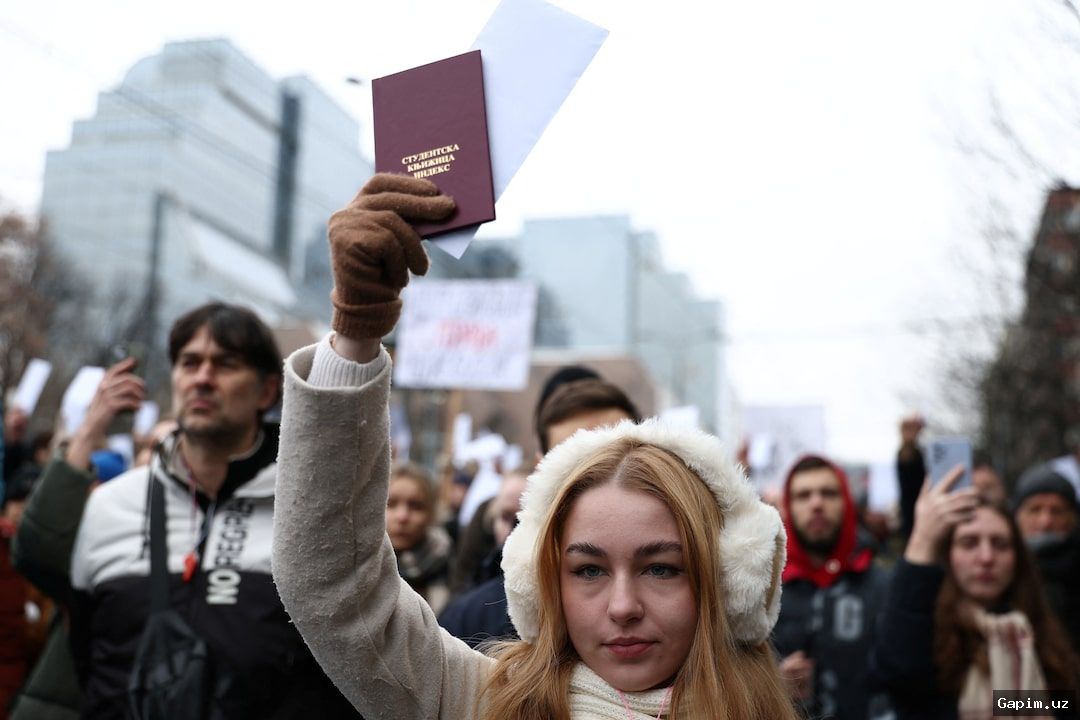
The Novi Sad disaster prompted demands for a transparent investigation, forcing then-Prime Minister Milos Vucevic to resign. President Aleksandar Vucic has pushed back hard against protesters, but the student-led movement has snowballed into a campaign to force early elections.
Vucic said this week that a ballot could be held between September and November this year. Protesters streamed into Slavija Square from several directions, many carrying banners and wearing T-shirts with the “Students win” motto.
Protester Maja Milas Markovic said students “managed to gather us here with their youth and wonderful energy; I really believe that we have the right to live normally.” Serbia’s state railway company cancelled all trains to and from Belgrade on Saturday, apparently to prevent people from other towns from joining.
In the evening, sporadic clashes broke out between protesters and police near the presidency building and outside a park where Vucic’s supporters have been camping since March last year. Police fired tear gas and stun grenades, pushing protesters back. Protesters set fire to bins filled with rubbish.
Journalist Tetyana Kekic told Al Jazeera the protests have “huge support from the public, and that’s because they’re an all-encompassing movement against the government.” However, she noted the challenge is that protesters lack a “clear political platform or policies” and “do not have a leader or a personality which could really challenge the president.”
The Council of Europe commissioner for human rights, Michael O’Flaherty, criticised Serbia’s government in a report this week and said he would monitor the situation closely. Serbia formally seeks EU membership but maintains close ties with Russia and China. The EU’s top enlargement official warned last month that democratic backsliding under Vucic could cost the country about €1.5 billion in EU funding.
Students now plan to challenge Vucic in approaching elections, hoping to oust the right-wing populist government. Vucic and pro-government media have branded critics as “terrorists” and foreign agents, ramping up political polarisation.
Source: www.aljazeera.com