Tech billionaire Elon Musk’s SpaceX is preparing to list its shares on the US-based Nasdaq in what will be the most hotly anticipated initial public offering (IPO) in years. Founded in 2002 by Musk, now the world’s richest man, SpaceX is best known for designing and launching rockets, spacecraft and reusable launch vehicles.
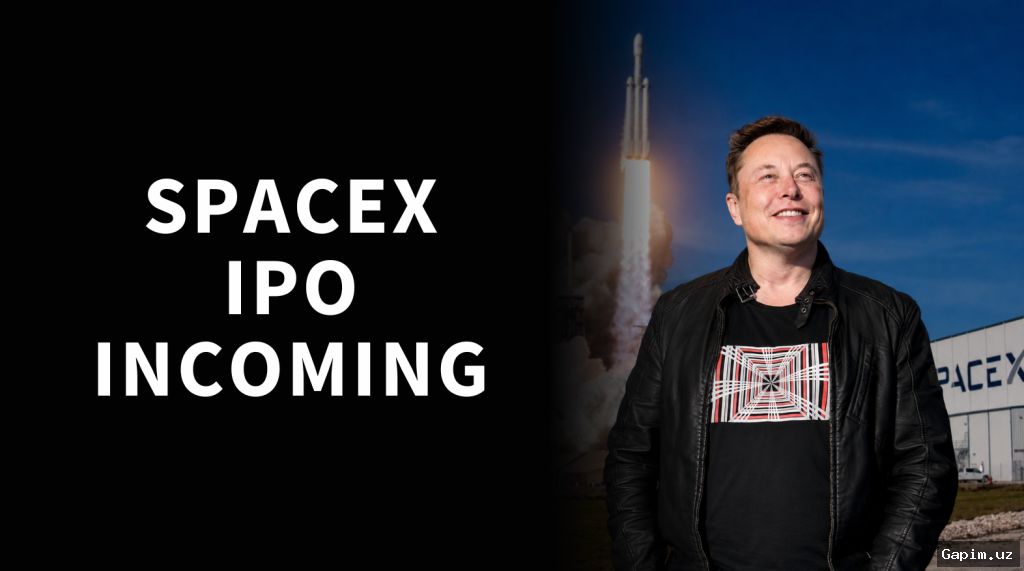
Since 2006, the company has partnered with NASA to deliver cargo and crew to the International Space Station (ISS). The Texas-based company has also launched rockets, satellites and spacecraft for various private companies. As well as its aerospace business, SpaceX provides internet services and artificial intelligence platforms through its dedicated divisions, Starlink and xAI.
An IPO marks the first time a private company sells its shares to the public, granting them partial ownership. SpaceX will be listed under “SPCX” on the Nasdaq, which is home to such corporate behemoths as Nvidia, Apple and Microsoft. While SpaceX has not officially confirmed the date of its public debut, multiple media reports have said it is planning to do so as early as June.
Following the IPO, members of the public will be able to buy and sell SpaceX shares on the stock exchange. Shareholders will also obtain voting rights at the company’s annual general meeting. It is widely expected to be the largest IPO in history, and is likely to make Musk the world’s first trillionaire. The firm is aiming to raise upwards of $80bn for a market valuation of between $1.75 trillion and $2 trillion, according to media reports.
Twenty-three financial institutions, including Goldman Sachs, Morgan Stanley, Citigroup, JP Morgan and BofA Securities, are underwriting the deal. The IPO will also be closely watched around the world as a defining moment for the nascent private space industry, said Gary Ng, senior economist for Asia Pacific at French investment bank Natixis.
“The SpaceX IPO is a landmark deal for the uncharted space economy,” Ng told Al Jazeera. “If the firm is successful in its current work with reusable rockets, it can lower costs and open opportunities for entirely new supply chains,” he said. “But of course, even though SpaceX is leading its industry, it is about whether the tech breakthrough can be sustained and if the products and services can be commercialised,” Ng added.
If all goes as planned, the SpaceX IPO could raise more than three times the record-breaking $25.6bn raised by Saudi Aramco in 2019. The SpaceX IPO differs from those of other companies in the level of control it will grant its head. Post-IPO, Musk will retain 85 percent of the company’s voting rights due to a dual share structure that grants some shares 10 votes instead of the customary one.
The company’s prospectus offers a sweeping vision that aims to “make life multiplanetary” and build a human colony on Mars. While Musk has long spoken of his goal of achieving a “self-sustaining” city on Mars, his prospectus also sets out his ambition to use SpaceX to understand the “true nature of the universe” and extend “the light of consciousness to the stars”.
The SEC filing also gave would-be investors the chance to finally look under the hood of SpaceX to see how the company is faring financially. SpaceX achieved revenue of $18.6bn in 2025, up from $14bn the previous year, but suffered a net loss of $4.9bn. In the first quarter of this year, the company reported $4.7bn in revenue but made a net loss of $4.3bn. Analysts have linked some of the losses to SpaceX’s decision to acquire xAI in 2025. The company’s prospectus alluded to some of these challenges, noting that “acquisitions, divestitures, or other strategic transactions we pursue may not achieve the anticipated benefits”.
Source: www.aljazeera.com