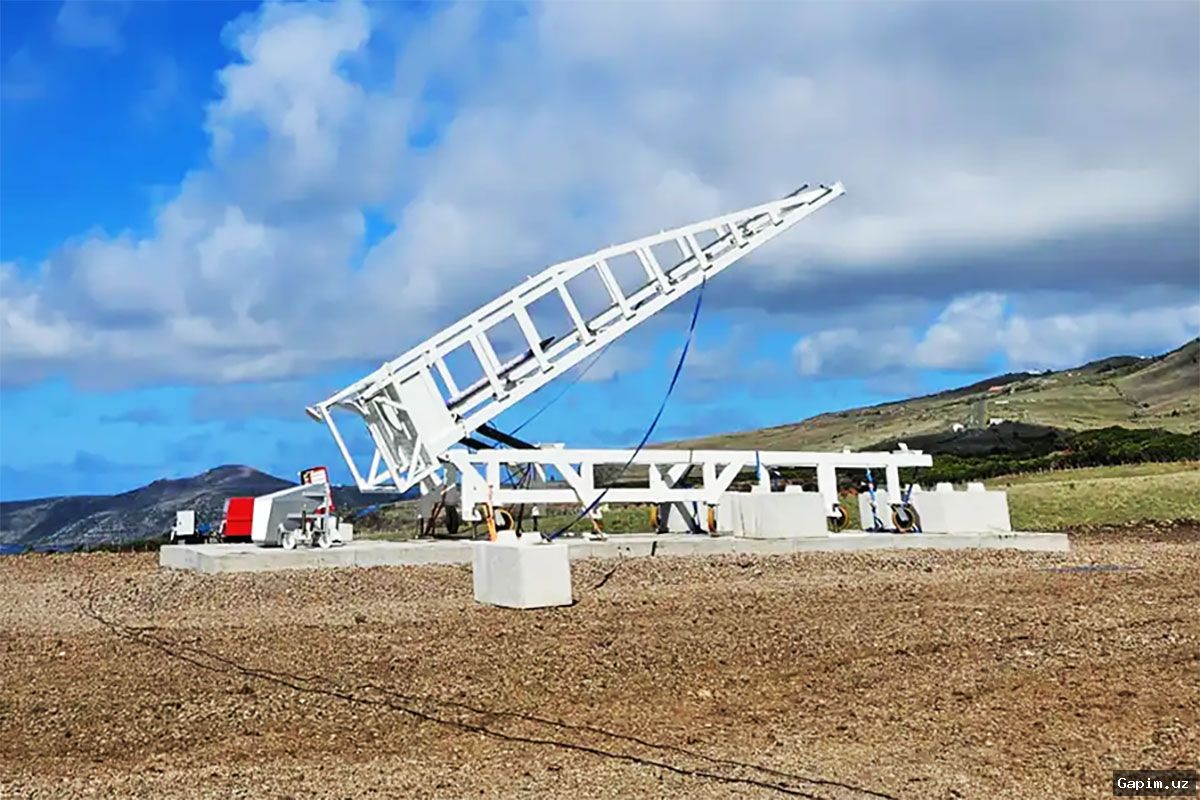
Portugal is constructing a spaceport on the small island of Santa Maria in the Azores archipelago in the Atlantic Ocean. The project, developed with EU cooperation, aims to boost the country's space industry.
Portuguese Space Agency President Ricardo Conde told DW that Portugal has modernized significantly over the past 20 years. He noted that universities produce top engineers, and about 80 companies employ 2,000 workers in the space sector, generating €200 million in turnover last year.
The spaceport is located near an old airstrip built by the US during World War II. Ivo Vieira of AED Cluster Portugal told DW that the European Space Rider spaceplane is scheduled to land there in 2028, and a rocket launch carrying a South Korean satellite is planned for 2030.
Bruno Carvalho of spaceport operator ASC explained that the facility is not a rival to Cape Canaveral but a complement to Europe's Kourou spaceport in French Guiana. It will serve as a cost-effective launch site for small rockets and satellites, strategically important for the EU.
Only 35 people will work at the spaceport, keeping costs low. Carvalho hopes to leverage local resources and boost the island's economy. The first spacecraft landing is expected later this year.
Marta Oliveira, co-founder of German firm ATMOS Space Cargo, told DW that Portuguese authorities have approved the first EU splashdown for the Phoenix 2.1 transport capsule. She describes her venture as "FedEx in space."
Portugal is also developing satellite manufacturing. Three centers—CEiiA consortium in Porto, Open Cosmos at the University of Coimbra, and a Lisbon-based center working with the military—are building small satellites for communications, Earth and ocean observation, and wildfire fighting.
CEiiA aims to develop high-resolution satellite industry. Representative Andre Dias said they can produce four civilian satellites weighing up to 500 kg per year. Expanding capacity could lead to more international contracts.
Ricardo Conde plans to have 30 satellites in orbit by 2030, some in collaboration with Spain. The military sector is also becoming increasingly important.
Source: www.dw.com