Taiwan plans to sharply increase its arsenal of anti-ship missiles to more than 1,800 units by early 2029 to enhance its ability to counter the growing threat of a blockade or invasion from China.
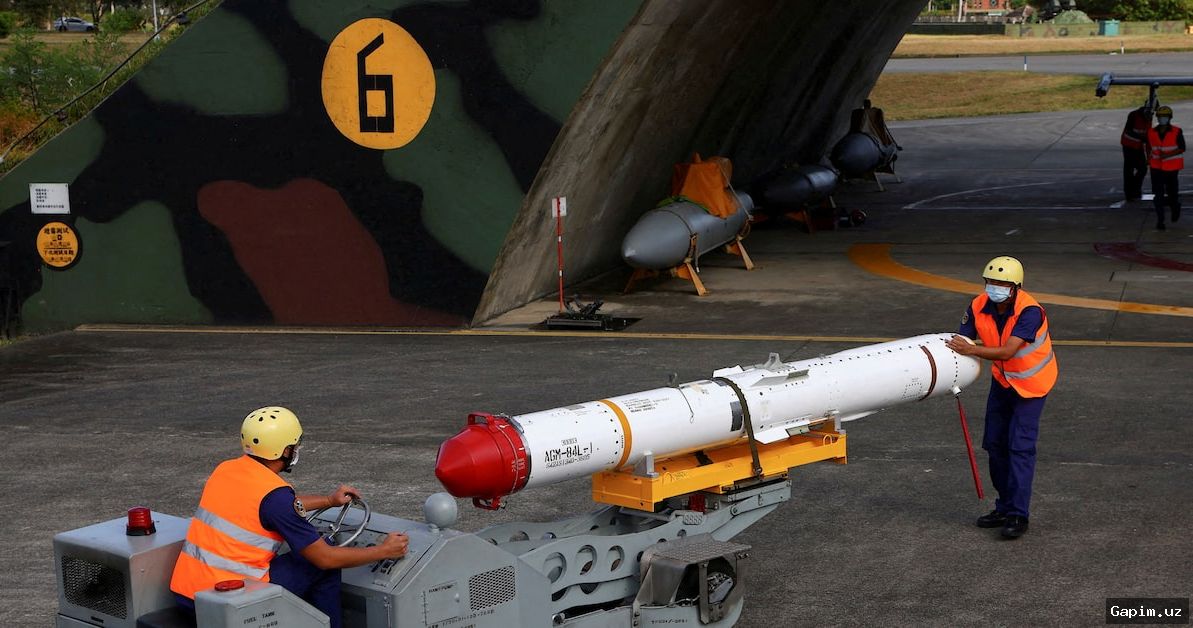
According to Reuters, based on arms trade data, US documents, and interviews with officials, the expansion is part of the island's shift to a so-called asymmetric strategy.
The approach is designed to offset Beijing's overwhelming firepower advantage with a large number of relatively affordable but deadly weapons, including missiles and drone swarms, Taiwanese military planners believe.
As part of these defense buildup efforts, Taipei also expects approval from US President Donald Trump for a new arms package worth up to $25 billion and a parallel $14 billion package, which Trump recently discussed with Chinese President Xi Jinping in Beijing. Xi reportedly warned the US leader that missteps on Taiwan could lead to conflict between the two countries.
The backbone of Taiwan's anti-ship capability will be US-supplied Harpoon missiles and domestically produced Hsiung Feng missiles. According to official documents and Reuters sources, by early 2029 Taipei aims to have 850 Harpoon missiles and around 1,000 or more indigenous Hsiung Feng II and Hsiung Feng III cruise missiles.
Ou Si-fu, deputy executive director for research at Taiwan's National Defense and Security Research Institute, told Reuters that such a quantity of weapons would create a "kill zone" in the Taiwan Strait and inflict massive losses on an invasion fleet, stressing that the island's goal is not to destroy every Chinese ship but to stop their landing.
Taiwan is drawing on the experience of Ukraine in the Black Sea and Iran in the Strait of Hormuz, demonstrating how a weaker side can successfully counter a stronger opponent using dispersed mobile missile launchers and drones.
To coordinate this growing firepower, Taiwan's Ministry of National Defense will form a new Coastal Combat Command from July 1, integrating coastal radars, anti-ship missiles, and drones into a single structure designed to deter China's onslaught until allies potentially arrive.
Source: podrobno.uz