Anti-immigration protests have erupted in Belfast, Northern Ireland, following a knife attack allegedly perpetrated by a Sudanese refugee. Hundreds of masked protesters blocked roads and torched cars and buildings on Tuesday evening, prompting evacuations of residents.
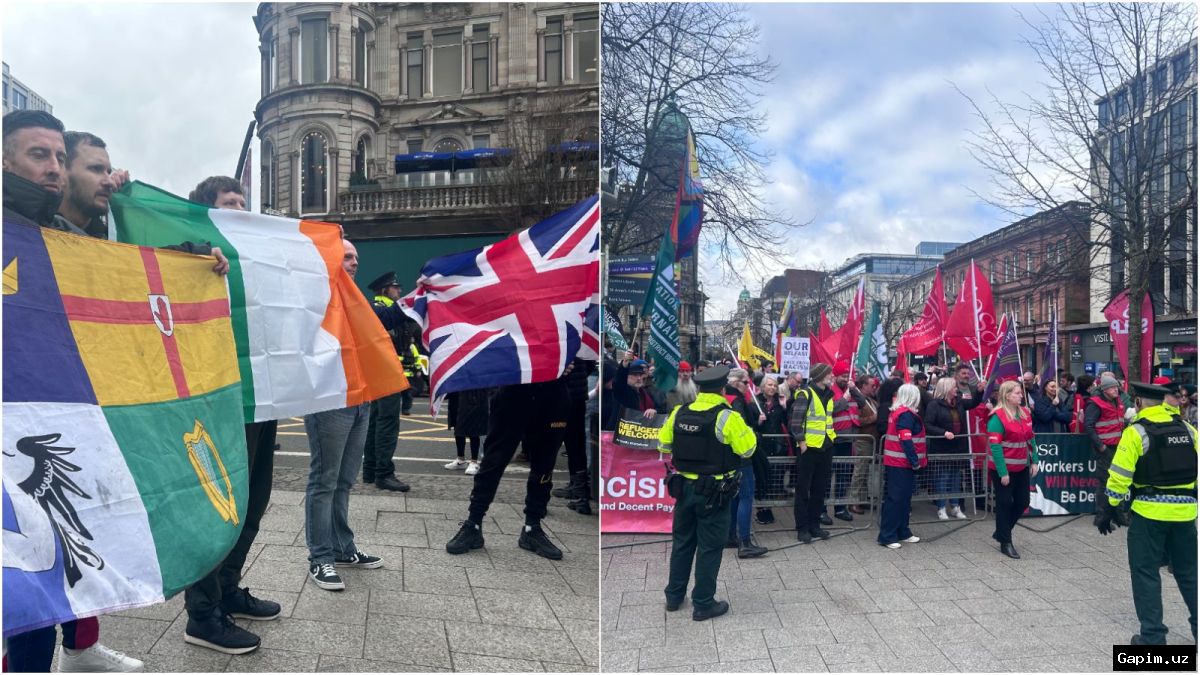
Michelle O’Neill, Northern Ireland’s first minister, described the riots as “nothing less than disgusting cowardice.” “Racism, intimidation and violence are wrong wherever they occur,” she said on X.
The 30-year-old suspect, whose name has not been released, was charged with attempted murder, possession of a bladed weapon in a public place, and making threats to kill after he repeatedly slashed a man in his 40s in the head and neck on Monday.
Northern Ireland police chief Jon Boutcher said the suspect arrived in the UK in 2023 via Paris and Dublin. The UK Home Office confirmed he is a Sudanese refugee with a legal residence permit valid until 2028.
The violence comes amid heightened tensions across Britain, with populist parties accusing asylum policy of allowing dangerous individuals into the country. Last week, clashes broke out in Southampton, southern England, over police handling of the murder of a young white student stabbed to death by a British Sikh man.
Immigration has become a hot-button issue in Britain, fueling the rise of the hard-right Reform UK party in recent municipal polls. Last year, anti-immigrant rioting occurred in Northern Ireland over an alleged sexual assault involving two teenagers described as being of foreign origin.
In July 2024, the killing of three young girls near Liverpool by a British 17-year-old son of Rwandan refugees sparked riots across the UK, including Northern Ireland. The teenager pleaded guilty to murder and was sentenced to life in prison with a minimum of 52 years.
Amnesty International described the past year as “a shameful year of hate” in Northern Ireland. Police recorded 2,048 racist incidents and 1,280 race hate crimes, among the highest levels since records began in 2004. “Behind every shocking statistic, there is a real person or family left living in fear,” said Patrick Corrigan, Amnesty’s Northern Ireland director.
Michael Kerr, professor of conflict studies at King’s College London, noted that while the number of rioters is relatively small, the consequences could be severe. “A small but determined far-right minority can create fear very quickly, especially when targeting tiny, vulnerable communities already at risk,” he told Al Jazeera.
Anti-immigration figures, including Reform party leader Nigel Farage and Restore Britain leader Rupert Lowe, have demanded details about the attacker’s immigration status. Democratic Unionist Party leader Gavin Robinson urged authorities to curb “uncontrolled immigration.”
Police urged the public not to share graphic video of the stabbing, but numerous social media accounts linked to “patriots” circulated the footage, calling for protests against mass immigration. American tech billionaire Elon Musk retweeted a post by anti-immigration activist Tommy Robinson, saying: “Only by protesting REPEATEDLY and LOUDLY will there be any change!!”
Northern Ireland Justice Minister Naomi Long accused rioters of “weaponising genuine hurt, concern and anger” and blamed far-right online agitators for stoking racial tension. “There have been bad faith actors in the UK and further afield who probably would’ve struggled before yesterday to find Belfast on a map … who were deliberately encouraging people to take to the streets,” she told BBC Breakfast.
Evi Chatzipanagiotidou, a lecturer in anthropology at Queen’s University Belfast, linked Tuesday’s violence to the Troubles, Northern Ireland’s sectarian conflict. She noted that riots occur in areas affected by long-term economic deprivation, unemployment, and marginalization. “Local historical and ideological processes converge with global far-right politics,” she said.
Kerr also pointed to political divisions within the power-sharing executive as a further danger. Without political unity, “the far right can use these incidents to drive a wedge between parties, communities and the police,” he warned. “If this continues, it will become a major policing challenge in Northern Ireland and could feed into wider unrest across the UK.”
Source: www.aljazeera.com