As Pope Leo XIV's visit to Spain draws to a close, the party that might have been expected to welcome a papal visit most enthusiastically is instead the most uncomfortable. Vox, the far-right party led by Santiago Abascal, treats Catholicism as a foundational marker of Spanish identity. But Leo's visit exposed the tension between that claim and the Church's own teaching on migrants, war and human dignity.
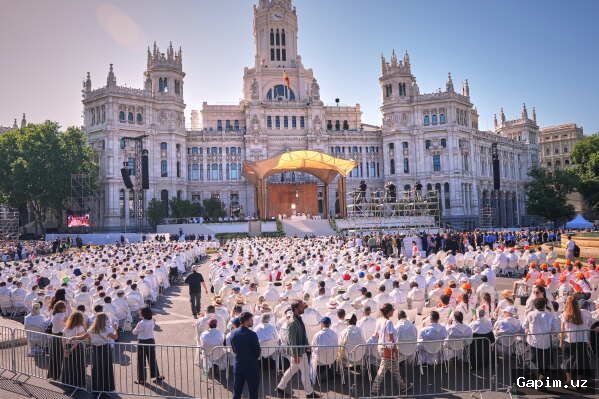
The pope's speech to the Spanish parliament on Monday did not sound like an endorsement of Abascal's politics. Reaching back to the School of Salamanca, the 16th-century movement whose theologians defended the rights and dignity of the Indigenous peoples of the Americas against the logic of conquest, Leo summoned a Catholic tradition that measured power by its treatment of the vulnerable. In a country now convulsed by the politics of immigration, no one could miss what kind of politics that history was meant to indict.
Vox embodies exactly the politics Leo was indicting: it has called for mass deportations, rebranded as "remigration", including of undocumented migrants, immigrants' children, some born in Spain, and those Abascal accuses of living off public benefits or refusing to adapt to Spain's customs. Pope Leo visited the island of Gran Canaria to speak to those who have risked their lives on the Atlantic migration route from Africa to Europe. At least 1,214 of them died or disappeared en route to the Canary Islands last year, according to the International Organization for Migration, and NGOs put the toll far higher.
To understand the context of Pope Leo's visit, it helps to remember that Spain is not the Catholic country it was a generation ago. The state pollster CIS recorded about 68 percent of Spaniards identifying as Catholic a decade ago; by the spring of 2025, that share had fallen to 52.8 percent, with only 17.3 percent describing themselves as practising. And yet Spain is also seeing a surprising revival of Catholic identity among Generation Z and young millennials. According to the Fundacion SM "Jovenes Espanoles 2026" survey, the share of young Spaniards identifying as Catholic has jumped from 31.6 percent to roughly 45 percent in five years.
Pope Leo appeared to address this new landscape directly. At an open-air mass last Sunday in Madrid, attended by more than a million people, the American pontiff drew a line between Christian values and far-right politics when he told the crowd that "no one can kneel before the Lord and despise their brother". Abascal, however, said after the pope's address that "we must distinguish between speeches and practical policy. These are the words expected of a religious leader."
All this could jeopardise next year's general election. Vox is rebuilding its regional alliances with the conservative People's Party (PP) and hopes to carry that partnership into national power if the PP, as forecast, wins. As the PP continues its alliance with Vox, it might also begin to lose part of the Catholic vote it relied on for so long.
Pope Leo and Prime Minister Sanchez appear aligned on both immigration and the US-Israel war on Iran. But if the far right is unhappy with this visit, the Socialist Party should not assume it has gained an ally in the American pope. The Catholic Church plays a longer and more cautious game than party politicians. The Church's defence of migrants is bound up not only with principle, but with its own future. However, on most ethical issues, such as family and abortion, the Catholic Church is still closer to Vox than to the Socialist Party.
Source: www.aljazeera.com