Deep in the Karakoram mountain range, where the borders of India, Pakistan and China converge, lies the Siachen glacier — a frozen river of over one trillion cubic feet of pristine ice, stretching more than 70km. Since April 1984, it has been a battlefield between India and Pakistan.
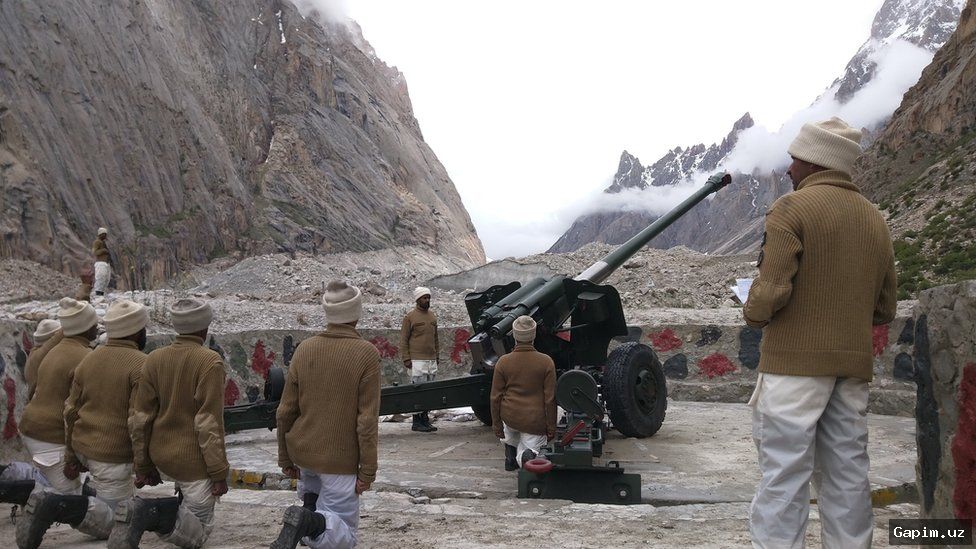
In May 2025, after an attack in Pahalgam killed 26 civilians, India and Pakistan traded missiles and drones for four days in the worst military confrontation since the 1999 Kargil war. Yet on the Saltoro Ridge, where both armies have faced each other since 1984, not a shot was fired.
On February 3, 2016, ten Indian soldiers from the 19 Madras Battalion returned to their camp after a midnight patrol. At dawn, a massive ice wall 800m wide and 182m high collapsed, burying their post. Rescuers found 33-year-old Lance Naik Hanamanthappa Koppad alive after five days, but he died three days later.
In April 2012, an avalanche buried a Pakistani army base in the Gayari sector, killing 129 soldiers and 11 civilian contractors. After 16 months of recovery, 131 bodies were found; nine men were never recovered.
Over 2,000 people have died in this conflict since 1984. Fewer than 3% died in actual fighting; the rest were claimed by the mountain. Temperatures plunge to minus 50°C, average winter snowfall approaches 10 meters, and blizzards can reach 300 km/h.
India's last officially disaggregated estimate for Siachen expenditure stood at $499 million in 2015-16. Pakistan's estimated annual cost is between $50-60 million. Both countries, with large populations below the poverty line, continue to justify this war.
About 900 kg of human waste is dumped into the glacier's crevasses daily. Heavy artillery containing toxic metals contaminates meltwater, which feeds the Nubra and Shyok rivers, part of the Indus river system — another point of tension.
The glacier's origins of conflict lie in the 1949 Karachi Agreement, which left the ceasefire line undefined beyond map grid point NJ 9842, stating it should continue "thence north to the glaciers." This ambiguity led to the world's highest war in 1984.
In 1978, Indian Colonel Narendra "Bull" Kumar discovered a map showing the Line of Control allegedly altered by Pakistan. The Indian Army subsequently launched expeditions, and on April 13, 1984, launched Operation Meghdoot, air-dropping soldiers onto key passes.
Today, the two armies are positioned not on the glacier itself but on various points of the Saltoro Ridge. The glacier has shown unusual resilience due to the "Karakoram Anomaly," but recent studies suggest net mass loss since 2018. The war over a disappearing asset continues.
Source: www.aljazeera.com