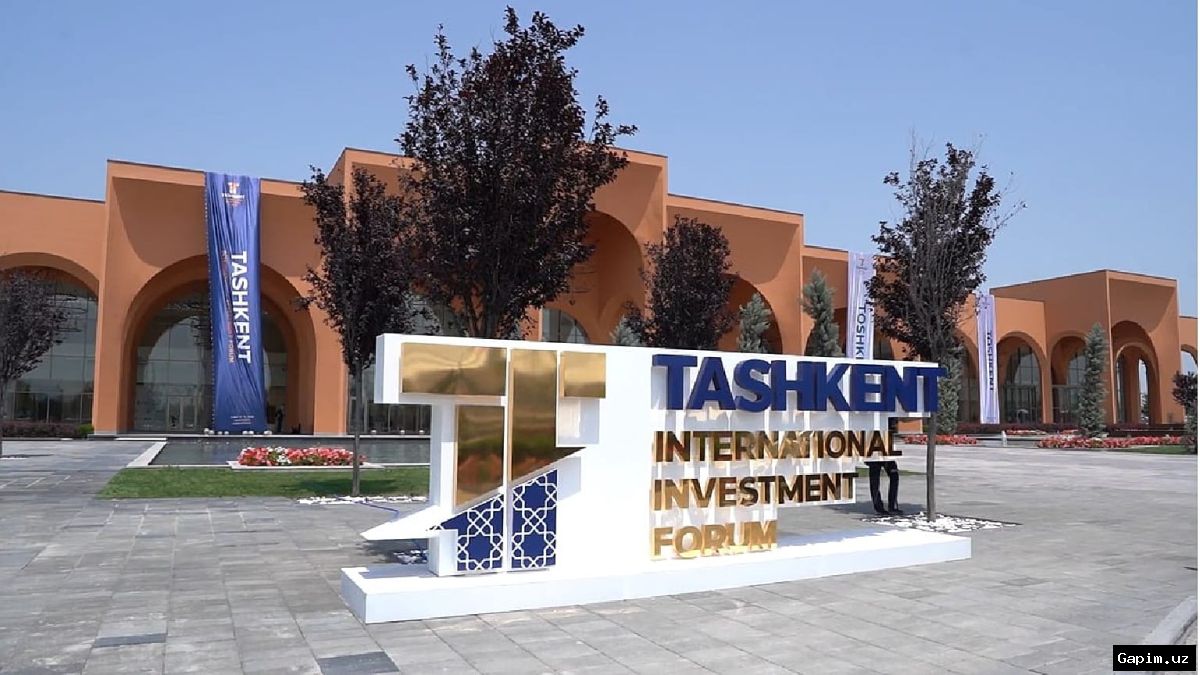
As global economic uncertainty and geopolitical tensions intensify, Central Asia is increasingly viewed by international investors as a new frontier for capital deployment. Some experts call the region an 'island of stability,' while others highlight its gradual transformation from a transit corridor into an independent growth and production hub. Participants at the Tashkent International Investment Forum discussed these trends.
Sachdev Ramakrishna, head of investment firm Marco Polo Ventures, noted that recent years have shown the vulnerability of even the most trusted economies. 'Geopolitical and economic stability is crucial for business. Against this backdrop, Central Asia appears as a relatively stable island of peace,' he said. The expert emphasized that growing interest in the region is driven not only by problems elsewhere but also by internal economic reforms.
Celeste Laporte-Talamon, policy analyst at the OECD Eurasia Division, stated that the region demonstrates sustained economic growth, has a young labor force, and is enhancing integration through trade reforms. She highlighted simplification of cross-border procedures and development of renewable energy as long-term advantages.
Teya Jokhadze, partner at Jokhadze Capital Advisors, stressed that capital does not flow automatically: investors need to be offered ready-made products and quality investment ideas. Shihab Elborai, partner at Strategy& (PwC), argued that investors are attracted not by stability per se but by growth prospects. 'Many think investors seek certainty. Actually, they seek growth. Central Asia offers growth, resources, and a strategic location between major markets,' he said.
However, experts also warned of the region's dependence on external processes. Laporte-Talamon pointed out that Russia's war against Ukraine and tensions around Iran could affect investment flows. Elborai identified uncertainty as the main challenge: 'Investors can manage risks, but they find it difficult to operate in unpredictable conditions.'
Adam Szentpeteri, acting CEO of Ipotekabank (OTP Group), offered an optimistic outlook for Uzbekistan: 'The economy is in good shape, and the government remains committed to reforms. The country's prospects are very good.' Experts listed rule of law, privatization, financial market development, and continued reforms as key conditions for attracting capital.
Forum participants agreed that geopolitical tensions have boosted interest in Central Asia, but the main challenge remains converting this interest into concrete projects. Jokhadze proposed establishing a fund of funds to leverage additional private capital. Elborai added that the region must focus on creating quality projects and deepening economic integration.
Source: www.gazeta.uz