Pakistan's National Disaster Management Authority (NDMA) issued a nationwide alert on Sunday, warning of thunderstorms, heavy rainfall, urban flooding, and an elevated risk of Glacial Lake Outburst Floods (GLOFs) across the country's northern regions over the next 12 to 24 hours.
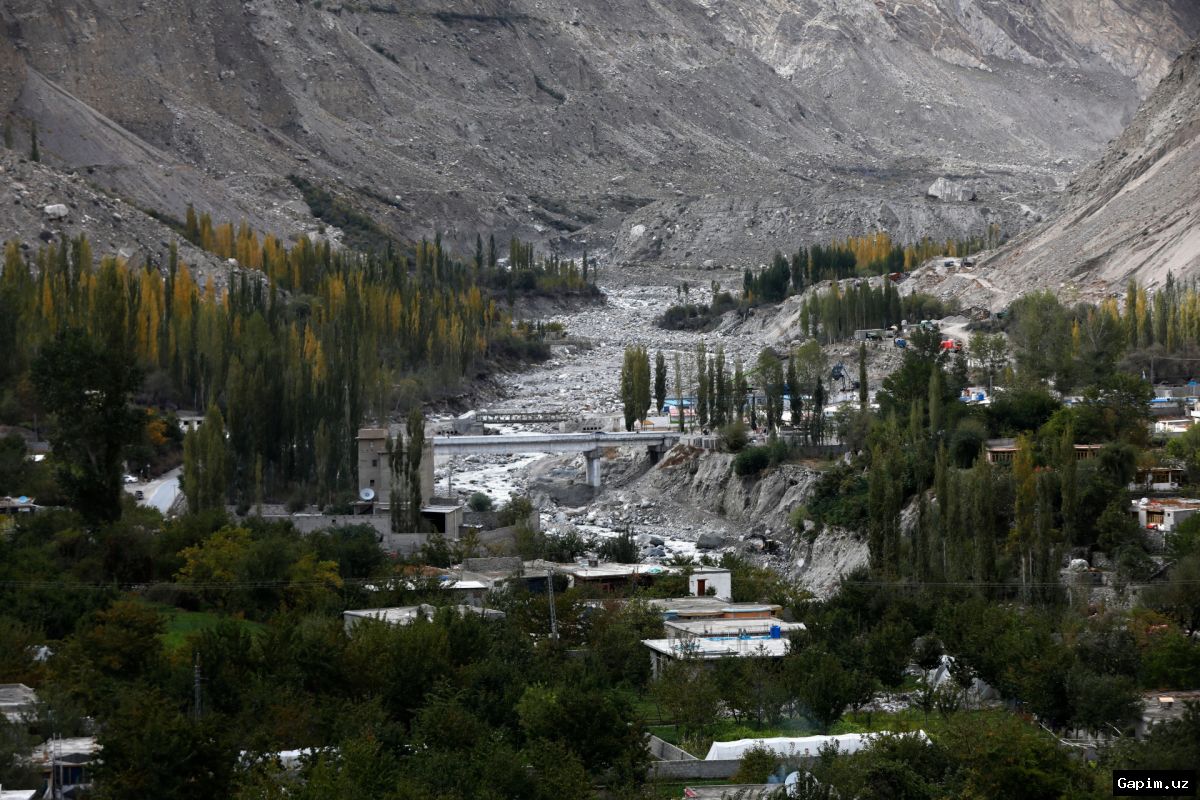
The alert identified Hunza and Skardu in the mountainous Gilgit-Baltistan region and Khyber Pakhtunkhwa province as the most vulnerable areas. Authorities also warned of flooding in the capital Islamabad and other urban areas including Rawalpindi. Provincial and district administrations have been placed on high alert and directed to keep drainage systems clear.
The NDMA advised tourists and travelers to avoid unnecessary travel during heavy rains and to check weather forecasts and road conditions before visiting northern regions, where landslides could close some roads.
The warning comes as Pakistan braces for a likely fourth consecutive year of punishing monsoon, expected to arrive later this month. Last year, monsoon rains killed more than 1,000 people, including 275 children, and displaced three million.
The historic floods in 2022, which submerged nearly a third of the country, killed nearly 1,700 people, displaced more than 30 million, caused $14.8 billion in property damage, and wiped out $15.2 billion from GDP.
Pakistan contributes less than 1% of global emissions yet remains among the five countries most affected by climate change. In Gilgit-Baltistan, temperatures reached a record 48.5°C this year, accelerating glacial melt and swelling lakes across the ecologically sensitive region.
Pakistan is home to some 13,000 glaciers – the most in the world after the polar icecaps. According to the UNDP, melting glaciers have formed more than 3,000 glacial lakes in Gilgit-Baltistan and Khyber Pakhtunkhwa, of which 33 are assessed as vulnerable to hazardous outbursts, with over 7.1 million people at risk.
GLOFs release millions of cubic meters of water and debris within hours, destroying bridges, farms, and entire communities. In 2017, Pakistan launched the GLOF-II project with UNDP, covering 24 valleys. However, Zakir Hussain, director general of the Gilgit-Baltistan Disaster Management Authority, told Al Jazeera that coverage is widely misunderstood: the project covered only 16 valleys, and many of the areas hardest hit in 2025 had no early warning system at all.
After the 2022 floods, a donor conference in Geneva in January 2023 pledged about $11 billion. But according to OCHA, only about $4.5 billion had been delivered by June 2025. Hussain said this shortfall reflects developed countries' failure to shoulder responsibility for carbon emissions.
Hussain added that vulnerability is compounded by a lack of coordination between institutions: “There is no single authoritative source of truth. What one institution accepts, another does not, creating administrative hurdles and breakdowns in response.”
Source: www.aljazeera.com