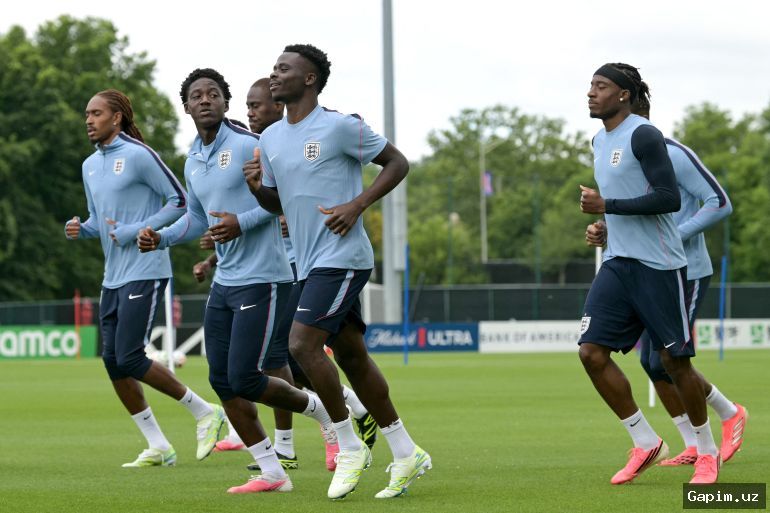
When England faces Ghana, a former British colony, the match carries deep socio-political meaning. Four young players – Kobbie Mainoo, Brandon Thomas-Asante, Jerome Opoku, and Antoine Semenyo – share similar backgrounds: all born in England, shaped by English football, but only Mainoo plays for England, while the others represent Ghana.
Research from the University of Oxford's Migration Observatory reveals that nearly a quarter of the 1,248 players selected for the 2026 World Cup were born in a different country than the one they represent, up from less than 9% in 2006. FIFA's eligibility rule changes have expanded talent pools.
The author recalls his dual allegiance to England and Nigeria, ignited at Wembley in 1994 during an England-Nigeria match. Over the years, both teams have broken his heart, but his loyalty remains.
The author highlights Black British football pioneers like Viv Anderson, Paul Ince, Ian Wright, and others. However, he criticizes the English media's treatment of Black players – celebrating them while making their belonging feel conditional.
African teams are closing the gap at World Cups, with Morocco reaching the semifinals in 2022. More diaspora talents are choosing to represent their ancestral countries. The author sees football as a mirror of society, reflecting the ongoing struggle for the Global South.
Source: www.aljazeera.com