Far-right populists appear to be gaining ground in Latin America, defeating leftist candidates in several recent presidential elections. In Colombia, far-right candidate Abelardo de la Espriella narrowly beat left-wing opponent Ivan Cepeda, focusing his campaign on the nation's security crisis. In Chile, extreme-right candidate Jose Antonio Kast took office in March, promising cuts to education and welfare while offering tax cuts to businesses. In Argentina, right-wing populist Javier Milei, an admirer of US President Donald Trump, has been in power since 2023, betting on austerity to save the economy.
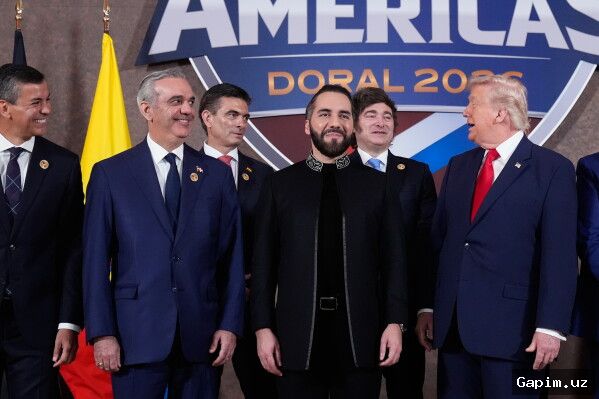
Right-wing, conservative or economic liberal forces now govern Bolivia, Costa Rica, Ecuador, El Salvador, Honduras, Panama, Paraguay and Peru. Brazil, Cuba, Guatemala, Mexico, Nicaragua, Uruguay and Venezuela are run by leftist or far-left governments. Brazil, the region's largest country, will hold elections this fall, pitting incumbent Luiz Inacio Lula da Silva against Flavio Bolsonaro, the far-right son of jailed former president Jair Bolsonaro.
Sabine Kurtenbach, head of the German Institute for Global and Area Studies, attributes recent right-wing victories to three interrelated issues: extreme social inequality, high crime rates, and a lack of rule of law, compounded by incumbents' failure to address them. In Colombia, de la Espriella promised to take on armed guerrillas and drug cartels. Kurtenbach calls this "punitive populism" or the "Bukele model," after El Salvador's President Nayib Bukele, who declared a state of emergency and jailed over 75,000 people, many without trial.
Jonas Wolff, a political science professor at Goethe University Frankfurt, points to security concerns and voter dissatisfaction as drivers of the rightward shift, reversing a decades-long trend. The early 2000s "pink tide" brought left-wing governments to power amid economic growth, but that phase ended with the COVID-19 pandemic, he says.
Political scientist Thomas Kestler from the University of Würzburg describes the shift as a pendulum swing to the right, expecting it to swing back if promised successes fail to materialize. However, if campaign promises are kept—as in El Salvador, where Bukele drastically reduced gang violence—the rightward lunge could cement itself.
Wolff warns that right-wing forces openly question fundamental civil and human rights, seeking to roll back advances by feminist and indigenous movements. The US regime under Donald Trump has aggressively supported right-wing allies in the region, including financial aid to Argentina and vocal support for the Bolsonaro family in Brazil. The US regime has also resorted to measures allegedly violating international law, such as an oil embargo on Cuba and an order to kidnap Venezuela's left-wing leader Nicolas Maduro.
Kurtenbach suggests looking beyond "right" and "left" labels, focusing instead on respect for human rights and the rule of law. "There are governments that recognize autonomy and the role of democratic institutions, and others, whether right or left, that do not," she says.
Source: www.dw.com