The United States announced on Wednesday that it will not renew the trilateral trade agreement covering $1.6 trillion in trade between the US, Mexico, and Canada, just one day before the deal was due for its first joint mandatory review. US Trade Representative Ambassador Jamieson Greer stated that the US would not agree to renew the USMCA 'in its current form.'
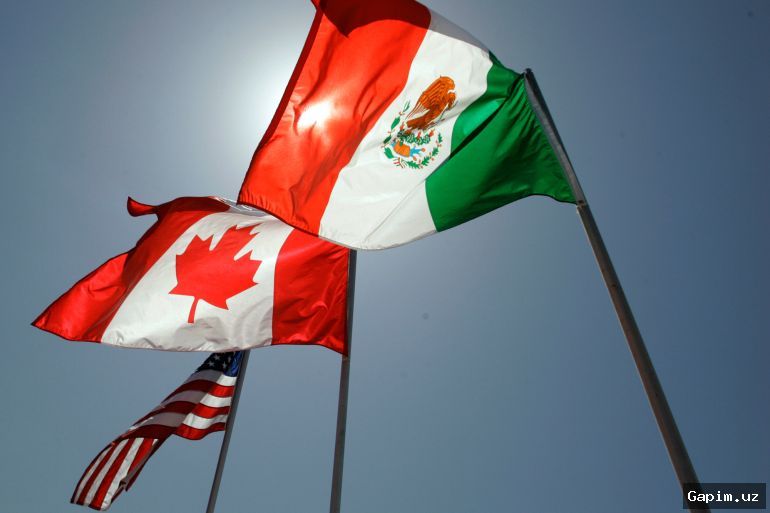
'The United States will continue to engage with Mexico and Canada to address the Agreement’s shortcomings and our trade deficits with these countries. However, the Agreement remains in force pending resolution of these issues or until the Agreement’s termination,' the statement read. The US also plans to meet Mexico the week of July 20 for a third round of bilateral negotiations related to the USMCA review.
The decision follows repeated criticism from US President Donald Trump, who in January called the deal 'irrelevant' and last month said, 'I don’t know that I’m going to renew it.' Trump has signaled openness to negotiations but remains skeptical.
The USMCA came into effect on July 1, 2020, during Trump’s first term, replacing NAFTA. According to the US State Department, it created a 'more balanced, reciprocal trade supporting high-paying jobs for Americans and grow the North American economy.' However, the US decision triggers a six-year review under a 'sunset clause' negotiated by Trump. Without amendments, the agreement will expire on July 1, 2036.
A Trump administration official told Reuters that despite imposing 25% tariffs on Canadian and Mexican auto industries, 50% on metals, and 10% on lumber, the president remains skeptical of any deal. The US goods trade deficits with Mexico and Canada reached $197 billion and $48.3 billion respectively in 2025, driven partly by oil imports from Canada and supply chain shifts from China to Mexico.
Mexican Economy Minister Marcelo Ebrard expressed willingness to address US concerns, stating, 'There is no difference that I can identify between Mexico, the United States and Canada that is so big that we cannot resolve it.' He emphasized protecting Mexico's automotive industry. Canadian Minister Dominic LeBlanc said Canada would continue to address Trump's tariffs on steel, aluminum, cars, and lumber.
Both Mexico and Canada remain open to talks. For now, the USMCA continues until 2036, and business proceeds as usual. Trump could use tariffs to pressure negotiations, or bilateral agreements may become more prominent, though unlikely to match USMCA's trade volumes.
Source: www.aljazeera.com