A new mutual defense pact between Saudi Arabia, Turkey, and Pakistan has raised questions about the shifting geopolitical landscape of the Middle East, where fallout from the US-Israel war on Iran has prompted some countries to seek new security arrangements. The pact, termed the Mecca Joint Defence Agreement, was signed in the Saudi city of Mecca on Friday.
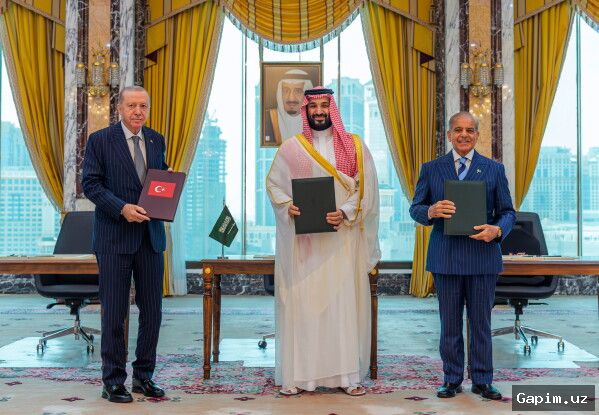
The agreement is intended to strengthen collective deterrence against any act of aggression, stipulating that an armed attack against any one of the three states shall be regarded as an attack against them all. It also provides for the enhancement of all aspects of defense cooperation among the three states.
Analysts say the pact points to growing doubts about the durability of US security guarantees. Kristian Coates Ulrichsen, a Middle East fellow at Rice University's Baker Institute, told Al Jazeera that regional states have harbored growing doubts about the reliability of the US security partnership for over a decade. The decision to begin military operations against Iran and the conduct of the war have intensified those concerns.
However, Ulrichsen added that building new defense pacts is likely not intended to replace or supplant the US, but to provide additional strategic and policy options. The agreement is seen as an effort by the three countries to reorient themselves after the turmoil of the Iran war.
Sina Toossi, an analyst at the Center for International Policy, called it one of the first major geopolitical signs that the regional order is being reshaped by the US-Israeli war on Iran. Rather than relying primarily on Washington, Saudi Arabia appears to be broadening its security partnerships and laying groundwork for more intra-regional security arrangements.
Iranian forces have launched waves of missile and drone strikes against US military facilities, causing bystander casualties, and targeted civilian infrastructure, including energy and desalination plants. Tehran's decision to close the Strait of Hormuz has imposed a steep cost on local economies, while Washington has struggled to provide partners with sufficient air defense munitions.
Analysts note that the pact is best understood as an effort to supplement regional security cooperation and deter Iran, not as a step toward greater confrontation. Yasmine Farouk of the International Crisis Group emphasized that all three countries have called for mediation and de-escalation, and the agreement's importance may lie in 'normative deterrence' rather than military action.
Source: www.aljazeera.com