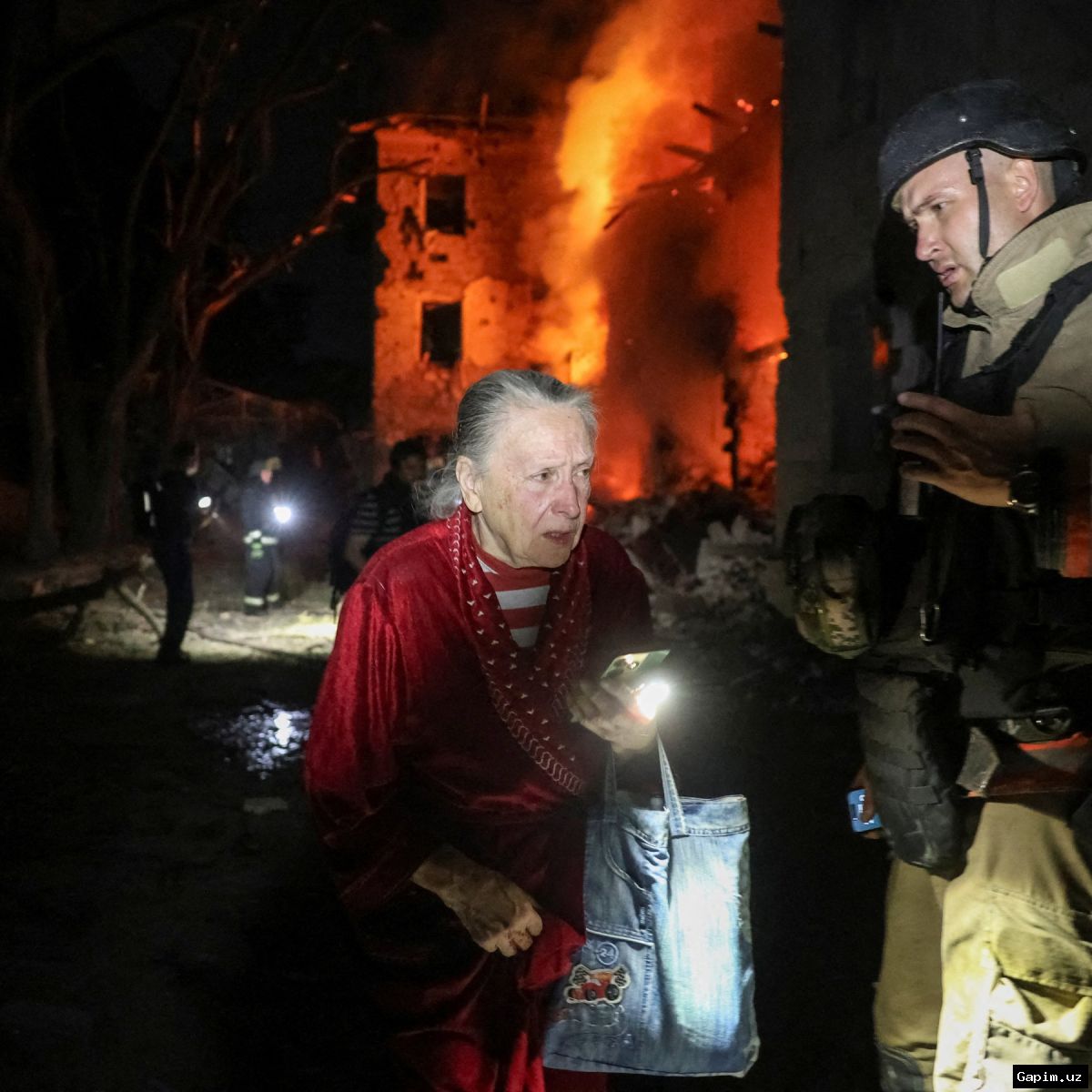
Russian forces killed four people, including a teenager, in aerial bomb strikes on the city of Kramatorsk in eastern Ukraine. Regional governor Vadym Filashkin reported on Telegram that seven bombs struck residential buildings, a shop, and private homes on Friday, injuring at least nine others.
Ukraine's military said it hit two major Russian oil refineries, an oil terminal, and a depot, as well as 10 tankers in the Sea of Azov. The Ilsky oil refinery in the Krasnodar region, one of the largest in southern Russia, caught fire, and the Ust-Luga complex in the Leningrad region was also struck, according to the general staff on Telegram. Both are frequent targets of Ukrainian attacks.
An oil terminal and depot in the Rostov region were attacked, causing explosions and fire. Robert Brovdi, Ukraine's drone forces commander, said 10 tankers in the Sea of Azov were attacked on Friday, among almost 50 fuel-carrying vessels damaged this week. Kyiv aims to limit fuel supplies for enemy troops and isolate Crimea, which Russia occupied in 2014.
Targeting oil tankers appears to be a new strategy by Ukraine, Al Jazeera's Audrey MacAlpine reported from Kyiv. “These ones in particular, according to Ukraine, refill, resupply the Russian-controlled peninsula of Crimea,” she said. “It also says that these tankers are part of Russia’s shadow fleet, which is a term used to describe unmarked ships that carry what Ukraine says is illegal oil.”
Russia's deputy prime minister said on Friday that Ukrainian drone strikes on energy infrastructure are causing fuel shortages. Speaking in Tver region, Novak said: “The shortage is due to obvious reasons, because our oil refineries are partially out of order for repairs due to [Ukrainian drone] arrivals.” He added that Moscow's temporary ban on gasoline and diesel fuel exports is aimed at “stabilising the situation.”
Late last month, Russian President Vladimir Putin acknowledged that Ukrainian strikes on Russia’s energy infrastructure had contributed to fuel shortages, but insisted it was “not critical.” Al Jazeera's Yulia Shapovalova reported from Moscow that more than 50 million people, almost a third of Russia’s population, have been affected by the fuel crisis.
Source: www.aljazeera.com