An Israeli attack on northern Gaza's Jabalia camp on Tuesday killed the director of a police station and several officers, adding to a mounting civilian death toll despite a months-long ceasefire.
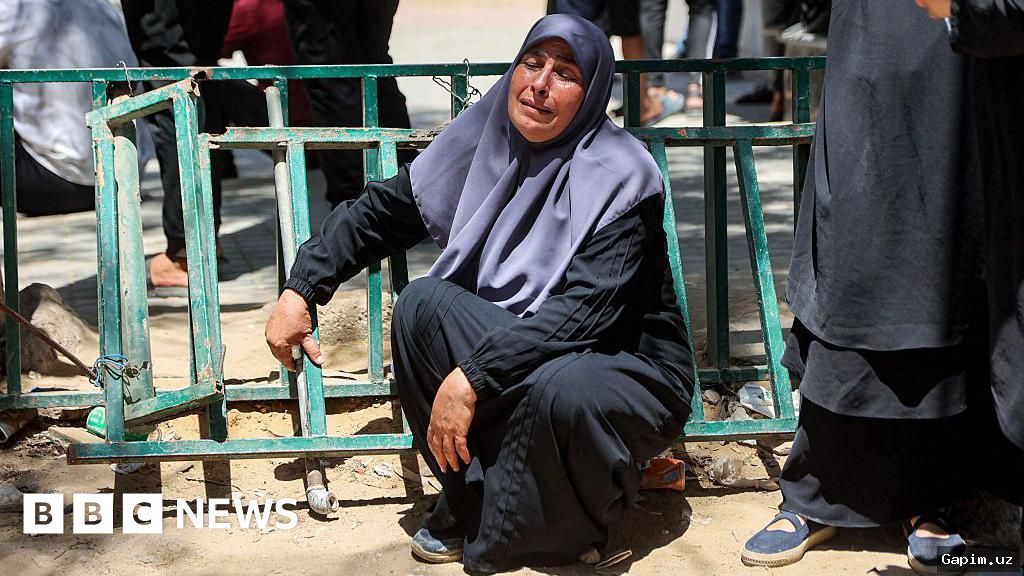
Israel continues to launch deadly raids across the Palestinian territory, citing the presence of Hamas fighters and “imminent threats”. However, political and strategic analysts warn that these daily incursions are not isolated security operations, but a calculated pattern to kill law enforcement officers, medical professionals, government officials and intellectuals.
These killings, analysts say, could systematically derail the US-backed plan for a post-war Gaza, paralyze the so-called Board of Peace set up under the Trump administration plan, and effectively allow Israel to maintain indefinite control over a territory that is otherwise uninhabitable.
Since the ceasefire took effect, Israel has conditioned the international community to accept daily breaches and killings as the new normal, analysts said. The total death toll since October 7, 2023, has reached at least 73,233, with 173,707 injured. According to the Government Media Office in Gaza, there have been 3,689 recorded Israeli violations during the 275-day ceasefire, resulting in 1,122 Palestinians killed and 3,599 injured.
The humanitarian situation continues to deteriorate, with Israel allowing only 35 percent of expected aid trucks and 36 percent of permitted travelers to cross the borders. The United Nations Human Rights Office (OHCHR) reported that Israeli attacks are systematically targeting police officers, recording at least 12 attacks on police since January 2026, killing 35 personnel.
Alongside law enforcement, Gaza's educational and medical sectors have been decimated. Most hospitals have been bombed, and at least 441 teachers and over 11,000 schoolchildren have been killed, according to the Palestinian Ministry of Education.
Ahmed al-Tanani, a writer and political analyst based in Gaza, noted that Israel's pretexts for these strikes have shifted from “security events” to “killing on intention”. He said the strikes are a direct response to Hamas demonstrating political flexibility, including dissolving its administrative committee. “Israel is saying clearly that its problem in the Gaza Strip is not with Hamas; its problem is with the entire national structure in Gaza, with the society, and with any possibility of recovery,” al-Tanani told Al Jazeera.
Analysts say Israel's immediate goal is to prevent the implementation of the Trump plan, while its long-term objective remains indefinite occupation and expansion of settlements. Israeli Defence Minister Israel Katz stated that the destruction of Gaza is a deliberate policy, a view that analysts say reflects the general mood in Israel.
Paolo von Schirach, president of the US-based Global Policy Institute, said taking comfort in the destruction of Gaza goes beyond fighting Hamas. “The idea was to make this place uninhabitable, hoping the people will disappear and go somewhere else,” he told Al Jazeera. Israel's strategy has severely undermined the Board of Peace, which currently lacks the tools and security forces to assert control.
Palestinian factions have leaned heavily into diplomacy, with Hamas dissolving its governance committee in favor of a technocratic body to remove Israeli pretexts for stalling. Mediators in Egypt, Qatar, and Turkiye are working to forge a unified Arab and Islamic stance to pressure the US into enforcing the ceasefire's operational details.
Source: www.aljazeera.com