President Shavkat Mirziyoyev of Uzbekistan held a meeting with the heads of the judicial system on August 14, during which the “Fair Justice — 2030” strategy was presented. The head of state emphasized that many issues in the judicial system remain unresolved, and the main criterion for its operation should be public trust.
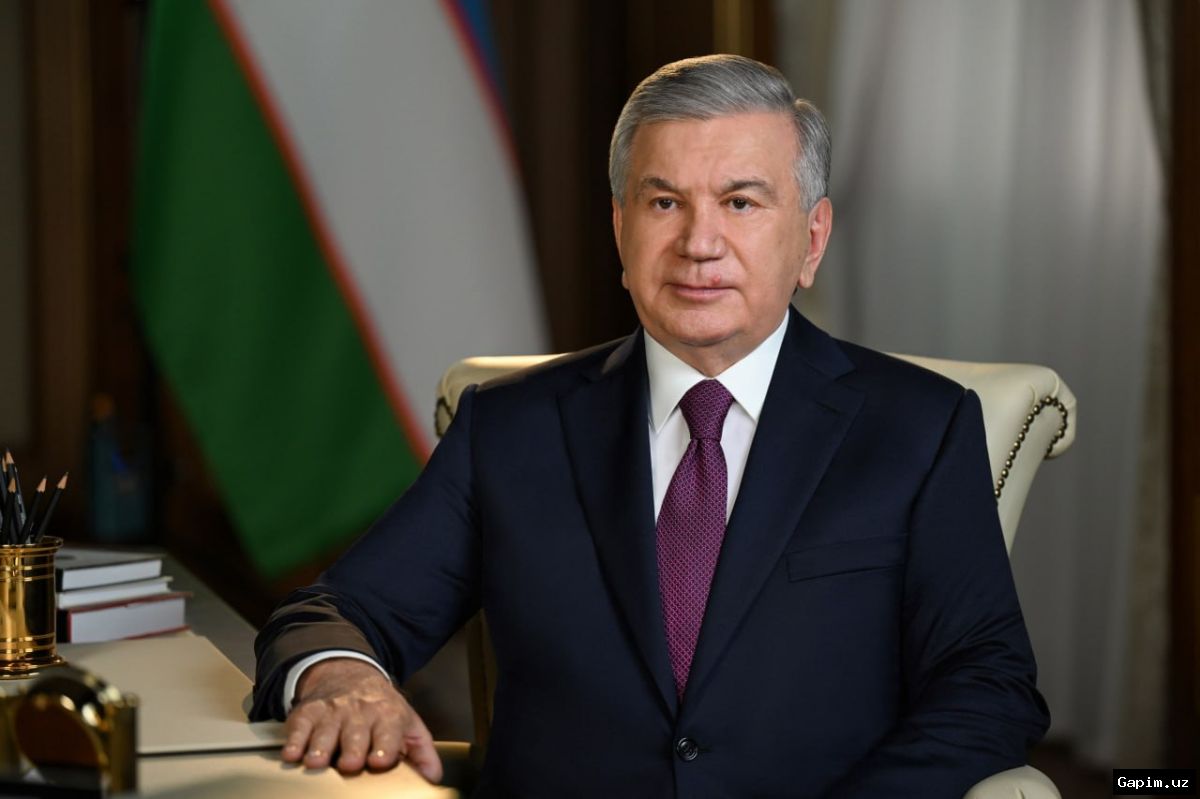
“Reforms in the judicial system are a top priority. Of course, we have done and are doing a lot. But the question of whether people are satisfied with the courts remains. We must seek an answer to this fair question together,” the president said in a report by the Uzbekistan 24 TV channel.
According to Shavkat Mirziyoyev, a person who turns to the court should feel the changes that have occurred in the country. “We must act so that a person entering the court feels the breath of a new Uzbekistan. The court is one of the three pillars of state power. The Constitutional Court must give its assessment as a fair arbiter,” he said.
The president noted that reforms have been carried out in the judicial system in recent years, but the amount of work ahead is still significant. “What have we achieved in the last ten years and what should we achieve from now on? We have appointed a new leader. We are acting in the interests of people, increasing their satisfaction and dignity. But to say that there is more work ahead than has been done is true,” the head of state said.
According to him, it is necessary to create conditions for citizens to fully trust the courts. “We must create conditions to win 100 percent trust of those who go to court. By 2030, we should have a modern court,” said Shavkat Mirziyoyev.
Chairwoman of the Supreme Court Robakhon Makhmudova announced that the “Fair Justice — 2030” strategy presented to the president includes 57 tasks, 160 measures, and 33 goals. “Every practical measure in reforming the judicial system should reflect the idea of 'For the Dignity of Man',” she said.
One of the directions will be to bring civil courts closer to the population. In particular, it is planned to establish courts for civil cases in all 208 districts and cities of the country. “As a result, every person — from the Aral Sea region to the most remote villages of Surkhandarya — will be able to solve their problem on the spot, without unnecessary hassle,” said the head of the Supreme Court.
It is also planned to open service offices in all court buildings, where citizens can receive information, consultations, and necessary assistance in one place. They will operate on the principle of a “single window.”
Another major change will be the reform of the procedure for reviewing court decisions. “Five interregional courts will be established to consider complaints in the order of revision. That is, the complaint will be considered by a completely different court. The Supreme Court will focus on the most complex and systemic issues,” said Robakhon Makhmudova.
The Chairwoman of the Supreme Court also announced plans to expand the powers of investigative judges based on the prima facie (“reasonable suspicion”) principle. “They will be given a mechanism to thoroughly verify the validity of a request for detention, with the possibility of requesting additional documents,” she said.
According to Robakhon Makhmudova, another innovation will be the creation of an open register of precedents, where the final legal positions of the Supreme Court presidium will be published. “Every person will be able to predict the outcome of their case in advance, relying on the legal position of the Supreme Court on a specific case,” she added.
According to the “Fair Justice — 2030” strategy approved by the president, from July 1, 2027, it is planned to establish 5 interregional courts, gradually introduce civil courts in almost all districts and cities, and expand the digitalization of courts.
Source: www.gazeta.uz