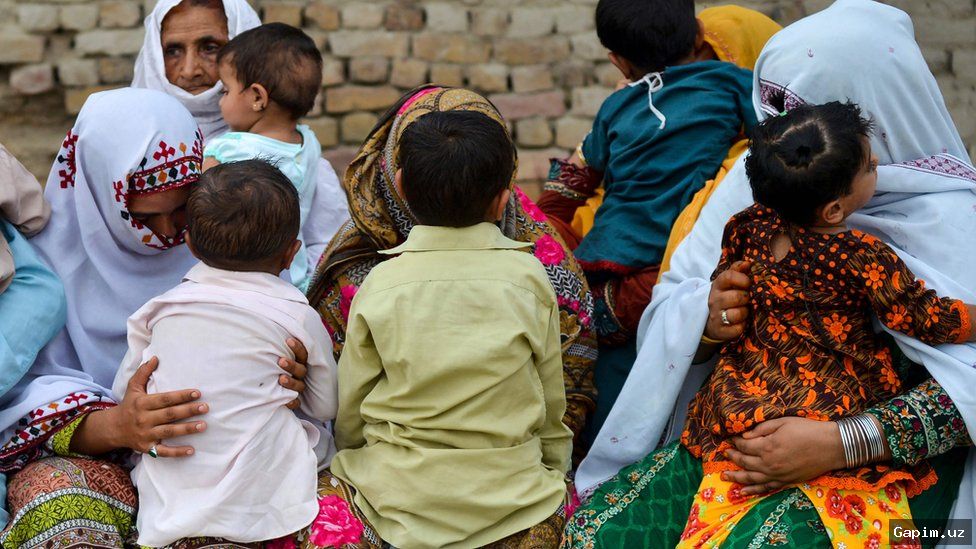
At least 130 people, most of them children, have tested HIV-positive in connection with an outbreak at a government-run hospital in Karachi, Pakistan’s largest city, with officials adding that the number has risen sharply in recent weeks.
Sindh Labour Minister Saeed Ghani said earlier this week that more than 10,500 people were screened in and around Kulsum Bai Valika (KBV) Hospital, a Sindh Employees’ Social Security Institution (SESSI) run facility, where 120 tested positive. A separate screening drive at another SESSI facility in Karachi’s Landhi area identified 10 additional cases.
SESSI is an autonomous provincial organisation that provides healthcare to industrial and commercial workers and their dependants across Sindh. The crisis at KBV Hospital first came to public attention in November 2025, when residents of Karachi’s SITE Town noticed a cluster of infections among children treated there.
Officials trace the outbreak to October 2025, when the first six HIV-positive cases were reported. Chief Minister Murad Ali Shah was briefed on July 14 that two internal inquiries had found serious lapses, including poor adherence to infection prevention protocols, inadequate use of protective equipment and improper handling of single-use syringes.
The first inquiry identified 16 HIV-positive children, while a second confirmed 78 infections and six deaths. Minister Ghani said all cases had been traced to exposure before October 2025 and that screening would continue. Thirty-seven doctors and hospital staff were issued show-cause notices on July 3.
Ghani claimed the infections were not caused by syringe reuse, arguing that KBV Hospital uses auto-disable syringes that cannot be reused. However, the official inquiries pointed to a broader breakdown in infection prevention.
This is not the first large HIV outbreak reported in Sindh. The World Health Organization (WHO) and UNAIDS identified Pakistan’s crisis as one of the fastest-growing HIV epidemics in the region, with annual infections rising 200 percent over 15 years, from 16,000 in 2010 to 48,000 in 2024. About 350,000 people in Pakistan are living with HIV, with nearly 80 percent unaware of their status.
Physicians writing in The Lancet HIV argued that Pakistan’s epidemic is now driven “in large part, by the health-care system itself,” pointing to repeated outbreaks linked to unsafe medical practices. Syed Faisal Mahmood, professor of infectious diseases at Aga Khan University Hospital, urged caution but noted that poor injection safety protocols are pervasive throughout the entire country.
The Sindh High Court has given the provincial government until July 20 to respond to a petition alleging violations of syringe regulation laws. Prime Minister Shehbaz Sharif ordered a nationwide ban on substandard syringes on July 3, and retail sales of conventional syringes will be banned from January 2027.
The Sindh government has approved a 2 billion-rupee ($7.2m) endowment fund for the long-term care of affected children, alongside an isolation ward and a third-party audit of KBV Hospital’s procurement and infection control systems. Mahmood, however, said measures such as banning syringes address only part of the problem, as about 60 percent of healthcare in Pakistan is delivered by the private sector, which is much harder to regulate.
Source: www.aljazeera.com