Belgium's federal government has approved a ban on importing goods produced in Israeli settlements in the occupied Palestinian territories, becoming the latest European country to act unilaterally on an issue that remains unresolved at the EU level.
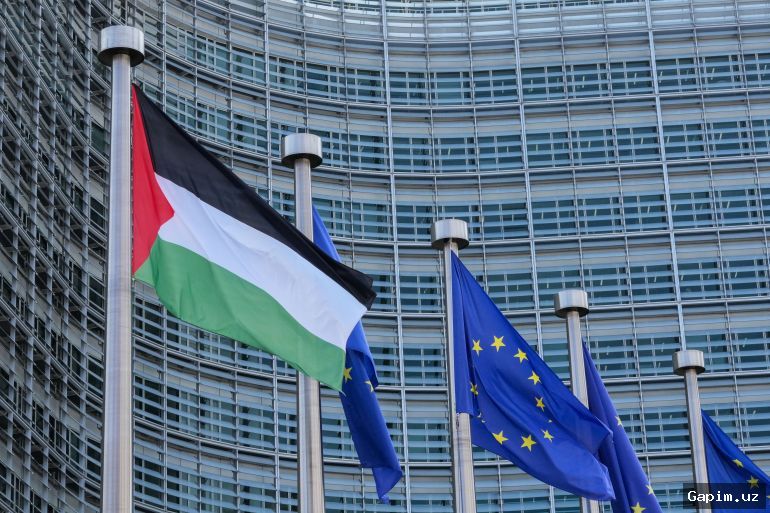
The decision was taken at the government's final cabinet meeting before the summer break, according to the Belgian News Agency (Belga) on Saturday. The move fulfills a commitment made last year over the scale of Israel's bombardment of Gaza and its death toll.
Earlier this week, Belgian Foreign Minister Maxime Prevot pressed EU counterparts at a closed-door meeting in Brussels for a bloc-wide ban, accusing the European Commission of offering ministers "a bone to chew on" rather than a genuine plan to act.
The ban comes amid growing evidence of settlement goods entering Europe. A Global Echo Litigation Center investigation this year examined over 30,000 export documents and found that roughly one in six Israeli agricultural shipments to Europe contained goods grown in settlements in the occupied West Bank or Golan Heights. For shipments bound for EU countries, the figure rose to nearly one in five.
The EU is Israel's largest trading partner, buying close to 30% of its exports and accounting for nearly a third of its total trade in goods, worth €43 billion ($49 billion) last year.
Belgium joins Spain, which enshrined a ban in law last September, the Netherlands, which agreed to one in May, and Slovenia, which adopted a similar measure earlier this year. Ireland's parliament passed its own prohibition on July 15.
The wave of national bans follows efforts by the European Commission to coordinate action, circulating a paper with three options: an import ban, a licensing scheme, or high tariffs on settlement goods. However, no decision was reached.
Five former European officials, including ex-Italian Prime Minister Enrico Letta and former German Vice Chancellor Sigmar Gabriel, published a joint call for an EU-wide ban, arguing that national bans carry limited weight since goods cleared in one member state can move freely across the bloc.
Source: www.aljazeera.com