The US-Israel war on Iran is escalating again, driving oil prices higher. But experts say the real clues to the state of the economy lie beyond indices and price points.
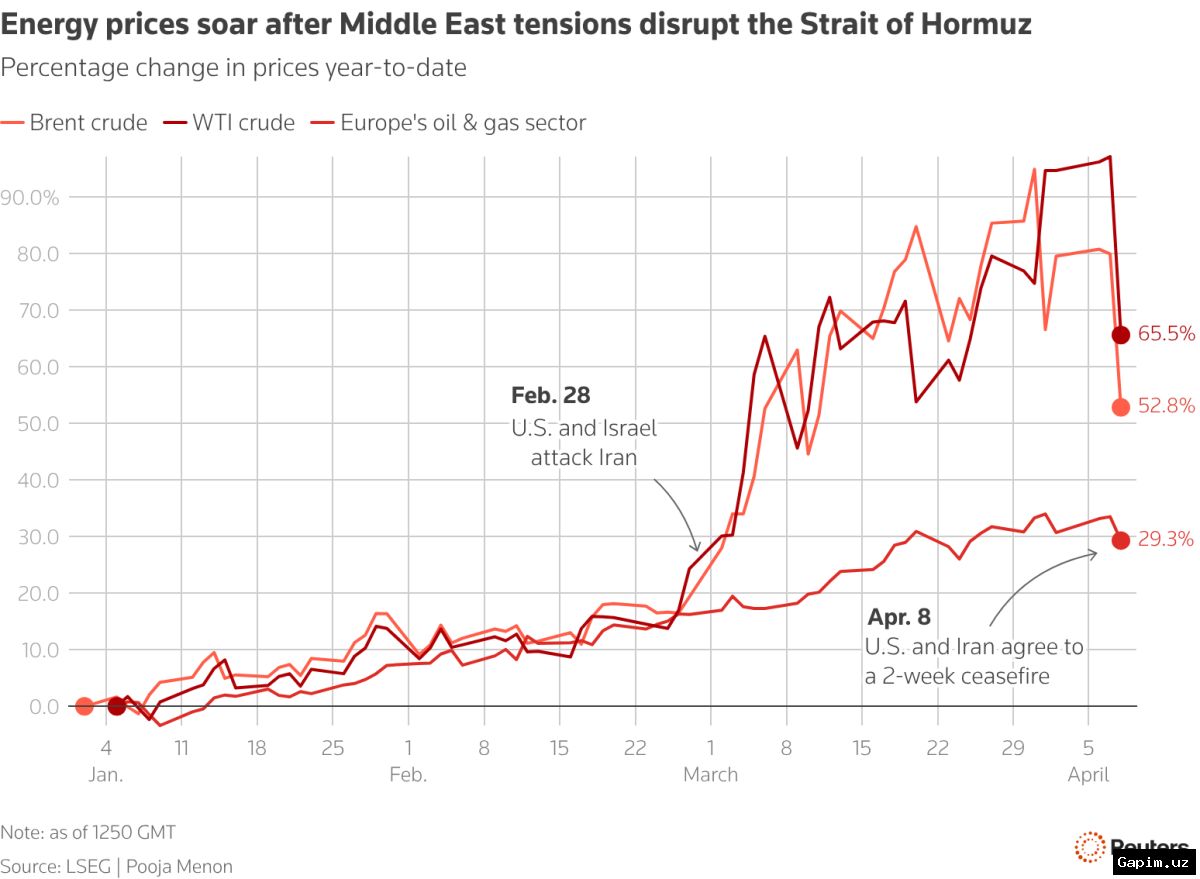
Michael Klein, professor of international economic affairs at Tufts' Fletcher School, notes that markets had been relatively quiet in the past month or two but have changed since the war on Iran began. Yields on 10-year US Treasury bills have risen nearly 60 basis points since late February to 4.6 percent on Monday, the highest level in a year, making borrowing more expensive for businesses and slowing the economy.
Klein explains that bond interest rates incorporate inflation because lenders want protection against erosion of their money. This also shows investors expect inflation to rise as the Strait of Hormuz, through which 20 percent of the world's oil traveled before the war, remains practically closed after a brief respite.
Consumer prices fell 0.4 percent in June, led by a 9.7 percent drop in oil prices. But a month after the MoU was signed and days after it fell apart, Brent crude reached $91.42 a barrel on Sunday before falling to $88.04 on Monday. The US national average gas price rose to $4 per gallon.
Traders now see a 55 percent chance of a quarter-point interest rate hike in the US in September. Rachel Ziemba, adjunct senior fellow at the Center for a New American Security, says the past month has gone from overoptimism about oil flows to a correction as the MoU fell apart and conflict risk increased.
Apart from the Strait's closure, Middle East refineries are operating at lower capacity due to Iranian attacks, and Russian refineries have been hit by Ukrainian drones, leading to shortages of oil products like gasoline and diesel.
The S&P 500 has fallen 0.81 percent in the past month, the Nasdaq-100 is down 5.66 percent, while the Dow Jones is up 0.53 percent. Mariano Torras, chair of finance and economics at Adelphi University, says equities have been relatively stable but long-term risks to food and global security are not being factored in.
Economists warn on food security: with the strait closed, fertilizer prices will soar. As the Southern Hemisphere enters its sowing season, developing countries in Africa and South America will be hit hardest. Even India, a big fertilizer consumer, could face food inflation.
Torras says stock markets presume government and Fed assistance, ignoring long-term risks. Klein adds that focusing on daily or weekly market fluctuations is a mistake, as it reflects herd mentality.
Source: www.aljazeera.com