On July 17, hours after Israel's parliament dissolved itself and set an October 27 election date, an Israeli drone struck a funeral procession outside Ahmad Yassin Mosque in the Nuseirat refugee camp, killing at least eight mourners as they buried a man killed hours earlier.
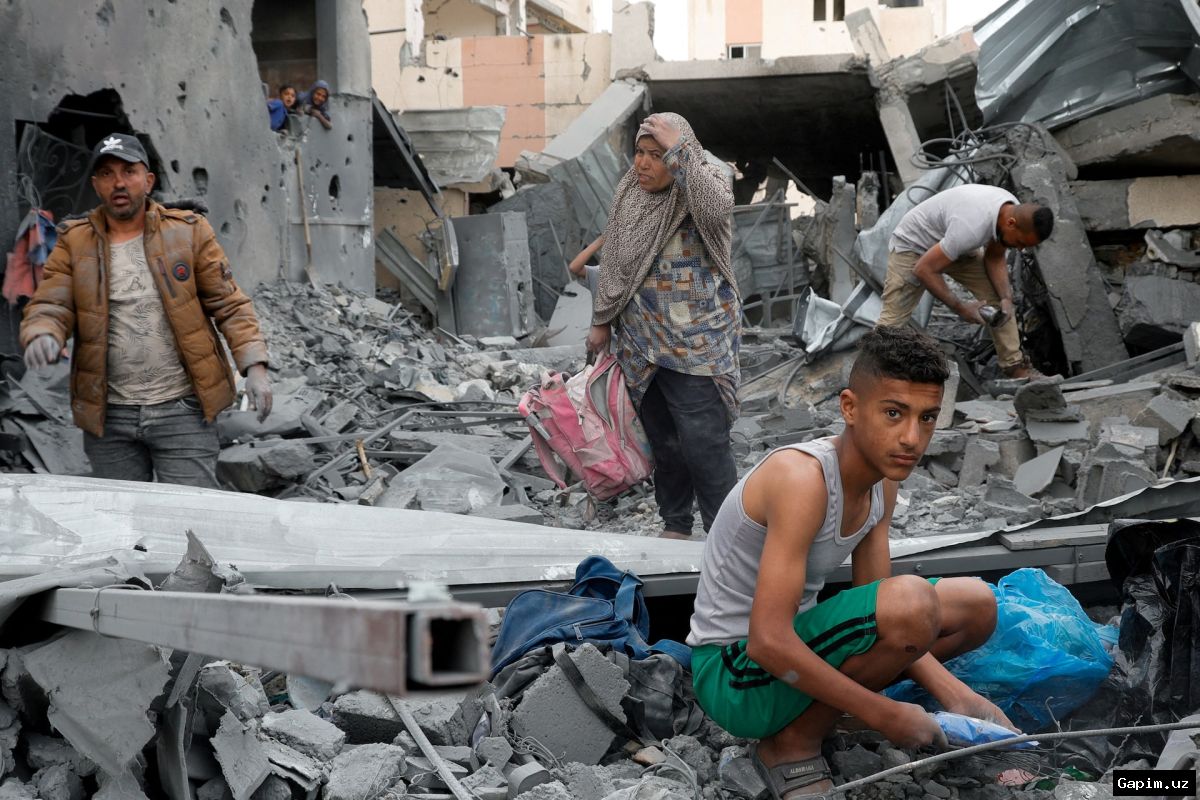
The UN human rights office said Israeli attacks have killed at least 57 Palestinians, including six children and eight women, between July 13 and 20, warning that the pattern “raises concerns of continuing violations of international humanitarian law, war crimes and other possible atrocity crimes in Gaza”.
In the same week, Israel’s military carried out daily killings, ministers raced to pass legislation before parliament dissolved, the Civil Administration issued demolition and land-seizure orders, and settlers attacked Palestinians with near-total impunity. All of this points towards an unrelenting few months of violence and dispossession before elections take place.
Beyond the Nuseirat funeral strike, the week’s Gaza toll included a string of air attacks on homes and displaced families. On July 15, an Israeli helicopter attack killed Omar Sami Abu Qassem, his wife Asmaa Ghazi and their six-year-old daughter Habiba in Deir el-Balah; their three-year-old son was the only survivor. On July 18, an Israeli warplane struck a residential building in Gaza City’s Nassr neighbourhood without warning, killing Adham Nasman, his wife Marwa and three of their children; a third child survived only because he was not home. Israel claimed that Nasman was a Hamas commander – the group has not issued a statement confirming that.
Then, an overnight Israeli air attack on July 21 killed Firas al-Masri, his wife Salsabeel and their four children as they slept in Gaza City. Amid this string of mass-casualty attacks, Israel’s Defence Minister Israel Katz told Channel 14, while touring northern Gaza, he felt satisfaction from the scenes of destruction, which he said resulted from a deliberate Israeli policy. He added that Israel was studying the establishment of three military-style settlement outposts in northern Gaza.
Katz’s statements coincided with a march on Sunday by the Nachala settler movement to the Gaza border fence, in which right-wing Israelis – accompanied by more than a dozen ministers and legislators, including National Security Minister Itamar Ben-Gvir and Finance Minister Bezalel Smotrich, and endorsed by Prime Minister Benjamin Netanyahu’s Likud party – called for the re-establishment of settlements inside Gaza.
On the other side of the fence, the Israeli-controlled “Yellow Line” has continued expanding westward, with new blocks placed near al-Qarara and reaching the Abu Miri roundabout east of Deir el-Balah, forcing hundreds more families to flee Israel’s advance, according to local sources.
The escalation in Gaza paralleled a sharpening campaign to create “facts on the ground” across the occupied West Bank. This past week, the Israeli security cabinet approved 1.3 billion shekels ($426.3m) to establish 34 new illegal settlements. On July 15, it approved an additional 1.075 billion shekels ($352.5m) for settler road infrastructure, Wafa reported, which will support much of the new settlements and outposts reaching far-flung areas of the West Bank. Smotrich called the decision a “settlement and security revolution”, aiming to establish more than 100 settlements and 160 agricultural and pastoral outposts.
Israel’s Crimson Thread barrier project continued with the systematic destruction of Palestinian water infrastructure in the northern Jordan Valley, with Israeli forces and settlers destroying three artesian wells near Atuf, confiscating pumps and generators, and severing roughly 800 metres of pipeline serving 4,500 dunams (4.5 square kilometres) of farmland, according to the Atuf Village Council.
In Masafer Yatta, the Wall and Settlement Resistance Commission has tied a wave of demolition and stop-work orders in Ad-Deirat and Ar Rifaiyya directly to a planned settlement road to run alongside Route 356 – a project that puts three of five local schools serving 700 children at risk, including Ar Rifaiyya’s, which lost a court appeal against demolition on July 8.
Meanwhile, on July 20, Hamas elected Khalil al-Hayya as head of its political bureau, ending nearly two years of collective leadership following Yahya Sinwar’s killing. In its final hours before the Israeli government’s dissolution, Netanyahu’s outgoing coalition pushed through a legislative blitz, including a Communications Law handing the government control over broadcast media and protections shielding ultra-Orthodox men from conscription.
And during the same week, ministers joined activists calling to resettle Gaza, Environment Minister Idit Silman reclassified the Nile crocodile as a “tended” species, a legal category for wild species bred and managed in captivity for commercial purposes. That clears a legal path for Ben-Gvir’s proposal to surround detention facilities for Palestinians with the reptiles – starting with Ktziot Prison, where imprisoned Gaza doctors, among others, are held without charge.
Source: www.aljazeera.com