The Indian government has approved a $13.2 billion semiconductor program, Semicon 2.0, to develop a domestic chip industry. This builds on the $9 billion India Semiconductor Mission (ISM) launched in 2021 and aims to create a complete chip ecosystem from design to manufacturing.
Over 90% of the world's most advanced chips are made in Taiwan, an island at the center of US-China rivalry. Any disruption to Taiwan's chip industry could shock the global economy, as semiconductors are used in everything from smartphones to military systems.
During the COVID-19 pandemic, chip shortages forced automakers to halt production, exposing global dependence on a few East Asian manufacturers. The US, EU, Japan, and South Korea have launched multi-billion-dollar programs to attract chipmakers.
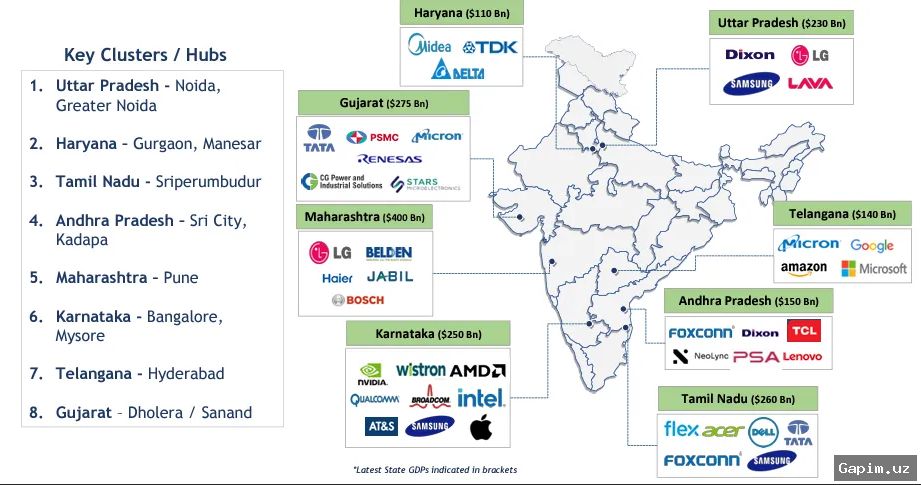
India's new program covers chip design, fabrication, packaging, specialty materials, equipment manufacturing, and workforce training. Thousands of engineers at Nvidia, AMD, Qualcomm, and Texas Instruments already design sophisticated chips in Bengaluru, Hyderabad, and Noida.
However, analysts warn India lags in large-scale manufacturing. V Kamakoti, director of the Indian Institute of Technology Madras, said: 'India already has the expertise to design sophisticated chips. The bigger challenge is manufacturing them.'
So far, India's progress has been in chip packaging and testing, not fabrication. The government aims to build a domestic semiconductor market worth $100-110 billion by 2030 and meet up to 75% of India's electronics demand with locally made chips.
Building a leading-edge fabrication plant costs over $20 billion and requires uninterrupted power and ultra-pure water. Kamakoti argues India should first master 28-nanometer chips before moving to advanced 3nm processors.
Sambit Sahu, a semiconductor veteran with 30 years at Qualcomm and Intel, said: 'The rapid growth of AI will drive demand for semiconductors, creating a window of opportunity for India.' But some experts doubt India can quickly close the manufacturing gap, predicting it will remain stronger in chip design.
Source: www.dw.com