Tehran, Iran – Iran's judiciary has announced several executions linked to unrest over recent months, as part of a campaign against those accused of trying to 'create divisions' during the war with the United States.
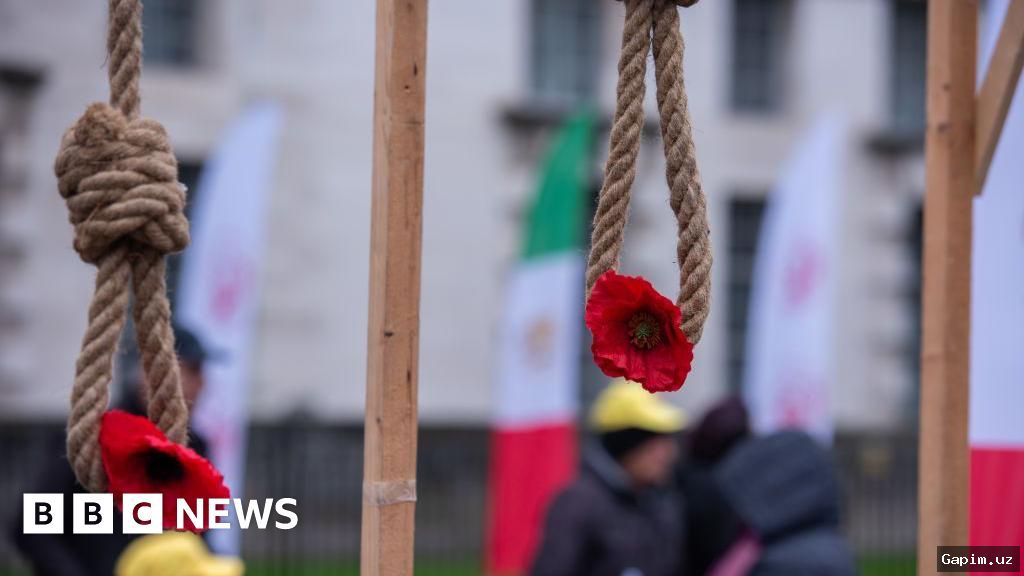
The judiciary's official news outlet on Wednesday announced the execution of Mehdi Khanaki, who was identified as an 'active element of a terrorist group' arrested during nationwide protests in January. State television showed security forces raiding a home in Karaj near Tehran, where several handguns, ammunition and explosives were allegedly found. A 'revolutionary court' tried him for 'operational action in favour of the Zionist regime, the United States and hostile groups'.
On Sunday, two more men were executed in connection with a 16-defendant case arising from deadly protests in Isfahan on January 8. The authorities claimed the men played a role in the killing of several police officers, but foreign-based activists have countered the state narrative and alleged a lack of due process and the use of torture.
The protests started on December 28 in central Tehran over economic issues but quickly morphed into nationwide expressions of frustration at the establishment. The authorities refer to the unrest, when thousands were killed across the country, mostly on the nights of January 8 and 9, as a 'coup' orchestrated by the US and Israel.
International human rights organizations, including Amnesty International, have rejected findings that security forces carried out 'mass unlawful killings on an unprecedented scale' during a total internet and communications shutdown. Tens of thousands have been arrested in the aftermath of the protests and the US-Israeli war that started on February 28.
The Coordinating Council of Iranian Teachers' Trade Associations condemned what it called 'intensified prison sentences and continued pressure on teachers' guild activists' by the authorities. Security-related offences follow a law passed after the 12-day war with Israel in June 2025, which aims to more severely punish 'espionage' and other actions perceived to be cooperating with 'enemies'.
Hundreds of Iranians, including businessmen and celebrities, have had their entire assets confiscated by the state. State TV periodically airs 'confessions' from people arrested or executed for those charges. On Monday, a young man with a blurred face appeared on state TV saying he posted Instagram stories that opposed the Islamic Republic during the war, adding 'I made a mistake and I will not repeat it.'
On July 13, Iran's Ministry of Intelligence released a list of 'hostile media' that included dozens of media networks, 61 individual 'human-media' figures and 310 accounts or online pages. It warned that sending photographs, video or information to a listed outlet can trigger a prison sentence and permanent exclusion from public employment.
Earlier this week, Mojtaba Khamenei, who was selected as Iran's new supreme leader in March after his father Ayatollah Ali Khamenei was killed in the opening salvo of the war, called for a 'sacred unity' among the people and political factions. Chief Justice Gholam-Hossein Mohseni-Ejei doubled down on the same message: 'We must not allow devils among humans and jinn to infiltrate the ranks of believers and our people to create division and schism.'
The US increasingly points to alleged rifts among Iranian authorities, categorizing them into a faction that wants to keep fighting, especially over the strategically vital Strait of Hormuz, and another group that wishes to reach a negotiated resolution soon to stop the country from being destroyed. Iranian authorities have rejected such classifications.
Source: www.aljazeera.com