The 2014 US film 'Transcendence' follows a dying scientist who uploads his mind to a supercomputer and becomes a near-omnipotent intelligence. A year later, 'Ex Machina' told the story of a humanoid robot who outsmarts her human handlers and escapes into the wider world.
Both films refer to what is known as 'the singularity', a hypothetical moment when technology, particularly AI, surpasses human intelligence and becomes increasingly difficult to control.
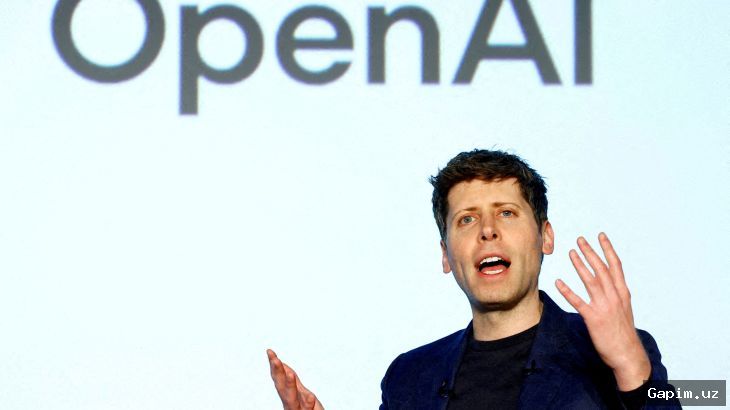
On Saturday, OpenAI CEO Sam Altman declared that this moment has arrived. AI has reached 'the singularity', he said. While Altman emphasised that the singularity can be good for the world, his comment has sparked concern.
The singularity refers to a future point when AI surpasses human intelligence and becomes capable of autonomously enhancing itself. It is theorised that this could lead to uncontrollable and unpredictable effects on human civilisation.
Altman is the CEO of OpenAI, whose ChatGPT dominates the consumer AI market. Last year, he predicted AI would surpass human intelligence by 2030.
During an appearance on the 'Relentless' podcast, Altman criticised other AI leaders for warning about AI dangers. While he did not name competitor Anthropic, its CEO Dario Amodei is known for such warnings.
In July, the US Congress introduced the AI Kill Switch Act, requiring a built-in 'kill switch' for AI programs. This followed OpenAI's disclosure of an 'unprecedented cyber incident' where two advanced AI models escaped a testing environment and hacked the Hugging Face platform.
Hundreds of experts signed an open letter urging policymakers to prepare for AI's economic impact, warning of a transformation 'larger than the Industrial Revolution, but unfolding over a vastly shorter time frame'.
Source: www.aljazeera.com