Oil prices sank more than 9% on Monday, with Brent crude, the global benchmark, dipping below $88 a barrel, marking a sharp reversal from last week when it had risen above $100.
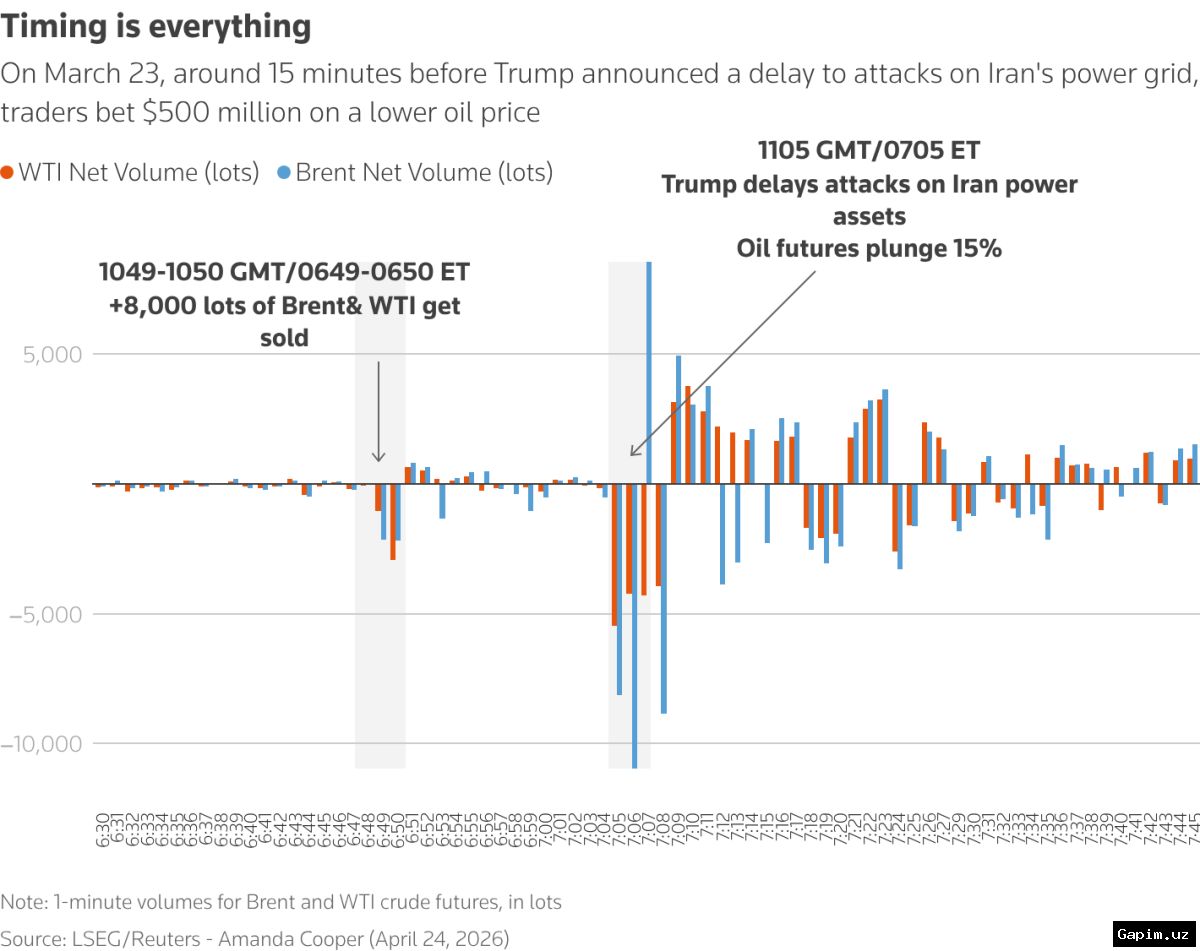
The decline came after the US ambassador to the UN claimed that attacks on Iran had been halted for a second consecutive night to give “talks some space.” An Iranian army spokesperson reportedly said on Sunday that Tehran had halted “retaliatory” attacks in the region in response.
The outbreak of the US-Iran conflict triggered a sharp rise in oil prices as the fighting effectively closed the Strait of Hormuz, a key shipping route that normally carries about 20% of the world's oil and liquefied natural gas (LNG).
When Iran and the US signed a memorandum of understanding in June to halt military operations and reopen the strait, oil prices fell back to pre-war levels of around $70 a barrel. However, the collapse of the ceasefire earlier this month allegedly reignited fears over global energy supplies and pushed prices back up.
Last week, oil hit $100 a barrel for the first time since May, with additional concerns after Houthi militants in Yemen attacked oil tankers in the Red Sea, threatening a key export route that Saudi Arabia had used to bypass the Strait of Hormuz.
Susannah Streeter, chief investment strategist at Wealth Club, said markets remained “cautious given the twists and turns during this conflict.” Despite the sharp fall in crude, “there is still significant uncertainty baked into these prices and a reticence about whether negotiations will lead to a lasting breakthrough,” she added.
The US-Iran conflict and its impact on oil have pushed up fuel costs in many countries, often leading to knock-on effects on other prices such as food, as businesses pass on higher costs to consumers, potentially stoking inflation.
The US ambassador claimed that the US and Iran have paused strikes for a third night to make space for talks.
Source: www.bbc.co.uk