The United States and Japan last week staged a coordinated currency intervention to halt the slide of the yen after the Japanese currency fell to a 40-year low against the US dollar. The yen dropped to 163 per dollar, its weakest level since 1986, prompting the rare joint action.
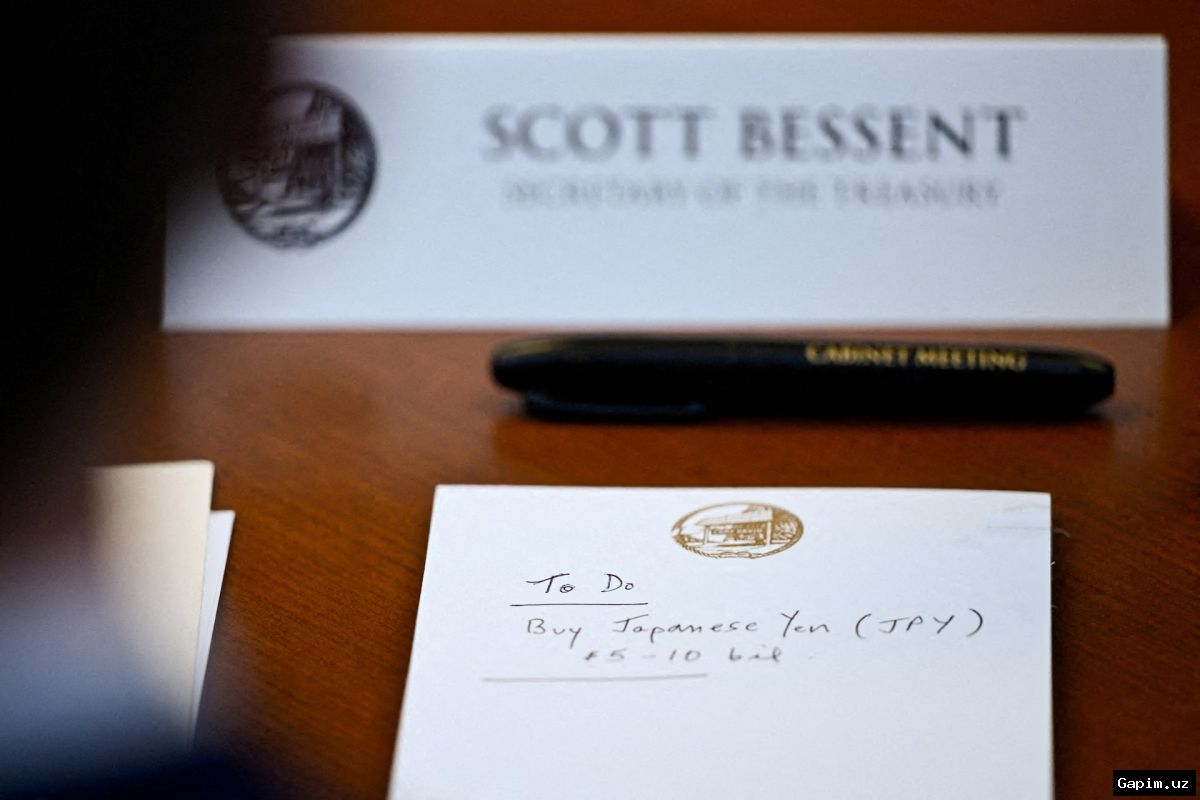
A currency intervention occurs when a government or central bank buys or sells large quantities of foreign currency to help stabilize the value of its own currency. In this case, the US Treasury began selling euros for yen on July 31, while Japanese authorities also bought yen. In the days following the intervention, the yen strengthened to 157 per dollar by Wednesday.
The US last intervened with Japan in 2011, following the Tohoku earthquake and tsunami, and also supported the yen during the Asian Financial Crisis in 1998. The yen's collapse is attributed to long-standing economic challenges in Japan, compounded by new pressures from the US-Israel war on Iran. Japan has struggled with economic stagnation since the early 1990s, with the Bank of Japan maintaining ultra-low and even negative interest rates for decades, putting downward pressure on the currency.
While a weak yen has attracted record tourism and kept exports cheap, it has also strained households by raising the cost of imported goods. Tokyo has spent tens of billions of dollars since 2022 trying to defend the yen, but the economic policies of successive leaders, including current Prime Minister Sanae Takaichi, have partly offset these efforts. Chris Turner, global head of markets at ING, told Al Jazeera: "Takaichi wants it all: growth, loose fiscal policy, loose monetary policy and a stable yen – but their policy mix is leading to a weak yen, which is causing an inflation problem."
While Japan is a close US ally, Washington intervened for its own benefit as much as Tokyo's, said Masahiko Loo, a senior fixed income strategist at State Street Investment Management. "Washington isn't trying to strengthen the yen for Japan's sake. It's trying to prevent a disorderly decline that could spill over into Treasury markets, global funding conditions, and broader financial stability," Loo explained. "A free-falling yen isn't just Japan's problem. At some point it becomes a global liquidity and financial stability issue, which is why Washington stepped in."
The yen is the world's third-most-traded currency after the US dollar and the euro, meaning dramatic changes in its value can have ripple effects across the global financial system. One of Washington's biggest concerns is the prospect of Japan selling off its holdings of US Treasury securities, which were valued at $1.114 trillion in May. If the yen continued to fall, Tokyo would be encouraged to sell large quantities of US Treasuries to raise cash to defend the currency, putting upward pressure on US interest rates and increasing the cost of servicing the national debt, which already exceeds $39 trillion.
"The financial cost of intervention for the US is low and, given that President Donald Trump favors a weaker US dollar, the domestic political cost is minimal," Shigeto Nagai, head of Japan economics at Oxford Economics, wrote in a research briefing. "Coordinated intervention is a cost-effective method as it allows the US to do a significant favor for Japan, a precious loyal ally in Asia, and take some pressure off US interest rates."
While the joint intervention has provided short-term support for the yen, Japan will need to take more fundamental measures, such as raising interest rates, to strengthen the currency in the long term. Japan's benchmark interest rate currently stands at 1.0%, its highest since 1995 but far lower than other advanced economies, including the US. The large gap between US and Japanese interest rates is a primary driver of the yen's persistent weakness.
Without a change in Japan's low-interest-rate environment, the latest currency intervention is just "throwing good money after bad," said Derek Tang, an economist and CEO of Monetary Policy Analytics. "Ultimately… the gravitational force of economic fundamentals will overwhelm intervention efforts," Tang told Al Jazeera. "Nevertheless, Japan seems very reluctant to tighten monetary policy to raise its own interest rates and allow the currency to appreciate in that manner. So this situation will persist for the time being."
Source: www.aljazeera.com