Indonesian authorities are scrambling to contain wildfires that have scorched more than 100,000 hectares (247,000 acres) of land, prompting the deployment of nearly 50,000 firefighters across the archipelago.
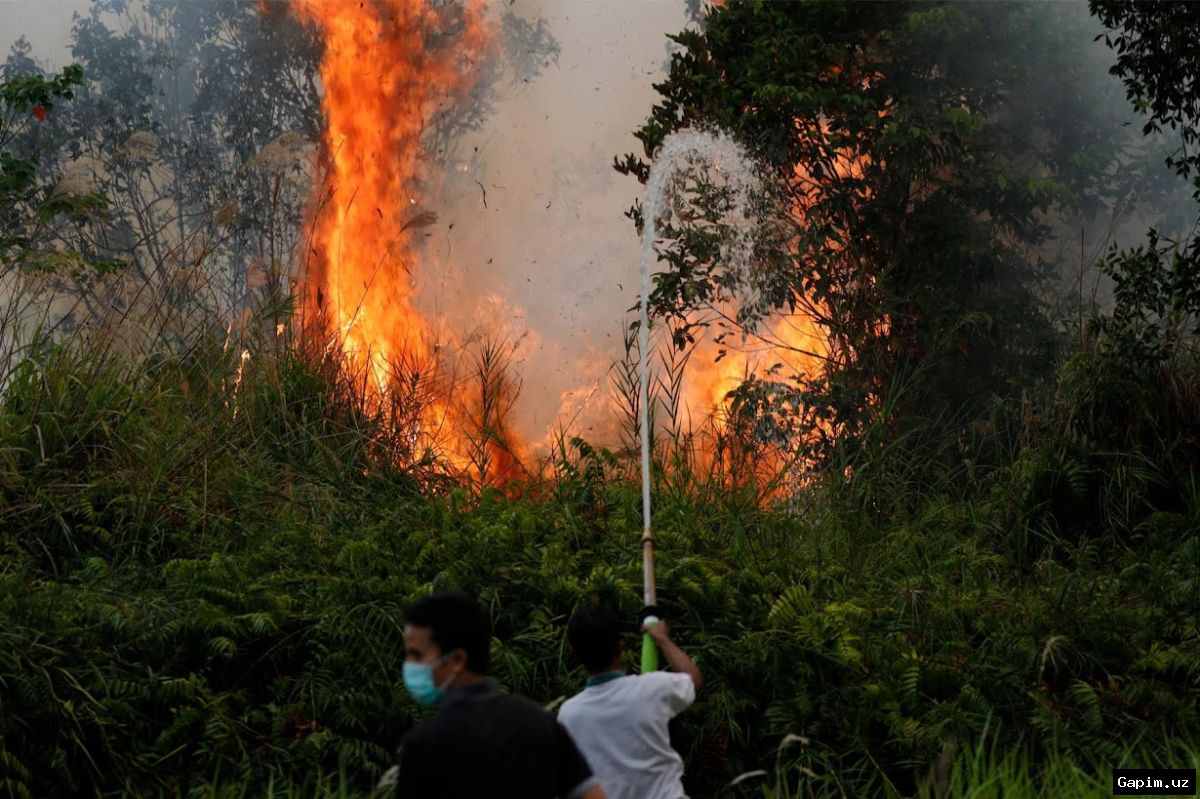
Dozens of schools remain closed for a second day on Tuesday due to hazardous air quality caused by the blazes. In West Kalimantan on Borneo island, the mayor of Pontianak ordered schools shut as smoke wafted over the city from fires elsewhere.
Children will learn from home until air quality improves, Mayor Edi Rusdi Kamtono said in a statement on Monday, emphasizing the need to protect young people from respiratory risks.
El Nino has contributed to dry conditions across Indonesia, increasing wildfire risk. Officials are prioritizing firefighting efforts in six provinces: Riau, Jambi, and South Sumatra on Sumatra island, as well as West Kalimantan, Central Kalimantan, and South Kalimantan on Borneo.
Chief Security Minister Djamari Chaniago warned reporters on Monday that arid conditions heighten the likelihood of fires spreading. “We are on alert because the weather conditions really make it possible for these fires to become larger,” he said.
Authorities are attempting cloud seeding to induce rain, spraying chemicals like silver iodide and salt into clouds to boost rainfall by up to 15 percent. However, Chaniago cautioned that finding sufficient rain clouds is a challenge, requiring constant monitoring of weather changes.
In East Java, more than 150 personnel battled remnants of a blaze at Bromo Tengger Semeru National Park, which has destroyed about 900 hectares since it started nine days ago. The fire is now mostly under control, covering just 2 hectares.
Ministry of Forestry data shows that over 107,000 hectares burned across the country from January to June, a 110 percent increase compared to the same period in 2023, when El Nino last affected Indonesia. The situation underscores the growing threat of climate-induced disasters in the region.
Source: www.aljazeera.com