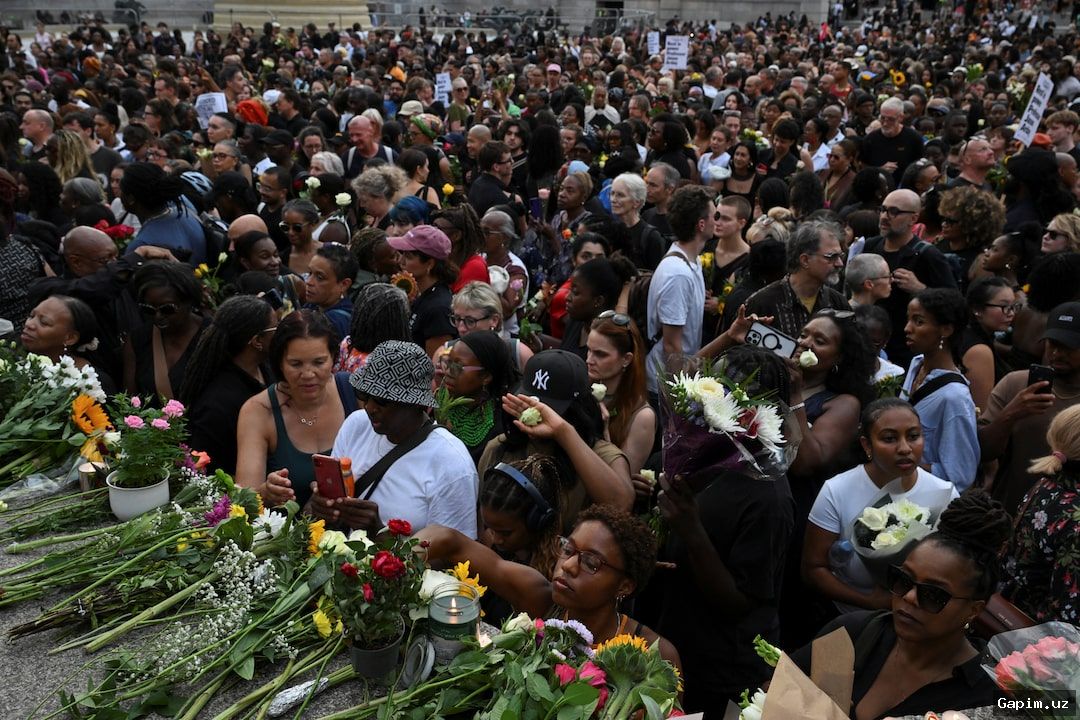
London, United Kingdom – Tens of thousands of mourners dressed in black filled Trafalgar Square, many carrying flowers for a vigil for Jason Arday, a former Cambridge University professor who died amid weeks of media scrutiny over plagiarism claims.
The 41-year-old academic, the youngest Black professor in Cambridge's history, was found dead at his home in south London on Friday. Many at Monday's vigil blamed relentless and "racist" media coverage for his death. Arday, diagnosed with autism as a child, had denied the allegations.
Mourners carried signs reading "Rest in power Professor Jason Arday", "Stop racist media now", and "Racism within mainstream media is responsible for Jason Arday's death". The gathering was, as one man put it, "a gathering of grief and grievance". Social worker Paul Vincent said he and others felt compelled to attend to show respect, but also to express deep disturbance: "Something dark has happened that we're not happy with."
The controversy centered on allegations that Arday had plagiarized parts of his 2015 doctoral thesis and embellished his biography. He resigned from Cambridge on August 5, saying the "relentless accusations" had taken a "profound toll" on him and his family. Liverpool John Moores University cleared him of plagiarism, but Cambridge, which initially dismissed the allegations as a "vile campaign", later opened a review of his appointment. He was found dead two weeks later; police treated the death as "unexpected" but "not believed to be suspicious".
Cambridge Chancellor Chris Smith condemned what he called a "racist feeding frenzy" after Arday's death. A petition for a public inquiry into media conduct, started by the Good Law Project, had gathered over 96,000 signatures by Monday. It argued that Arday's "tragic death was the direct, foreseeable and foreseen result of press harassment," and that "a significant element in that harassment was the colour of his skin". The petition cited other academics, including white ones, who faced less scrutiny for similar allegations.
According to NewsCord, some 249 articles about Arday were published in UK media in the 22 days before his death, with 188 in the final nine days after his resignation. Organizers at the vigil asked attendees not to speak with reporters, and the mood was hostile towards the media. Patricia Cohen, holding a yellow rose, called the coverage "biased" and "damning and unfair", questioning whether journalists would face consequences. Liz Combe said, "Jason could have been my son... to be torn down, just because of racism."
The vigil drew prominent Black British figures, including politicians Diane Abbott and Dawn Butler, filmmaker Misan Harriman, and singer Beverley Knight. Abbott said she had seen Arday a week before his death and believed "the vicious media campaign drove him to his death". Butler apologized: "We let him down... we couldn't protect him." Knight described watching "the destruction of a brilliant man, for sport, ignited by jealousy and fuelled by hatred".
Arday's family did not attend but issued a statement read by MP Bell Ribeiro-Addy. They described him as "a selfless and gentle soul" and said "the public cruelty Jason was subjected to was too much for any man to bear". The statement closed with Arday's own words: "Every human life has a purpose. Imagine what might happen if we were all united in the just cause of valuing all human beings equally. Then maybe, just maybe, all kinds of great things might be possible."
Source: www.aljazeera.com