The student-led 'Cockroach' movement in India is expanding its campaign for accountability to government schools, but its methods are facing growing resistance from authorities. The group, which calls itself the 'Cockroach Janta Party' (CJP), rose to national prominence in May by leading weeks of protests over a scandal involving highly competitive entrance exams.
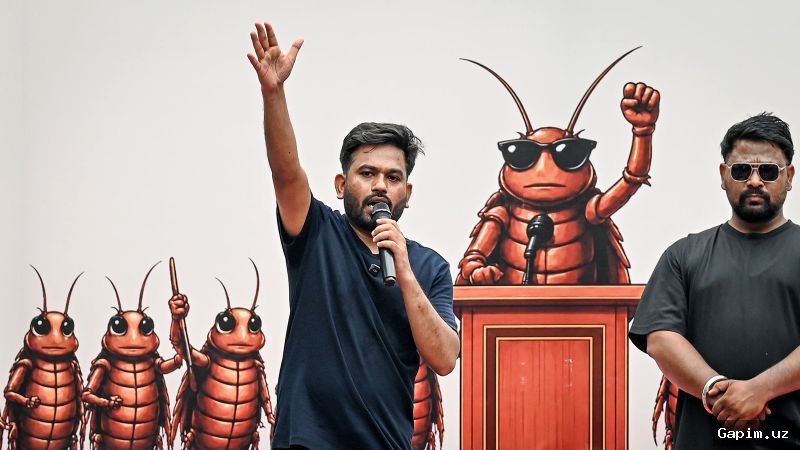
The campaign put intense political pressure on the government and ended with the resignation of Education Minister Dharmendra Pradhan last month. Now, the CJP is targeting India's government schools, organizing volunteers to visit classrooms, document conditions, and demand accountability for problems.
Launched on August 15, India's Independence Day, the campaign asks parents, students, and volunteers to inspect schools and record basic facilities including toilets, drinking water, electricity, classroom furniture, and school buildings. The CJP says the findings will be used to pressure authorities to make improvements. Its initial target is to audit 100 rural government schools over two months, and it has also proposed giving recognition to village leaders who improve their schools.
Unlike the first campaign, which was based on street protests, the school audits require a more sustained form of local activism. Volunteers are expected to work consistently at the local level, document conditions, and follow up with officials, parents, and communities. The organization is dealing with different layers of the Indian administration, as responsibility for government schools is divided between state governments, local administrations, and elected village bodies.
India has over a million government schools, according to Education Ministry data. They make up nearly 70% of all schools in the country but serve less than half of its 247 million schoolchildren. That scale has given the CJP a vast field for its campaign, but it has also brought new challenges. Authorities are raising questions about rules and locations for the CJP scrutiny, as well as safeguards when children are present.
The response is already varying from state to state. Some authorities have ordered their own inspections, while others have restricted access or taken police action against CJP volunteers. In Maharashtra and Rajasthan, authorities have objected to school visits carried out without permission. In one case, a complaint by school authorities resulted in police action against CJP members after they entered premises to conduct an audit. In Rajasthan, restrictions have been imposed on outsiders entering government schools, as well as on filming, interviews, and other forms of documentation.
CJP spokesperson Ashutosh Ranka said, 'We are not afraid. We are seeking accountability from the government.' In Uttar Pradesh, Chief Minister Yogi Adityanath has ordered officials to conduct on-the-spot checks of school facilities and directed police to register cases over what he called misleading videos about schools and colleges.
The CJP says such measures undermine public scrutiny. Authorities say schools are not open spaces for unauthorized inspections, particularly when children are present. Vinita Gursahani Singh, managing trustee of the 'We, The People' campaign, said limits are set by law. 'Under the Right to Information Act, any citizen can inspect schools but you need to submit an application. And that makes sense as there has to be consideration for students and teaching,' Singh told DW.
'All public scrutiny is legitimate. It is our job to scrutinize. But the scrutiny has to follow process. It has to be even-handed. What applies to one citizen must apply to all,' she said. The CJP maintains that government schools are publicly funded institutions and citizens have a legitimate right to ask how they are functioning. Volunteers use standardized audit forms to record conditions and send findings to the CJP, which says it will use the material to press local administrations to respond.
Critics question whether citizen activists can assume the role of inspectors. There are concerns about whether volunteers have the expertise to assess safety or infrastructure problems and how allegations posted on social media are verified. Mohandas Pai, an education advocate, supports the CJP's focus on government schools but disagrees with its methods. 'I like young people taking interest in school education. It's a broken system, and we need reforms,' Pai told DW.
But he objected to large groups entering schools and questioning headmasters and children. 'You can't just barge into a school just because you think you are entitled to do it,' Pai said, stressing that 'children have to have a safe, secure environment.' He suggested the CJP should instead send small teams with permission, collect systematic data, publish regular reports, and use evidence to pressure governments.
CJP spokesperson Saurav Das rejected the argument that the campaign should rely on conventional channels, saying such approaches have failed to bring meaningful change. Responding to Pai on X, he challenged him to join the next school visit and show the volunteers how it should be done.
The audit campaign has also raised questions about privacy, consent, and disruption of teaching when volunteers enter schools, film inside classrooms, or question students. However, Kavita Srivastava, president of the People's Union for Civil Liberties (PUCL) Rajasthan, opposes restrictions on outsiders entering schools and taking photos and videos in her state. 'Activists were visiting government schools to document their condition and demand accountability. Protecting children's privacy should not be used to prevent legitimate public scrutiny of government schools,' Srivastava told DW.
Activist Amrita Johri said the CJP's first campaign tapped into a longstanding accountability gap in India's examination system, which cost millions of young people time and money. 'The demand for accountability had popular resonance because there was no real response from the government,' Johri told DW. She backed the school audit campaign, saying public scrutiny should be welcomed. 'Public audits are an integral part of citizens' right to information and should be welcomed as an opportunity to fix accountability,' she said, adding that the CJP needs to train volunteers, document problems, and follow up with authorities to make the campaign effective.
Source: www.dw.com